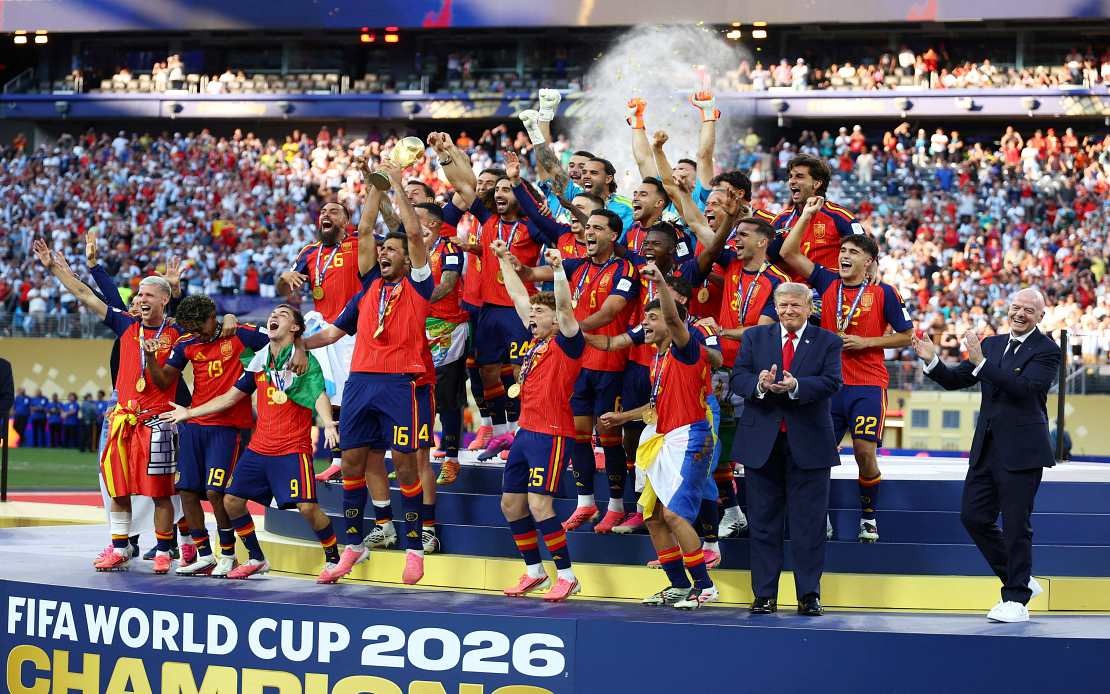
The Spanish national football team began their journey home on Monday following a historic World Cup victory in the United States, with the Spanish capital bracing for what officials expect to be one of the largest public celebrations in recent years. Captain Rodri and his teammates were scheduled to touch down at Madrid airport at 12.50 pm local time, marking the official start of festivities that would extend throughout the afternoon and evening across the city's most iconic venues and thoroughfares.
Spain's second men's World Cup triumph came courtesy of Ferran Torres, whose extra-time strike proved decisive in the final against Argentina at a New Jersey stadium. The victory represents a defining moment for Spanish football and has sparked widespread national celebration, with government officials and the royal family alike emphasizing the magnitude of the achievement. Prime Minister Pedro Sánchez publicly acknowledged the team's accomplishment through social media, describing the squad as tremendous and expressing national pride in their continental and global success.
The ceremonial programme arranged for the returning champions underscores the cultural significance attached to the victory across Spanish society. King Felipe VI personally orchestrated a formal royal reception scheduled for the afternoon at the Royal Palace, signalling the importance placed by the monarchy on acknowledging the team's success. This level of state involvement reflects how major sporting achievements in Spain transcend the football pitch and become matters of national significance, drawing participation from the highest levels of government and the crown.
Following the palace formalities, the Spanish Federation arranged for the squad to embark on an open-top bus parade through Madrid's central districts, a traditional format for honouring championship-winning teams. The procession was anticipated to draw hundreds of thousands of supporters from across the city and surrounding regions, all eager to witness their heroes in person and participate in collective celebration. Such events serve as crucial moments for communities to process shared achievement and foster national unity through sporting success.
The festivities reached their crescendo at Cibales Square, one of Madrid's most prominent public spaces, where organisers scheduled a major public show beginning at 6 pm. The team was expected to arrive and address the assembled crowds at approximately 9 pm, providing supporters with an opportunity to hear directly from the players and coaching staff responsible for bringing the World Cup home. These large-scale public gatherings represent an established tradition in Spanish culture when commemorating sporting triumphs, allowing ordinary citizens to participate meaningfully in celebrating national achievement.
Defender Marc Cucurella articulated the team's enthusiasm about the homecoming, expressing gratitude for the opportunity to share their success with supporters who could not travel to the United States for the tournament. His comments highlighted the emotional dimension of championship victories, emphasizing that the players considered public celebration an essential component of the overall triumph. The sentiment reflected a broader understanding within the squad that their achievement belonged not merely to the athletes themselves, but to the entire nation that had supported them through their international campaign.
The presence of King Felipe VI and Prime Minister Sánchez at the final match in New Jersey demonstrated Spain's institutional commitment to backing the national team at the highest levels. Such attendance by government and royal figures serves symbolic purposes, reinforcing to international audiences that Spain values its football programme and considers its performance on the world stage reflective of national identity and capability. The direct engagement of state officials in the US celebrations foreshadowed the elaborate homecoming arrangements being orchestrated in Madrid.
From a regional perspective, Spain's World Cup success carries implications for Southeast Asian football supporters and observers who follow European football closely. The victory demonstrates the continued dominance of traditional European football powers in global competition and provides context for understanding the competitive landscape that regional teams navigate. Malaysian football enthusiasts and analysts often look to European success stories for insights into tactical development, youth training systems, and institutional approaches to building championship-calibre squads.
The celebrations planned across Madrid also illustrate how modern sporting events generate economic and social activity extending well beyond match days themselves. The influx of supporters into Madrid's streets would generate commercial activity across hospitality, retail, and transport sectors, while the media coverage and public engagement surrounding the homecoming reinforced Spain's profile as a premier football nation. Such multiplicative effects of championship victories help explain why governments and municipalities invest substantially in supporting their national teams, viewing sporting success as delivering returns across multiple dimensions of national interest.

