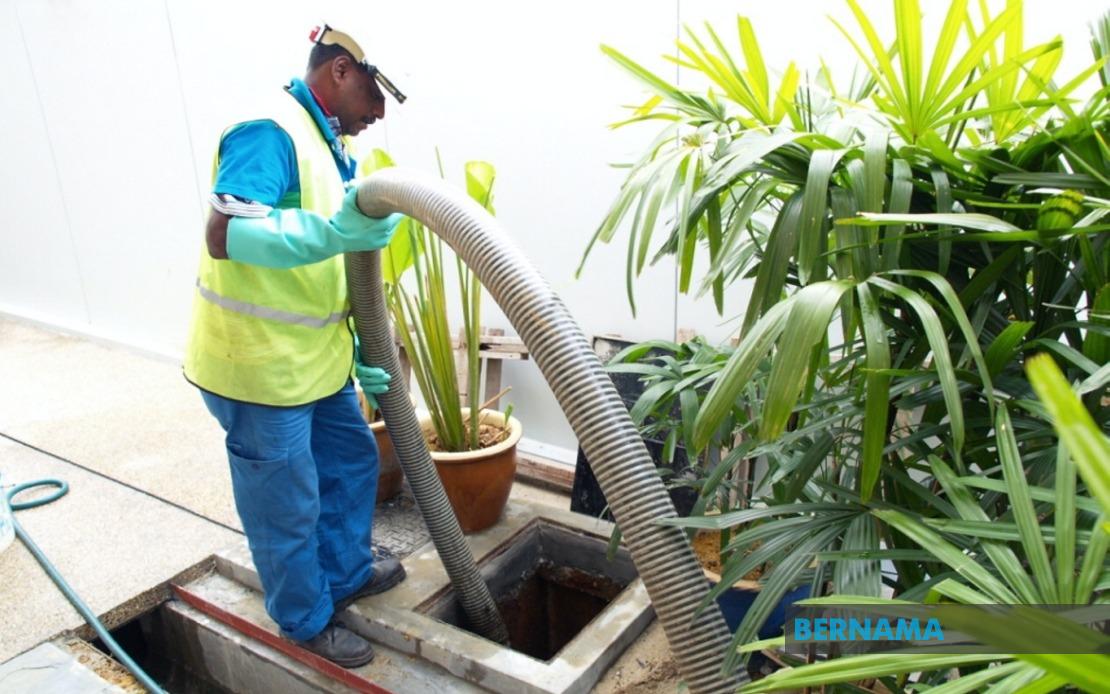
The National Water Services Commission (SPAN) has ramped up enforcement action in Sungai Petani, issuing 270 compliance notices to property owners who have neglected their septic tank maintenance obligations. The notices were distributed during Ops Padi 2, a three-day enforcement sweep conducted between August 4 and 6 that examined 341 premises across the commercial and residential sectors.
SPAN's Operations Division Enforcement Section director Ainal Yusman Mohamad Yusop explained that the operation targeted properties that had disregarded previous notices from Indah Water Konsortium Sdn Bhd (IWK), the country's major wastewater management contractor. Among the inspected locations, 242 were commercial establishments while 99 were residential properties. The findings revealed a troubling pattern of long-term neglect across the Sungai Petani business district, with authorities discovering that most premises had systematically ignored their legal duty to maintain septic systems.
The compliance breach appears widespread among ageing infrastructure in the town. Most of the buildings examined were constructed during the 1970s and 1980s, an era when septic systems were the standard wastewater solution for non-centralized areas. Critically, records showed that many of these tanks had not been serviced for extremely extended periods. In some cases, septic tanks had gone unmaintained for between 10 to 15 years. Even more stark, SPAN's documentation uncovered instances where the most recent maintenance dated back to 1997 or 1999—meaning some systems had operated without professional desludging for roughly two decades or longer.
Under the Water Services Industry Act 2006 (Act 655), property owners bear explicit responsibility for maintaining their septic systems. The legislation requires them to engage licensed service providers or permit holders to perform desludging operations at regular intervals. This legal framework exists to prevent environmental contamination, protect public health, and ensure that wastewater treatment standards are upheld. The extent of non-compliance discovered in Sungai Petani suggests that many property owners may be either unaware of these obligations or deliberately ignoring them, creating potential risks for groundwater pollution and sanitation issues.
The enforcement approach adopted by SPAN offers property owners a structured remedial pathway before harsher penalties apply. Those receiving compliance notices have been granted a 14-day window to respond and take corrective action by arranging septic tank emptying. This grace period reflects a graduated enforcement strategy designed to achieve compliance through persuasion before resorting to stricter measures. However, Ainal Yusman made clear that the timeline is firm and non-negotiable for those who have already demonstrated long-term indifference to their maintenance responsibilities.
Failure to comply within the stipulated fortnight will trigger escalated enforcement mechanisms. SPAN has indicated that properties remaining non-compliant will face follow-up actions, including issuance of notices of offence and potentially formal investigations. Such escalation could lead to prosecution and criminal liability. Under Section 65(1)(c) of Act 655, violations carry substantial financial penalties, with maximum fines reaching RM50,000 upon conviction. This elevated penalty structure underscores the seriousness with which Malaysia's regulatory framework treats septic tank maintenance failures.
The Sungai Petani operation reflects broader challenges facing Malaysia's decentralized wastewater infrastructure. Unlike areas served by centralized sewage networks, towns relying on septic systems depend entirely on property owners' discipline and understanding of maintenance requirements. Inconsistent compliance creates cumulative environmental damage, as poorly maintained tanks leak contaminants into soil and groundwater. Given that many Malaysian towns and smaller cities still operate predominantly on septic systems rather than municipal sewerage, the patterns observed in Sungai Petani likely mirror conditions elsewhere across the country.
For businesses and commercial operators affected by these notices, the compliance requirement presents both a cost and an operational consideration. Engaging licensed service providers to desludge tanks typically involves professional fees, and the 14-day timeline may require rapid scheduling to meet the deadline. Commercial premises, which accounted for approximately 71 percent of the inspected locations in this operation, may face particular pressure to organize and fund these services quickly while maintaining normal business operations.
The Sungai Petani enforcement drive also highlights the significance of IWK's role in monitoring and reporting non-compliance to regulatory authorities. As the contracted operator managing these relationships across Malaysia, IWK's data and notifications form the foundation upon which SPAN builds its enforcement actions. The partnership between the regulator and the service provider is critical to identifying problem areas and ensuring that violations are detected and addressed systematically rather than through ad-hoc complaints.
Moving forward, this operation may serve as a template for similar enforcement initiatives in other towns where septic tank compliance has slipped. The scale of non-compliance uncovered—270 notices from 341 premises—suggests systemic issues rather than isolated cases of negligence. SPAN's public statement and media engagement around the operation also serve an awareness function, signaling to property owners nationwide that maintenance obligations are actively monitored and violations carry real consequences. Whether this approach succeeds in generating sustained compliance or simply produces short-term responses that revert to neglect after penalties are avoided remains to be seen.

