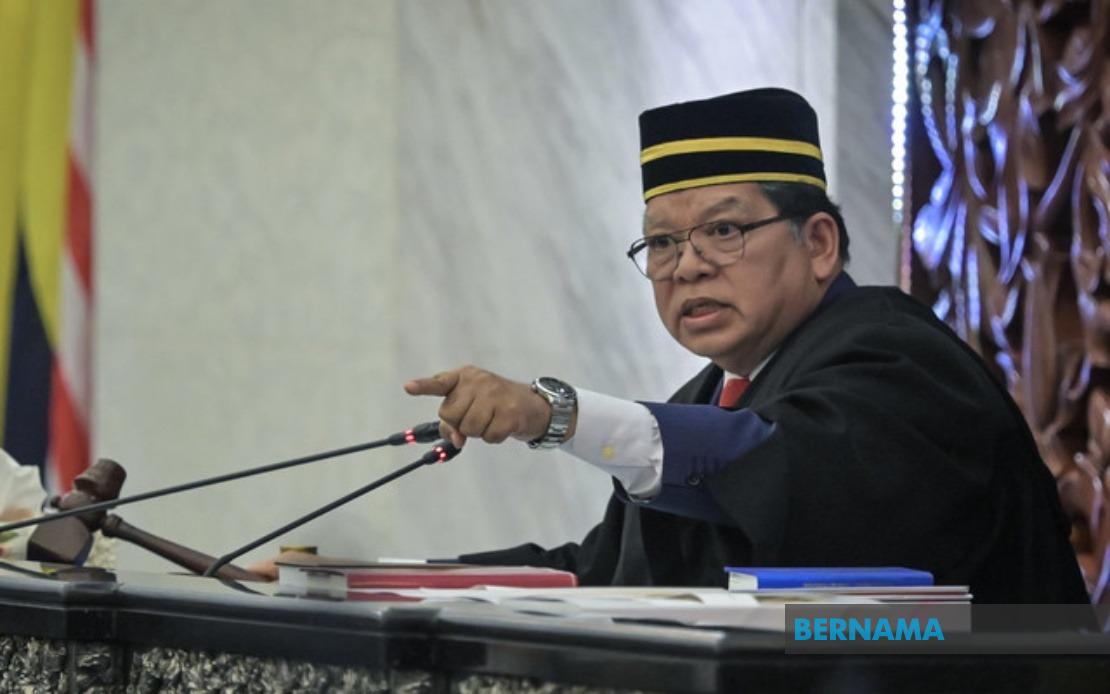
The Speaker of the Dewan Rakyat, Tan Sri Dr Johari Abdul, has issued a fresh appeal to Members of Parliament to prioritise their health by participating in regular screening initiatives, following an incident in which a lawmaker required emergency hospitalisation. The call came during proceedings on July 8, as the chamber prepared to commence its daily question-and-answer session, underscoring the timing and seriousness of the Speaker's health advocacy at the nation's legislative centre.
The catalyst for the Speaker's reminder was the hospitalisation of Kuala Terengganu MP Datuk Ahmad Amzad Hashim, who experienced a medical emergency while present in Parliament. The incident occurred during the ministerial question-and-answer period, an especially visible moment given that the MP was scheduled to participate in subsequent debate on the 2024 Annual Report of the Human Rights Commission of Malaysia. His urgent transfer to the National Heart Institute (IJN) underscores the unpredictable nature of serious health events and their potential to strike even within the controlled environment of the legislative chamber.
Speaker Johari's intervention reflects a broader institutional commitment to preventive healthcare among Malaysia's 222 lawmakers. The annual health screening programme for MPs has operated since 2023 under a collaborative framework involving the Ministry of Health, creating a structured pathway for early disease detection among this demographically diverse group. The programme represents a systematic approach to occupational health, acknowledging that MPs—many of whom balance demanding constituencies, lengthy parliamentary sittings, and extensive travel—face particular stress-related health risks.
The Speaker articulated the public health rationale underlying the initiative with considerable clarity. Early detection of medical conditions enables prompt intervention and allows legislators to adopt preventive strategies, whether through lifestyle adjustment, pharmaceutical management, or timely clinical treatment. This preventive orientation aligns with global best practices in occupational health, where screening programmes have demonstrated measurable benefits in reducing morbidity and mortality among high-stress professional populations. For a legislature where members often work late into the evening and maintain gruelling parliamentary schedules, such programmes address a genuine occupational health vulnerability.
Parliament as an institution has taken the position that MP health matters for institutional continuity and effectiveness. A legislature operating below full capacity due to member absences caused by preventable or poorly managed health conditions faces functional challenges. Beyond institutional considerations, however, the Speaker's appeal rests on a humanitarian foundation: that no MP should face medical crisis that could have been identified and managed earlier through screening. This reflects an implicit recognition that parliamentary duties, while important, should not come at the cost of personal health or family wellbeing.
The collaboration between the Dewan Rakyat and the Ministry of Health demonstrates inter-institutional coordination on a health matter affecting the federal government's senior legislative body. Ministry commitment signals that health authorities view MP screening as a legitimate public health priority, particularly given the age profile of Parliament and the prevalence of non-communicable diseases in Malaysia's adult population. The partnership also provides administrative efficiency, allowing MOH resources and expertise to reach a concentrated population of national policymakers.
Speaker Johari's public acknowledgement of those MPs who have already participated in screening carries implicit social pressure—a gentle nudge toward compliance through recognition of conscientious peers. This approach leverages informal institutional norms alongside formal programme structures. In Malaysian parliamentary culture, where collegial relationships and respect for institutional processes carry weight, such recognition functions as soft incentive for broader uptake among MPs who might otherwise view health screening as optional or peripheral to their core duties.
The incident involving Datuk Ahmad Amzad Hashim also raises questions about parliamentary medical preparedness. That an MP required emergency transport to IJN while attending Parliament suggests that while screening programmes address prevention, the institution may benefit from examining on-site medical capabilities and emergency response protocols. For a diverse legislature containing members across a wide age range, immediate access to medical resources within Parliament could serve as a complementary safety measure to upstream screening initiatives.
For Malaysian MPs generally, the message carries particular relevance given regional health trends. Non-communicable diseases including cardiovascular conditions, diabetes, and hypertension increasingly affect working-age professionals across Southeast Asia. Malaysia's own health statistics reflect rising prevalence of such conditions, particularly among older demographics and those in high-stress occupations. An MP population, which skews toward middle age and older, likely mirrors or exceeds national prevalence rates for these conditions.
The Speaker's call also implicitly acknowledges that health risks do not pause for parliamentary business. MPs cannot simply defer medical care until the parliamentary recess, particularly if screening might identify asymptomatic or early-stage conditions. The visibility of this reminder, issued from the Speaker's chair before the assembled chamber, elevates health screening from administrative programme to institutional priority—a message likely to resonate more powerfully with MPs than routine correspondence from parliamentary administration.
Beyond Parliament itself, the Speaker's intervention sends a signal about government's positioning on preventive health. At a time when Malaysia faces rising healthcare costs and growing disease burden, visible promotion of screening programmes by senior government figures—especially from within Parliament itself—contributes to cultural normalisation of proactive health engagement. When MPs themselves are visibly screened and encouraged to prioritise prevention, it reinforces messaging that reaches Malaysian households through multiple channels of influence and authority.
The institutional response to Datuk Ahmad Amzad Hashim's hospitalisation, rather than being confined to expressions of concern, has been leveraged as a teachable moment for the broader MP community. This reflects mature institutional learning: that individual medical events can highlight systematic vulnerabilities and prompt preventive action. As Parliament operates in an increasingly demanding environment—with longer sittings, complex legislative agendas, and mounting social demands on individual MPs—ensuring that legislators themselves model and participate in health-preserving practices becomes both a moral obligation and a practical institutional necessity.

