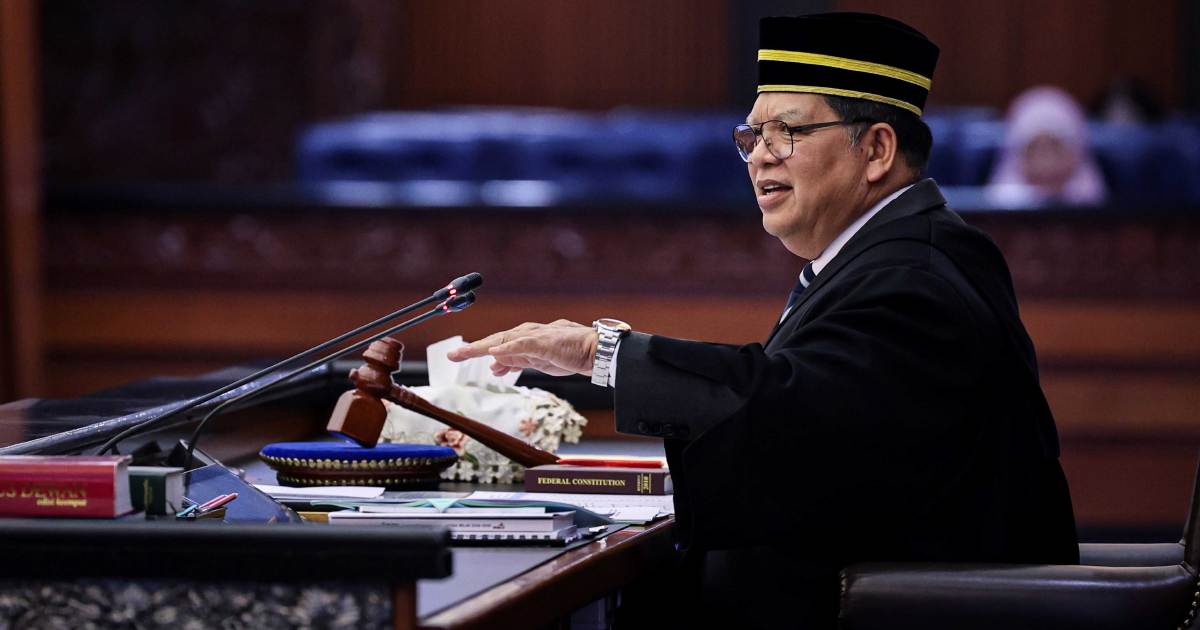
Malaysia's Dewan Rakyat Speaker Tan Sri Johari Abdul has issued a clear directive to all members of parliament, reminding them of their fundamental obligation to maintain attendance during legislative sessions unless they have legitimate grounds for absence. The admonition reflects ongoing concerns about maintaining parliamentary decorum and ensuring adequate representation during debates and voting procedures that shape the nation's laws and policies.
Parlamentary attendance stands as one of the most basic yet critical responsibilities of elected representatives. When MPs absent themselves from sittings without approval, they undermine the very foundation of democratic accountability and legislative efficacy. The Speaker's intervention signals a commitment to upholding these standards at the highest institutional level, particularly as Malaysia continues to navigate complex political circumstances that demand full engagement from lawmakers across all political divides.
The emphasis on valid reasons for absence carries particular significance given Malaysia's recent political volatility. Coalition shifts, defections, and minority administrations have made legislative arithmetic increasingly precarious. Each vote, each debate, and each parliamentary session carries heightened consequence when margins of support remain narrow. Absences that might be considered minor inconveniences in stable political environments become strategic considerations in fragmented parliaments, where the presence or absence of individual members can determine legislative outcomes.
Under parliamentary rules, members are entitled to request leave for genuine circumstances including illness, official duties, family emergencies, and pre-approved absences. The Speaker's reminder does not prohibit legitimate reasons for missing sittings but rather discourages the casual or politically motivated non-attendance that occasionally characterises parliamentary proceedings. This distinction proves essential for protecting both individual rights and institutional integrity.
From a Malaysian perspective, public trust in parliamentary institutions has faced tests in recent years as various political actors have employed parliamentary tactics—including boycotts and strategic absences—as negotiating tools. Citizens expect their elected representatives to show up and conduct the nation's business, not use legislative sittings as instruments in factional political disputes. The Speaker's statement serves to reinforce that parliament exists primarily to serve the people's interests rather than factional advantage.
For Southeast Asian democracies grappling with similar challenges around legislative engagement, Malaysia's approach offers useful lessons. Strong institutional enforcement of attendance expectations helps preserve parliamentary dignity and prevents the chamber from becoming a forum for political theatre rather than substantive governance. Other regional parliaments facing comparable pressures have found that clear rules, consistently applied, strengthen rather than weaken political institutions.
The Speaker's authority to monitor and comment on parliamentary conduct derives from his constitutional role as guardian of the House's procedures and traditions. When members persistently absent themselves without valid justification, it affects committee work, legislative scrutiny, and the deliberative capacity of parliament itself. The backlog of bills awaiting consideration and the volume of constituency matters requiring legislative attention leave little room for members who treat parliamentary duties casually.
In practical terms, the reminder extends to all members regardless of their political affiliation or government status. Government MPs must demonstrate commitment to legislative business by attending sessions where their support proves necessary for legislative programmes. Opposition members carry equal responsibility to participate in debate and scrutiny that forms the cornerstone of meaningful democratic oversight. The Speaker's neutral position requires him to maintain these standards uniformly across all parliamentary groupings.
The timing of such reminders often correlates with observed patterns of absenteeism during particular sessions. Parliamentary observers have occasionally noted that attendance rates fluctuate depending on anticipated contentious votes or less engaging legislative business. The Speaker's directive addresses this selective engagement, asserting that parliamentary service demands consistent commitment rather than selective participation based on political convenience.
For Malaysia's democratic maturation, cultivating a culture of parliamentary responsibility matters significantly. As the nation develops more sophisticated party systems and political coalitions evolve, maintaining core institutional standards becomes increasingly important. MPs who view parliament primarily as a venue for making occasional political statements rather than a workplace requiring regular diligent attendance undermine the institution's effectiveness and public credibility.
Moving forward, this reminder may encourage administrative improvements in how absences are tracked and documented, potentially leading to greater transparency in parliamentary attendance records. Public disclosure of attendance patterns would enable constituents to assess whether their representatives prioritise legislative work, information increasingly sought by engaged voters seeking to evaluate their MPs' commitment and performance.
The Speaker's intervention reflects broader global conversations about parliamentary quality and member engagement. Legislatures worldwide struggle with maintaining attendance standards while respecting legitimate reasons for absence. Malaysia's approach, emphasising clear expectations while acknowledging valid circumstances, represents a balanced framework for institutional governance.
Ultimately, Tan Sri Johari Abdul's reminder serves as an institutional call to order, reaffirming that parliament functions effectively only when members treat their roles with appropriate seriousness. This foundational principle underpins democratic accountability and the legitimacy of legislative decisions affecting millions of Malaysians.