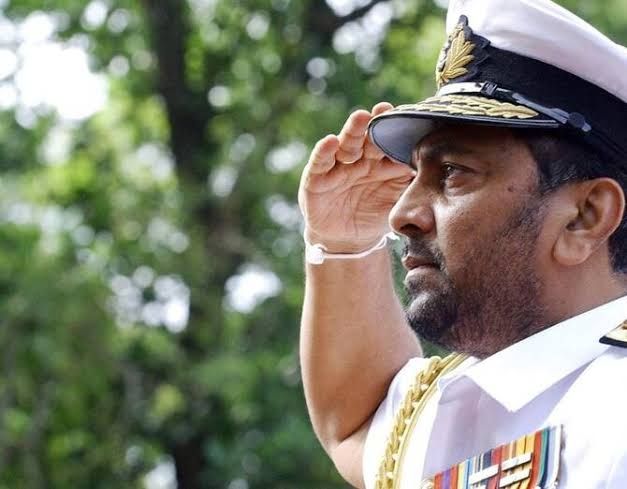
Sri Lanka's anti-corruption authorities have detained Admiral of the Fleet Wasantha Karannagoda, 73, following allegations that he improperly enabled the recruitment and international training of Yoshitha Rajapaksa, the son of former president Mahinda Rajapaksa. The arrest on Friday represents a significant development in the island nation's intensifying campaign against high-level graft and alleged misconduct by members of the Rajapaksa political dynasty.
The Bribery Commission's case centres on events from 2006, when Yoshitha Rajapaksa joined the navy despite lacking the standard qualifications required for entry to the service. According to the commission's statement, Karannagoda, who held the position of navy commander at that time, made a deliberate decision to circumvent established recruitment protocols to facilitate the younger Rajapaksa's enlistment. The investigation has also extended to cover the arrangement of overseas training at Dartmouth, Britain's prestigious naval college, raising questions about how such placements were authorised and funded.
Karannagoda's military career spanned a critical period in Sri Lanka's history. He served as navy commander throughout the final stages and immediate aftermath of the country's three-decade conflict with Tamil separatists, a war that concluded in 2009. His tenure encompassed some of the most contentious military operations in modern Sri Lankan history. In recognition of his long service, he was promoted to the rank of admiral of the fleet in 2019, though he currently holds no active position within the naval hierarchy.
The arrest of Karannagoda is not confined to the recruitment matter alone. British authorities imposed sanctions on him in March 2025 following investigations into alleged serious human rights violations and extrajudicial killings during his command. Additionally, he faces conspiracy to murder charges related to the deaths of eleven young men between 2008 and 2009. These charges, which were initially dismissed in October 2021 under the presidency of Gotabaya Rajapaksa—Mahinda's younger brother—have since been reinstated following political changes in Colombo.
The resurrection of charges against Karannagoda reflects a broader shift in Sri Lanka's political landscape. President Anura Kumara Dissanayake, who assumed office in September 2024, campaigned explicitly on a platform of accountability and pledged to pursue unresolved high-profile crimes and corruption cases that had previously been shelved. Since taking power, his administration has accelerated investigations and prosecutions of figures connected to the Rajapaksa family and their wider political network, signalling a departure from the leniency extended during the preceding administration.
Yoshitha Rajapaksa himself remains entangled in multiple legal proceedings. The 38-year-old was arrested last month in connection with the Dartmouth training arrangement, with prosecutors alleging he misappropriated state funds for his own naval education. He is currently out on bail pending trial. In a parallel case, investigators are scrutinising his acquisition of residential property, as he has failed to provide satisfactory explanations for the sources of income used to finance the purchase. When questioned, Yoshitha claimed the funds derived from the sale of gemstones gifted by his grand-aunt, a narrative undermined by the grand-aunt's own inability to account for how she had originally obtained the precious stones. This lacuna in the provenance narrative has drawn further investigative attention.
The case against Yoshitha represents one of several criminal matters targeting the Rajapaksa household and associated individuals. Multiple family members and their associates have accumulated various charges spanning corruption, financial impropriety, and conduct-related offences. These matters have languished in the court system for years, with little progress during the period when the family remained politically influential. The change of administration has injected new momentum into stalled proceedings and created space for dormant investigations to advance.
Gotabaya Rajapaksa, Mahinda's brother and himself a former president, has come under intensified scrutiny in recent weeks. Authorities imposed a foreign travel ban on him last month as investigators explore his alleged involvement in the 2019 Easter Sunday bombings, coordinated suicide attacks that resulted in 279 deaths across churches and hotels in Colombo and other cities. The imposition of travel restrictions suggests that investigative bodies now regard him as a material person of interest in this high-casualty terrorism investigation.
The timing and sequencing of these developments underscore the political realignment occurring in Sri Lanka. Under the previous administration, oversight mechanisms were either dormant or actively protective of the Rajapaksa family. The elevation of Gotabaya Rajapaksa to the presidency in late 2021 effectively shielded family members from prosecution, resulting in the suspension of charges against figures like Karannagoda. The electoral victory of Dissanayake and his coalition has fundamentally altered these dynamics, restoring institutional independence to investigative and prosecutorial bodies that had been compromised or constrained.
For regional observers, the unfolding situation in Sri Lanka carries implications extending beyond the island. The sequence of arrests and prosecutions demonstrates the vulnerability of political figures when patronage networks dissolve and democratic institutions regain operational autonomy. It also highlights the fragility of rule-of-law protections in South Asian contexts, where legal proceedings can be weaponised or shelved depending on the political alignment of those in power. The outcome of these cases will influence perceptions of whether Sri Lanka's new administration can meaningfully address institutional decay and establish durable accountability frameworks.
The investigation into Karannagoda and related proceedings will test the commitment of Dissanayake's administration to judicial independence and the pursuit of cases involving powerful figures without regard to political cost or international pressure. The involvement of international dimensions—British sanctions and training at British institutions—adds a layer of external scrutiny that may influence the trajectory of these matters. As proceedings advance through Sri Lanka's courts, observers across Southeast Asia will be monitoring whether genuine accountability emerges or whether these cases become mired in procedural delays and political manoeuvring characteristic of post-conflict societies grappling with historical injustices.

