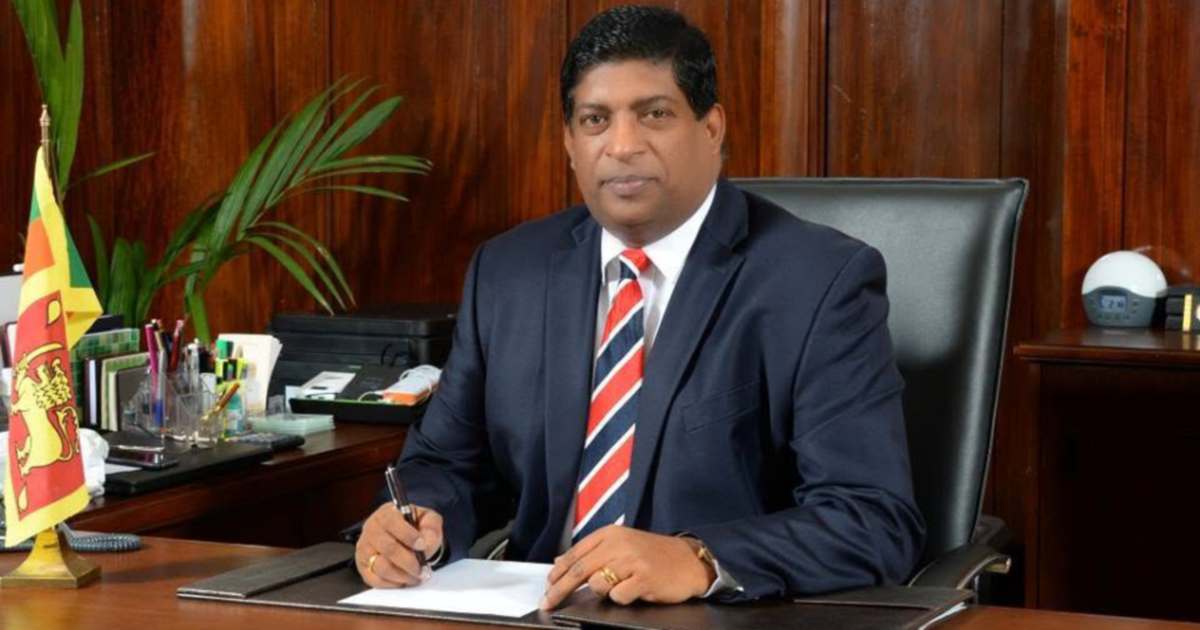
Ravi Karunanayake, who previously held the position of finance minister in Sri Lanka's government, has been taken into custody following allegations that he directed public funds towards paying workers employed in his private enterprises. The arrest was announced by Sri Lanka's principal anti-corruption agency, reflecting an intensification of efforts to investigate financial misconduct among high-ranking former officials.
The arrest represents a notable moment in Sri Lanka's ongoing battle against corruption within state institutions. Karunanayake, a prominent political and business figure, faces serious accusations centring on the improper deployment of government resources for personal or private business purposes. Such cases involving former cabinet ministers are particularly significant in nations where governance standards have been questioned, and they often attract considerable public and international scrutiny.
The timing of this action carries broader implications for Sri Lanka's institutional framework. The country has faced persistent challenges related to fiscal transparency and accountability, particularly following economic crises that have strained public finances and eroded confidence in government stewardship. Prosecuting former senior officials demonstrates the anti-corruption body's resolve to hold powerful figures answerable, though critics often note that such investigations typically proceed at a measured pace.
For Malaysian observers, the case offers instructive parallels with anti-corruption efforts within ASEAN. Both Malaysia and Sri Lanka have grappled with high-profile cases involving political and business elites accused of financial impropriety. The mechanisms employed by these nations—specialised anti-corruption agencies, asset investigations, and public accountability processes—reflect shared concerns across the region about governance standards and the misuse of public authority for private gain.
The alleged mechanism of the misconduct is particularly noteworthy. Rather than accusations of straightforward embezzlement, Karunanayake is alleged to have used governmental channels to effectively subsidise his private workforce. This practice, sometimes termed "salary redirection" or disguised privatisation of public funds, represents a sophisticated form of financial misconduct that blurs the boundaries between official duty and personal enrichment. Such arrangements can persist undetected for extended periods because they often appear, superficially, as legitimate administrative transfers.
The broader economic context matters significantly here. Sri Lanka's recent financial difficulties have elevated public concern about how state resources are managed. Citizens and observers have become increasingly attuned to evidence of misappropriation, particularly when state expenditures appear disproportionate to economic output or when public services experience shortfalls despite budgetary allocations. Any revelation of funds diverted for improper purposes intensifies public anger about wasted resources during periods of economic hardship.
Institutionally, the arrest underscores the independence and credibility of Sri Lanka's anti-corruption apparatus, assuming the investigation proceeds transparently and fairly. When such agencies demonstrate capacity to investigate figures regardless of political stature, it strengthens public confidence in institutional integrity—a crucial factor for economic recovery and foreign investment decisions. Conversely, if investigations are perceived as selective or politically motivated, they risk undermining the anti-corruption mission itself.
For the regional perspective, developments in Sri Lanka's governance framework carry weight across South and Southeast Asia. Investors, multilateral institutions, and neighbouring states pay attention to how nations handle senior-level financial wrongdoing. The outcomes of such investigations influence assessments of country risk, institutional stability, and the predictability of policy implementation. Strong anti-corruption enforcement can enhance a nation's standing, while perceived weakness or selective prosecution damages it.
Karunanayake's previous tenure as finance minister adds complexity to the case. Former ministers often retain networks and influence within bureaucratic structures, which can complicate investigations. Simultaneously, their prior access to official systems and knowledge of financial procedures may have facilitated the alleged misconduct. The prosecution must therefore navigate both procedural challenges and potential obstacles to gathering comprehensive evidence.
The investigation's progression will likely centre on financial documentation tracing fund flows from government accounts to private entities, employee records establishing the employment relationship, and communications demonstrating deliberate direction of public resources. Such cases typically require meticulous forensic accounting and coordination among multiple state institutions, extending timelines but potentially yielding durable convictions.
Broader questions about accountability standards also emerge from this development. How consistently do anti-corruption bodies pursue similar allegations against other officials? Are procedures applied uniformly regardless of political affiliation or tenure? Malaysian readers, familiar with comparable controversies domestically, recognise that answers to such questions significantly influence public perception of institutional impartiality and effectiveness.
The case also highlights ongoing tensions within post-crisis governance environments. Nations recovering from economic dysfunction frequently face pressure to prosecute historical wrongdoing while simultaneously maintaining political stability and attracting investment. Sri Lanka must balance these competing imperatives as investigations proceed. How officials, particularly in the financial sector, are held accountable will send signals about the seriousness of reform commitments.
Ultimately, Karunanayake's arrest signals that no position, however senior, offers automatic immunity from investigation. Whether this translates into sustained institutional reform or represents an isolated action will become apparent as the case progresses through judicial channels. For regional observers assessing governance trends across South Asia, the outcomes will provide important insights into evolving standards of official accountability and the robustness of anti-corruption mechanisms.

