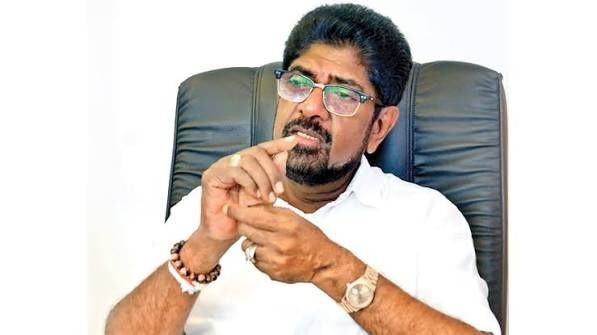
Sri Lankan law enforcement has taken into custody Keheliya Rambukwella, a former government minister, following an investigation into the disappearance of a priceless historical artefact from the palace grounds of Veera Parakrama Narendrasinghe, the island's last Sinhala king who held power until 1739. The ornate granite moonstone in question forms part of an ancient ceremonial threshold at the palace entrance and carries immense cultural significance to the nation's heritage. The Commission to Investigate Allegations of Bribery or Corruption (CIABOC) has formally accused Rambukwella of complicity in removing the valuable carved rock from its historic location in December 2022, while simultaneously hamstringing police efforts to pursue the investigation at that time.
The moonstone theft represents a brazen removal of a nationally significant artefact during a period when Sri Lanka's governance structures were under severe strain. The timing of the theft—occurring during the country's financial implosion—raises troubling questions about institutional breakdown and the exploitation of chaos by those in positions of authority. CIABOC's formal allegations specify that Rambukwella "conspired, aided and abetted" the theft during his tenure as a sitting minister, indicating a deliberate abuse of his official standing to facilitate the crime. Beyond the cultural loss involved, the incident underscores how elite corruption flourished amid Sri Lanka's economic catastrophe, with powerful figures apparently leveraging their positions to plunder national treasures.
The arrest extends Rambukwella's mounting legal troubles, which already encompass separate and serious charges relating to his stewardship of the health ministry. Prosecutors have documented that while serving as health minister, he authorised the purchase of what was presented as a critical cancer treatment drug that was discovered to be nothing more than water—a criminal negligence that potentially cost lives during a period when Sri Lankans faced an acute pharmaceutical shortage. This fraudulent procurement scheme has ensnared multiple senior health ministry officials in legal proceedings, suggesting a systematic pattern of corruption within the sector rather than isolated misconduct.
The counterfeit medicine scandal must be understood within the context of Sri Lanka's unprecedented economic collapse. When the nation defaulted on its US$46 billion foreign debt in April 2022 following an official bankruptcy declaration, the healthcare system descended into crisis as essential medications became inaccessible. Instead of implementing emergency procurement protocols or seeking legitimate international assistance, ministry officials under Rambukwella's leadership appear to have authorised the purchase of fraudulent pharmaceutical products. This decision, made at a moment when Sri Lankans desperately needed life-saving treatments, represents a catastrophic betrayal of public trust during the country's darkest economic hour.
Rambukwella now faces the additional accusation of misappropriating state resources for private enrichment, specifically by employing six individuals using government funds for his personal business ventures. This charge reveals a pattern of using ministerial office as a vehicle for personal financial gain, a form of corrupt practice that compounds the seriousness of his alleged involvement in the moonstone theft. The convergence of multiple serious allegations—institutional theft, obstruction of justice, counterfeit pharmaceutical fraud, and misuse of state funds—paints a portrait of an official who systematically exploited his governmental position for personal and material benefit.
For Malaysia and other Southeast Asian nations, the Rambukwella case serves as a cautionary example of how governance failures cascade during economic crisis. When countries experience the kind of systemic stress that accompanied Sri Lanka's 2022 bankruptcy, institutional safeguards often erode. Officials facing economic pressure, diminished government capacity, and weakened oversight mechanisms may calculate that criminal conduct carries acceptable risk. The moonstone theft, occurring amid national financial collapse, demonstrates how crises create opportunities for grand larceny disguised within broader institutional chaos.
The investigation and prosecution of Rambukwella may indicate that Sri Lanka's anti-corruption machinery, despite the country's broader institutional challenges, retains some independent investigative capacity. CIABOC's willingness to pursue a high-ranking former minister signals that accountability mechanisms have not completely collapsed. However, the delays in these proceedings—the theft occurred in December 2022, with the arrest following months later—highlight how slow-moving and resource-constrained Sri Lankan justice processes remain even for high-profile cases involving elite defendants.
The broader significance of this case extends beyond individual criminal liability. The theft and subsequent cover-up reflect how national heritage becomes vulnerable when political institutions deteriorate. Countries experiencing severe economic stress must particularly guard their cultural patrimony, as officials under financial duress may view national treasures as negotiable assets. The moonstone's removal from its ancient ceremonial position represents not merely a property crime but a cultural wound, eliminating public access to a tangible connection with pre-colonial Sri Lankan monarchy and sovereignty.
As Sri Lanka begins the protracted process of economic recovery following its IMF bailout negotiations, anti-corruption efforts will prove essential to rebuilding international credibility and domestic institutional legitimacy. High-profile prosecutions of former officials, particularly those from the previous government administration, signal commitment to accountability. Yet prosecutions alone prove insufficient without systemic reforms addressing the institutional vulnerabilities that permitted such corruption to flourish during the crisis period. Rambukwella's case will be closely watched both within Sri Lanka and across the South Asian region as an indicator of whether the country's political elite can face meaningful legal consequences for abuse of office.

