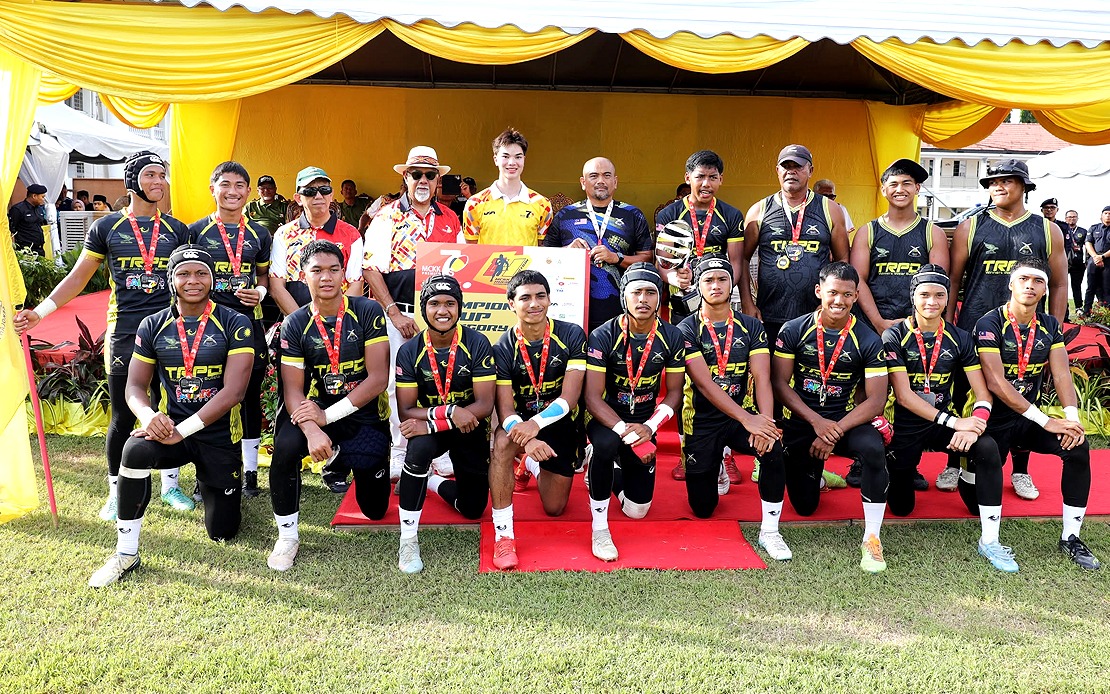
Malaysia's elite school rugby programme demonstrated its competitive depth this week when Sekolah Sukan Malaysia Pahang successfully defended the MCKK Premier 7s rugby championship, overcoming rival Sekolah Sukan Tunku Mahkota Ismail in a tightly fought Cup final. The 19-14 scoreline at Malay College Kuala Kangsar's field in Perak reflected the intensity of a contest between two institutions that have come to dominate Malaysian school rugby in recent seasons. The result marked SSMP's second consecutive title, as the Pahang-based academy claimed the coveted NJ Ryan Trophy once again, establishing themselves as the tournament's benchmark team.
The intensity displayed during the championship match underscored the quality of rugby being developed in Malaysia's specialist sports schools. SSMP's ability to maintain their advantage throughout the contest demonstrated not only superior conditioning but also tactical discipline under pressure. The narrow margin of victory—just five points—suggests that SSTMI mounted a determined challenge that kept the outcome in doubt until the final moments. That both finalists have now met in successive years' Cup deciders points to a concentration of talent within Malaysia's school rugby ecosystem, where these two institutions appear to have pulled ahead of their peers.
The significance of SSMP's repeat triumph extends beyond silverware. Consecutive championships validate the academy's coaching philosophy and player development systems, signalling to other schools what consistency and investment in rugby infrastructure can achieve. For Malaysian rugby administrators, the dominance of these two schools raises important questions about competitive balance and whether broader participation opportunities might need expansion to prevent an undue concentration of success within a narrow cluster of institutions.
Beyond the headline competition, the Premier 7s tournament's supporting divisions revealed the breadth of talent emerging through Malaysian schools. SMK Tun Hussein Onn captured the Plate title with a 24-19 win against Sekolah Sultan Alam Shah, demonstrating that high-quality rugby extends beyond the elite final. This result was particularly noteworthy given the quality required to reach that competition level, suggesting a robust secondary tier of school programmes developing capable players.
The Bowl category saw SMK Hosba overcome SMK Syed Sirajuddin by a 17-12 margin, while the Shield competition produced the tournament's most emphatic result when MRSM Balik Pulau dismantled Royal Military College with a commanding 22-0 shutout victory. These lopsided scores in lower divisions are not uncommon in age-grade rugby, where physical development disparities can create significant performance gaps. However, they may also indicate that some participating schools require more structured coaching support or player development pathways to compete at equivalent levels.
The 14th edition of the MCKK Premier 7s tournament carries considerable historical weight within Malaysian school rugby. Over more than a decade, the competition has evolved into one of the nation's premier sporting fixtures, attracting significant participation from schools nationwide. The longevity and prestige of the tournament has made it a crucial pathway for players progressing toward senior representative opportunities and, potentially, professional rugby careers. The calibre of rugby on display reinforces why Malaysian rugby stakeholders view school-level development as foundational to the sport's future health in the country.
Raja Datuk Seri Azlan Muzaffar Shah, representing the Perak sultanate, presided over the closing ceremony and prize distribution. The participation of royal patrons in school sporting events underscores the cultural significance these competitions hold within Malaysian society. Such ceremonial endorsement elevates these tournaments beyond mere school fixtures into events of statewide importance, lending legitimacy and attracting wider attention from the sporting public.
For SSMP, retaining the trophy places them in rare company among Malaysian school rugby programmes. Building and sustaining competitive excellence across multiple years requires consistent recruitment of talented players, retention of quality coaching staff, and institutional commitment to rugby development. The academy's success pattern suggests they have mastered these fundamentals better than rivals, creating an environment where young players can develop their skills systematically and reach peak performance levels by competition time.
The implications for Malaysian rugby extend beyond school-level competition. The talent pipeline visible in tournaments like the MCKK Premier 7s directly feeds into university rugby, national age-group teams, and eventually senior representative rugby. SSMP's sustained excellence means the wider rugby community benefits from observing how a specialist school programme structures its player development, trains its teams, and competes effectively. Coaches and administrators from other institutions invariably examine champion teams for methodological insights they might adapt to their own programmes.
Looking toward future editions, the tournament organisers may need to consider structural adjustments if competitive balance concerns emerge from SSMP and SSTMI's continued dominance. Introducing salary caps on foreign coaching expertise, rotating competition formats, or establishing development pathways for emerging schools could maintain viewer interest while distributing success more widely. However, such measures must balance fairness with preserving the tournament's credibility as a genuine championship where the best-prepared teams prevail.
The MCKK Premier 7s rugby tournament ultimately reflects Malaysian school sport at its most vibrant. The commitment displayed by participating institutions, the quality of rugby showcased across multiple divisions, and the ceremonial significance accorded to the competition demonstrate rugby's growing foothold in Malaysia's secondary education system. With SSMP now firmly established as the current standard-bearer, their challenge moving forward will be achieving a third consecutive title—a feat that would cement their legacy as one of Malaysian school rugby's greatest programmes.

