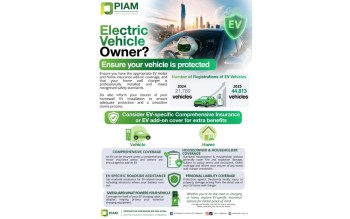
The General Insurance Association of Malaysia (PIAM) has moved to reassure property owners that standard fire and home insurance policies provide protection against fire damage stemming from electric vehicle charging equipment, regardless of the ignition source. The clarification comes in response to growing concerns about EV safety following a recent charging-related fire in Cheras that caused significant property destruction, prompting questions about the adequacy of existing coverage under typical Malaysian insurance policies.
According to PIAM Chief Executive Officer Chua Kim Soon, standard policies covering specified perils include fire-related losses arising from any source of ignition, provided policyholders have not engaged in fraud, deliberate misconduct, or breached policy conditions. This distinction is crucial for Malaysian homeowners who have invested in EV charging infrastructure at their residences, as it establishes that the source of the fire—whether electrical, mechanical, or environmental—does not automatically disqualify a claim from consideration. However, this fundamental protection operates within the parameters established by individual policy documentation, meaning the precise coverage available depends on specific terms, conditions, and any applicable exclusions written into each policy agreement.
The classification of EV charging equipment within insurance frameworks differs depending on installation type and permanence. Hard-wired chargers that are permanently affixed to a property's electrical system typically fall within the 'buildings' section of a home insurance policy, treated similarly to other fixed fixtures and fittings like air conditioning units or water heaters. Conversely, portable or temporarily installed charging cables generally do not qualify under standard home policies and instead require coverage through specialised electric vehicle motor insurance products or supplementary add-on packages that insurers have developed specifically for this emerging risk category. This dual classification system reflects the insurance industry's distinction between permanent property modifications and removable equipment.
Insurers maintain specific expectations regarding risk management and electrical safety standards as preconditions for coverage validity. Homeowners are obligated to exercise reasonable care in maintaining their electrical systems and installations, adhering to established safety protocols. When processing claims arising from EV charging incidents, insurers will typically scrutinise official investigation reports from fire departments and other authorised bodies to establish whether the loss resulted from accidental causes or preventable circumstances such as deliberate arson, policy fraud, or failure to comply with statutory electrical codes. This investigative approach helps insurers distinguish between legitimate claims and fraudulent submissions, while also identifying instances where homeowners have installed uncertified or unlawful electrical modifications that violated building regulations.
Chua emphasised that homeowners must proactively inform their insurance providers whenever they install permanent EV charging equipment, as failure to do so may create administrative complications during claims assessment. Declaring electrical upgrades serves multiple purposes within the insurance relationship: it ensures that the property's declared sum insured accurately reflects current replacement value following the modification, maintains transparency between policyholder and insurer, and establishes clear documentation of when the equipment was installed. This notification process essentially creates an official record that protects both parties by preventing disputes about whether coverage applies to a specific installation. Additionally, homeowners should conduct regular reviews of their policy sum insured to confirm it captures the full rebuilding costs of their property, accounting for any structural improvements, new fixtures, or technological upgrades that have increased the property's replacement value since the policy was originally underwritten.
Given the inherent risk that fire or electrical malfunctions in EV charging systems could spread to neighbouring properties, particularly in densely configured residential settings such as terrace houses or apartment towers, property owners face secondary liability exposure requiring careful consideration. The standard public liability component of house owner policies in Malaysia typically provides a baseline limit of RM50,000, which many insurance specialists consider modest given potential damage to adjacent units and the associated reconstruction costs. PIAM advised policyholders that optional liability extensions are readily available from most major insurers, allowing residents to increase their public liability limit substantially and thereby establish a more robust financial buffer against claims from neighbours suffering fire damage or other losses originating from their EV charging installation.
The emergence of EV ownership as a mainstream phenomenon across Malaysian households has exposed potential gaps in insurance coverage frameworks designed during the pre-electric vehicle era. Electric vehicle owners now require a comprehensive assessment of both their motor insurance policies—which cover the vehicle itself and its battery system—and their residential property policies, which protect the charging infrastructure and the home structure itself. Many existing policies contain ambiguities or unstated assumptions about EV-related risks that may create coverage disputes at the moment a claim arises. By conducting a thorough policy review proactively, EV owners can identify any shortcomings and either select policies with explicit EV coverage or negotiate additional coverage options with their insurers, ensuring they maintain uninterrupted protection across all aspects of their electric vehicle ownership experience.
The guidance from PIAM represents an important step toward clarifying the responsibilities and protections applicable to the rapidly expanding cohort of Malaysian EV owners who have invested in home charging solutions. As electric vehicle adoption accelerates nationwide—supported by government incentives and improving charging infrastructure—insurance providers and policyholders alike must develop clearer expectations about coverage obligations and risk management practices. The Cheras incident serves as a timely reminder that even modern, purportedly safe technology can malfunction, underscoring the value of maintaining adequate insurance protection and adhering to installation standards that comply with Malaysian electrical codes and manufacturer specifications.

