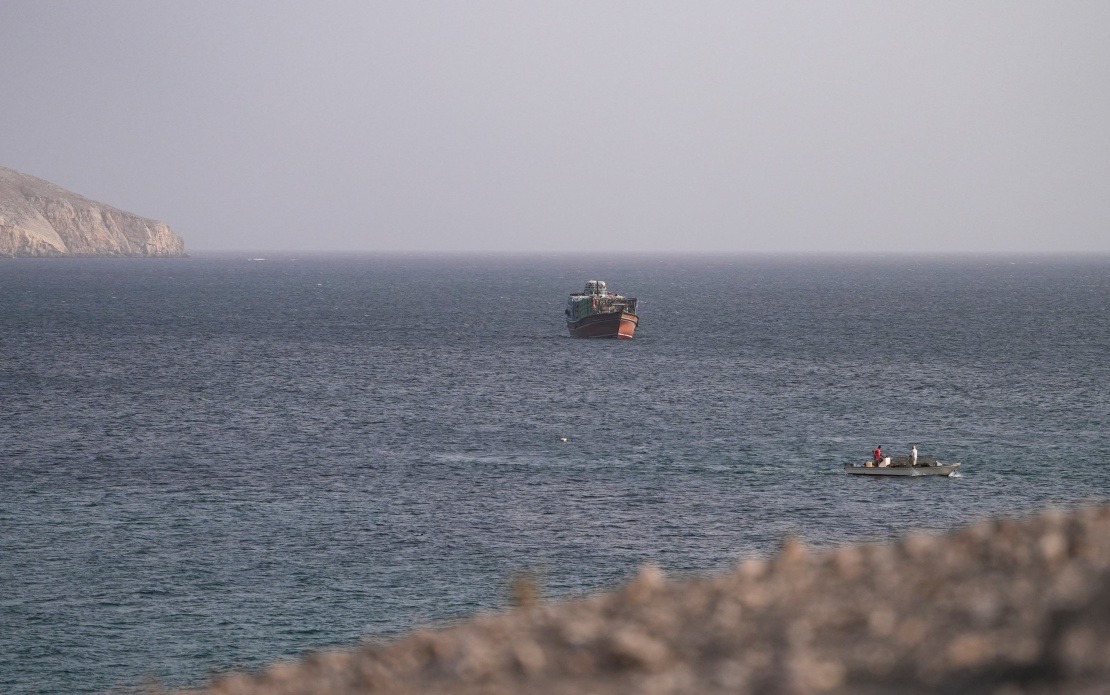
Iran's Foreign Ministry Spokesperson Esmaeil Baqaei has declared that the Strait of Hormuz will never revert to its pre-conflict status, rejecting assumptions that a recent agreement with Oman represents a straightforward reopening of the critical shipping lane. In a televised address on Sunday, Baqaei emphasised that ongoing negotiations between Tehran and Muscat are focused instead on establishing a structured framework for maritime safety, fundamentally reshaping how one of the world's most important energy chokepoints will operate going forward. The statement reflects Iran's intention to reshape regional dynamics following the ceasefire that took effect on April 8.
The diplomatic engagement between Iran and Oman carries particular weight given their shared status as the Strait's two coastal nations, conferring upon them joint stewardship responsibilities over maritime security. Baqaei outlined that substantive discussions commenced immediately after the ceasefire took hold, progressing through multiple rounds of consultations. The prominence assigned to these talks was underscored when Iran's Foreign Minister Abbas Araghchi prioritised Oman as the destination for his first international visit following the conflict, where conversations with the Sultan of Oman and his foreign minister specifically addressed Strait governance and secure maritime passage establishment. This diplomatic prioritisation signals that Tehran views the maritime question as central to its post-conflict regional positioning.
A memorandum of understanding governing the conflict's conclusion incorporates specific provisions regarding future Strait management. Under its fifth clause, Iran is positioned as the primary administrator of the waterway but must conduct this role in consultation with Oman and through dialogue with broader regional actors. This arrangement represents a significant departure from prior maritime governance structures and reflects Iran's insistence on formalised consultation mechanisms rather than unilateral control. The inclusion of regional dialogue requirements indicates acknowledgment that Strait stability carries implications extending beyond bilateral Iranian-Omani relations.
During the initial weeks of ceasefire implementation, Baqaei noted that the northern route through the Strait functioned securely with regular shipping transit. However, this operational success remained incomplete, as an undisclosed military incident occurred before the agreed 30-day period for restoring full pre-conflict maritime conditions could conclude. This interruption signals that restoring normalcy faces obstacles beyond the bilateral negotiations, potentially reflecting broader regional tensions and the involvement of external actors. The incomplete restoration period underscores the fragility of emerging maritime arrangements in contested geopolitical territory.
Crucially, the envisioned maritime corridor emerging from Iranian-Omani discussions will constitute neither the current northern nor southern routing options. Instead, Baqaei indicated that negotiations aim to produce a novel pathway determined through bilateral agreement, suggesting a deliberate reconstruction of maritime infrastructure that reflects new security priorities and political realities. This reconfigured route represents not merely logistical adjustment but potentially a symbolic assertion of changed power dynamics and security considerations. For Malaysian readers focused on regional stability, this recalibration could affect shipping patterns and insurance frameworks affecting Southeast Asian vessels transiting the waterway.
Baqaei stressed that conversations with Muscat remain explicitly bilateral and do not invite third-party involvement, despite the memorandum's references to regional dialogue. This apparent tension between bilateral negotiations and broader regional consultation suggests Tehran seeks to manage the maritime question through direct coastal-state coordination while maintaining discretion regarding security mechanisms. The emphasis on excluding external parties reflects concern that outside intervention could constrain Iran's operational flexibility or impose constraints incompatible with Tehran's security preferences. For regional observers including Malaysia, which maintains significant maritime commerce interests, this gatekeeping approach raises questions about transparency and non-littoral state involvement in governance frameworks.
Iranian officials have framed future Strait management as inseparable from security safeguards preventing exploitation by parties previously engaged in aggression against Iran. This construction places security restrictions at the conceptual centre of maritime governance, elevating political and military considerations above purely commercial efficiency. Baqaei articulated that establishing appropriate mechanisms requires full respect for Iranian sovereign rights, implying that the new maritime framework must incorporate elements protecting Iran's defence capabilities and strategic autonomy. This security-centric approach diverges markedly from conventional maritime governance emphasising neutrality and commercial freedom of navigation.
Baqaei's remarks also encompassed warnings directed toward the United States, rejecting suggestions that Iran had sought to curtail military activities. The spokesperson characterised American officials' claims as historically unfounded and dismissed Donald Trump's social media statements as psychological warfare components. This defensive posturing reflects Iranian perceptions of sustained external pressure despite the ceasefire arrangement, indicating that Tehran views the broader geopolitical environment as remaining confrontational. The invocation of past military interventions emphasises Iran's historical experience with external aggression, shaping its approach to future security arrangements.
The Iranian Foreign Ministry spokesperson emphasised that Tehran's strategic decisions proceed from national interest and security calculations rather than responding to international pressure, threats, or media campaigns. This assertion of decision-making autonomy carries implications for how external actors, including regional powers and global traders, should anticipate Iranian behaviour regarding Strait governance. Baqaei's suggestion that past experience demonstrates threats prove ineffective in altering Iranian positions constitutes a warning against coercive diplomacy approaches. For Malaysia and other regional trading nations dependent on Hormuz access, this inflexibility suggests that maritime arrangements will reflect Iranian preferences even when contested internationally.
Baqaei further warned that nations providing military bases, logistical support, or direct cooperation to parties initiating aggression against Iran would face consequences and bear responsibility for such actions. This categorical statement extends accountability beyond direct combatants to encompassing state facilitators, potentially affecting regional alignment patterns. The explicit framing of support provision as grounds for Iranian retaliation carries implications for how allied states calculate their strategic postures. For Southeast Asian nations maintaining diverse diplomatic and security relationships, this warning suggests careful navigation of great power competition around the Persian Gulf remains necessary.
The spokesperson indicated that Iran had received diplomatic contact from Bulgaria, the United Kingdom, and Ukraine within the preceding 24 hours, suggesting ongoing international engagement despite confrontational rhetoric. These diverse diplomatic channels indicate that despite tensions with Western powers, sustained dialogue mechanisms persist. The very fact of enumerated diplomatic contacts suggests that outside states recognise the necessity of maintaining communication channels even amid disagreement over Strait governance and broader Middle Eastern conflicts. This diplomatic activity, though limited in scope, indicates that complete international isolation of Iran remains impractical despite political differences.
Baqaei concluded by decoupling the bilateral Iranian-Omani maritime understanding from the broader question of whether the Strait ultimately achieves fully restored commercial operations. This formulation suggests that the Strait's future status remains contingent upon broader regional security developments and American actions rather than being permanently settled through the current bilateral discussions. The conditional framing implies that Strait normalisation remains reversible depending on external developments, preserving Tehran's flexibility to adjust maritime access policies responsive to geopolitical shifts. For Malaysian exporters and shipping companies, this conditionality introduces uncertainty into long-term maritime planning and suggests that Hormuz passage stability cannot be assumed indefinitely despite current negotiations.

