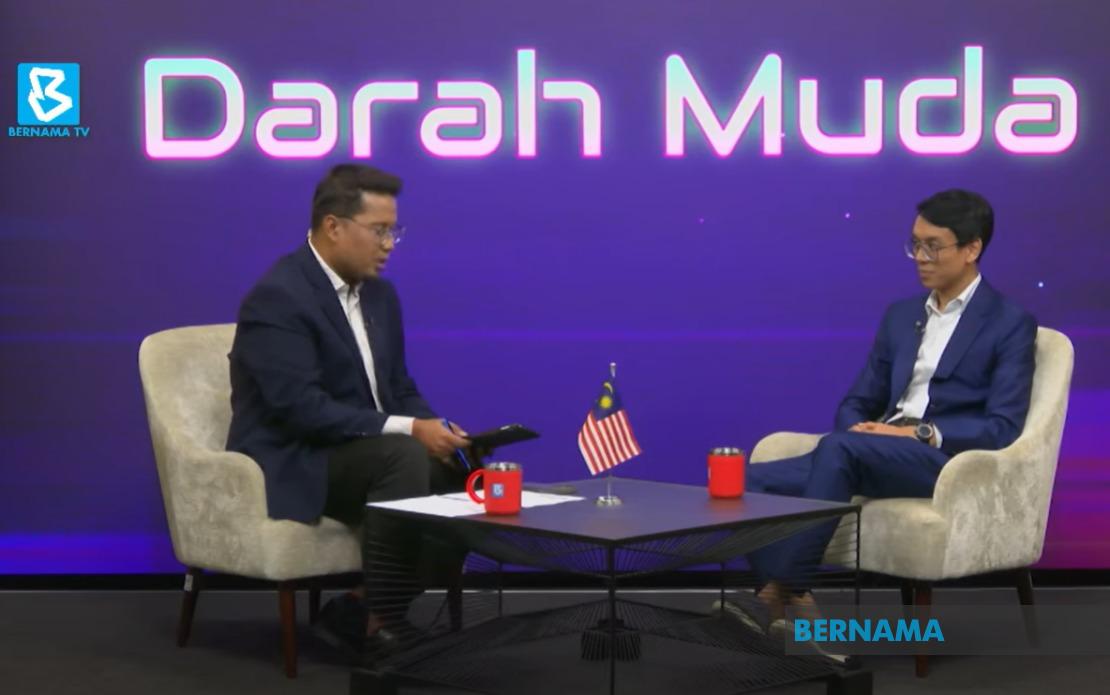
The mounting scrutiny surrounding Lembaga Tabung Haji (TH) has prompted fresh calls for institutional overhaul, with governance specialists emphasizing that technical competence at senior levels and rigorous oversight mechanisms represent the surest defence against repeating the financial mismanagement documented in a damning Royal Commission of Inquiry report. Mohamad Ikmal Ahmad Nordin, a data analyst attached to IKRAM Malaysia's Economic Agenda Team, has articulated a compelling argument that the institution's recovery hinges not merely on reactive reforms but on fundamental structural realignment that addresses the root causes of systemic dysfunction rather than merely treating symptoms.
The Royal Commission report exposed significant governance lapses at TH, a hybrid institution responsible simultaneously for managing pilgrimage logistics and administering what functions as a savings scheme for Malaysian Muslims. Mohamad Ikmal emphasizes that this dual mandate creates a complex institutional challenge requiring specialized expertise across multiple domains. When an organization manages both religious and financial affairs, he suggests, the leadership structure must reflect the distinct competencies demanded by each function, rather than concentrating authority in individuals whose background may lie primarily in administrative or religious spheres.
Critically, Mohamad Ikmal identifies deficient financial literacy among senior TH leadership as a foundational problem requiring urgent remediation. An institution managing substantial pooled deposits and investment portfolios demands decision-makers with demonstrable capability to interpret financial statements, understand capital markets dynamics, and evaluate portfolio performance. The analyst argues that TH's leadership cadre should ideally comprise fund managers, professional accountants, and actuaries—individuals whose training equips them to navigate complex financial operations with appropriate rigour and oversight. This represents a departure from the historical practice of assigning institutional leadership based on political patronage or administrative seniority divorced from relevant technical qualification.
The governance framework itself requires substantial strengthening to prevent recurrence of the problematic fund flows identified in the RCI investigation. Mohamad Ikmal advocates for continuation of comprehensive forensic audits across TH-related companies and subsidiary entities, viewing these investigations as essential to establishing clear accountability chains and identifying actors who may have benefited from institutional irregularities. His perspective reflects concern that incomplete investigations could create conditions for future misconduct, as individuals or entities implicated in past impropriety might retain capacity to distort institutional operations. Forensic audits, though resource-intensive and potentially politically uncomfortable, serve as documentary safeguards against selective accountability and institutional amnesia.
The institutional separation of religious and financial functions represents another element of Mohamad Ikmal's reform vision. He proposes that responsibility for Hajj logistics and Islamic religious dimensions could be delegated to the Department of Islamic Development Malaysia (JAKIM) or relevant ministerial portfolios, while TH itself refocuses on its primary function as a financial intermediary managing deposits and investments. This functional delineation would permit specialized expertise to flourish within each domain, rather than requiring a single institutional apex to synthesize incompatible skill sets. Such reorganization would clarify accountability lines and permit performance evaluation against clearly defined mandates.
The implications for younger Malaysians deserve particular emphasis, as demographic trends suggest growing numbers of Muslims from Generation Y and Generation Z aspiring toward Hajj performance. These cohorts face unprecedented economic pressures—housing costs, education debt, and inflation—that make accumulating the substantial capital required for pilgrimage increasingly challenging. A Tabung Haji restored to operational efficiency and guided by forward-looking financial innovation could pioneer schemes specifically calibrated to younger depositors' circumstances, potentially through flexible contribution schedules, performance-linked returns, or integrated savings products bundled with financial education components.
Monetary restoration alone cannot rebuild the social contract between TH and depositors fractured by revelations of institutional mismanagement. Public confidence represents intangible capital essential to mobilizing voluntary savings, and confidence restoration requires demonstrable commitment to governance standards exceeding bare minimum regulatory compliance. Leadership must communicate a vision that transcends the institution's administrative apparatus, articulating how reformed TH serves depositors' spiritual and financial aspirations through transparent, competently executed operations. This communication challenge falls particularly heavily on new leadership tasked with reversing perception of TH as an institution vulnerable to internal predation.
The recovery trajectory adopted by TH since earlier financial stress represents an incomplete answer to the institutional pathologies documented by the RCI. Mohamad Ikmal's intervention suggests that procedural reforms and capital restructuring, while necessary, cannot substitute for fundamental realignment of leadership composition and institutional purpose. The analyst's emphasis on comprehensive investigation rather than compartmentalized problem-solving reflects sophisticated understanding that institutional corruption typically represents systemic phenomena rather than isolated lapses attributable to individual bad actors. Addressing surface manifestations while preserving underlying dysfunctional structures creates conditions for recurrence through different mechanisms.
Movement toward Mohamad Ikmal's reform vision requires political consensus that institutional effectiveness and fiduciary responsibility should supersede other considerations in leadership selection. Malaysian governance has historically struggled with this principle, particularly regarding bodies with substantial financial assets and religious symbolism. Tabung Haji's restored credibility will ultimately depend on whether policymakers demonstrate willingness to prioritize technical competence and governance discipline over patronage considerations or factional allegiances. The institution's mission—enabling Muslims of modest means to undertake sacred pilgrimage—possesses sufficient moral weight to justify insisting on leadership and governance standards reflecting that importance.

