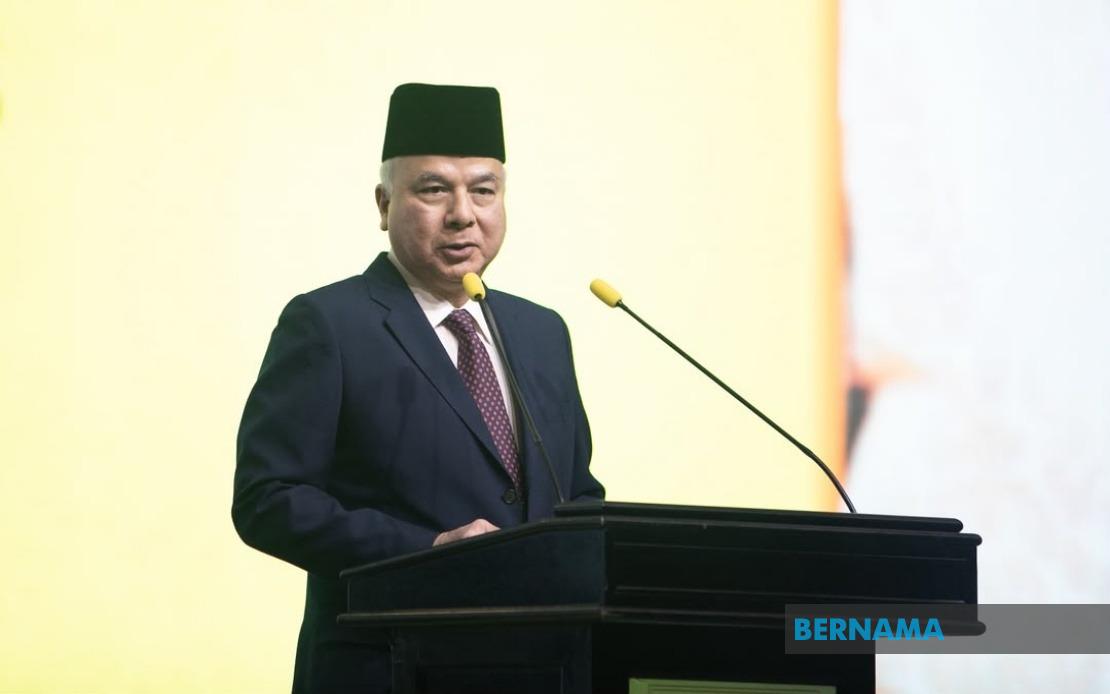
At the 8th World Conference on Islamic Thought and Civilisation in Ipoh, Sultan Nazrin Shah, the Sultan of Perak, delivered a pointed message about what truly determines national success. The monarch argued that even countries blessed with abundant natural resources, a skilled workforce, and rich cultural heritage will ultimately disappoint their citizens if they neglect the foundational elements of good governance. His remarks highlighted a reality that resonates across Southeast Asia, where many nations face the challenge of translating potential into tangible progress for ordinary people.
The Sultan's vision of practical governance rested on several pillars. First among these is institutional strength—not institutions that depend on a single leader or political administration, but ones robust enough to outlast any individual or government. This distinction carries particular weight in Malaysia's context, where institutional independence has periodically come under strain. When institutions remain resilient and autonomous, they can serve as genuine checks on power and guardians of the public interest, rather than becoming extensions of whoever holds office at any given moment.
Transparency in how governments raise and spend public money forms the second pillar. Sultan Nazrin emphasized that citizens deserve confidence that their taxes and contributions genuinely serve the broader common good rather than private interests or narrow political agendas. This principle speaks directly to Malaysian concerns about spending accountability and resource allocation. A public that understands where money comes from and where it goes is far more likely to trust their government and participate constructively in national development.
Equally important is the impartial application of the rule of law, wherein no individual—regardless of wealth, status, or political connections—can escape accountability, and no person, however disadvantaged, is denied legal protection. This principle remains a work in progress across the region. When the wealthy or well-connected enjoy preferential treatment while the poor face the full force of legal penalties, the state's legitimacy erodes from within. The Sultan's insistence on equal application of law reflects Islamic principles of justice that should theoretically align with Malaysia's constitutional framework, yet frequently encounter practical obstacles.
Sultan Nazrin challenged a common misconception about political stability. Many assume that stable nations are those where disagreement is muted or suppressed, but he countered this by noting that some of the world's most stable democracies are simultaneously among the most contentious—precisely because they channel disputes through legitimate institutions rather than through violence or extrajudicial means. The difference lies not in the absence of debate but in the existence of agreed-upon rules for settling disagreements. When citizens trust that elections are fair, courts are impartial, and public office is not for sale, even heated political differences need not threaten national cohesion.
Conversely, instability emerges when the underlying institutional framework erodes. Once citizens lose confidence that the system is fundamentally fair, they cease investing in peaceful resolution and explore alternatives. The Sultan pointedly observed that the vulnerable suffer first when governance breaks down—the poor lack resources to navigate a corrupted system, the marginalized have no advocates within institutions that have ceased to function impartially, and the voiceless find that their concerns no longer register in a state consumed by factional competition. This observation carries urgent implications for Malaysia, where inequality and regional disparities remain significant concerns.
Budgets, in Sultan Nazrin's formulation, are moral documents as much as financial instruments. They reveal, with stark clarity, which groups a government genuinely prioritizes and which it treats as afterthoughts. A government that claims to champion the vulnerable while allocating disproportionate resources to elite interests reveals its true priorities through its budget, not its rhetoric. This framework invites Malaysian citizens to examine their own government's spending patterns and ask whether resources align with stated values—a valuable exercise in democratic accountability.
The Sultan also highlighted the role of the civil service as a bulwark of national unity. When public servants act impartially, dispensing services without regard to race, religion, or political affiliation, they embody the principle that the state exists to serve all citizens equally. Conversely, when the civil service becomes factionalised or politicised, the very infrastructure of national cohesion fractures. He noted that leaders who govern with genuine humility, listen before legislating, and recognize that their power is borrowed rather than owned achieve more durable loyalty and national pride than any slogan or campaign could generate.
On the economic front, Sultan Nazrin rejected the notion that development can or should occur in isolation. No nation, however talented or resource-endowed, prospers by closing itself to the world. Trade, investment, knowledge transfer, and technological exchange constitute the currents upon which modern prosperity flows. Malaysia's own success as a middle-income country has depended substantially on integration into global supply chains and cross-border investment. Cooperation between nations, between government and private enterprise, and between state institutions and civil society emerges as the essential operating condition for sustainable growth.
However, the Sultan introduced an important caveat: openness and cooperation must not become synonymous with dependency. Nations must retain the capacity to chart their own course and pursue their own strategic interests. History demonstrates that economies embracing open trade while simultaneously building resilient, diversified domestic industries substantially outperform those retreating into protectionism or over-relying on single sectors. This balance proves particularly relevant for Malaysia, which must decide how much foreign involvement to permit in strategic sectors while maximizing the benefits of global integration.
The Sultan's most distinctive contribution came in his discussion of Islamic finance as an underutilised mechanism for regional cooperation and development. Malaysia has spent decades positioning itself as a global hub for Islamic finance—from sukuk issuance to takaful to Syariah-compliant fund management. Yet, Sultan Nazrin argued, the true revolutionary potential of Islamic finance lies not merely in compliance with religious prohibitions on interest but in its distinctive philosophy of risk-sharing, asset-backing, and genuinely equitable participation in economic gains. If taken seriously, this philosophy could catalyse infrastructure investment across Muslim-majority nations, unlock financing for small and medium enterprises throughout the Organisation of Islamic Cooperation, and mobilize patient capital addressing critical development challenges from water security to renewable energy transition.
Sultan Nazrin's address ultimately presented governance and economic cooperation not as technical matters for specialists but as moral imperatives rooted in Islamic principle and universal human dignity. His emphasis on institutions that outlast individuals, on transparency and accountability, on balancing openness with autonomy, and on channelling disagreement through legitimate rather than violent means offers a framework applicable across Southeast Asia. For Malaysia specifically, his remarks invite serious reflection on whether current institutional arrangements sufficiently embody these principles and whether public resources are genuinely serving the common good or narrow interests.

