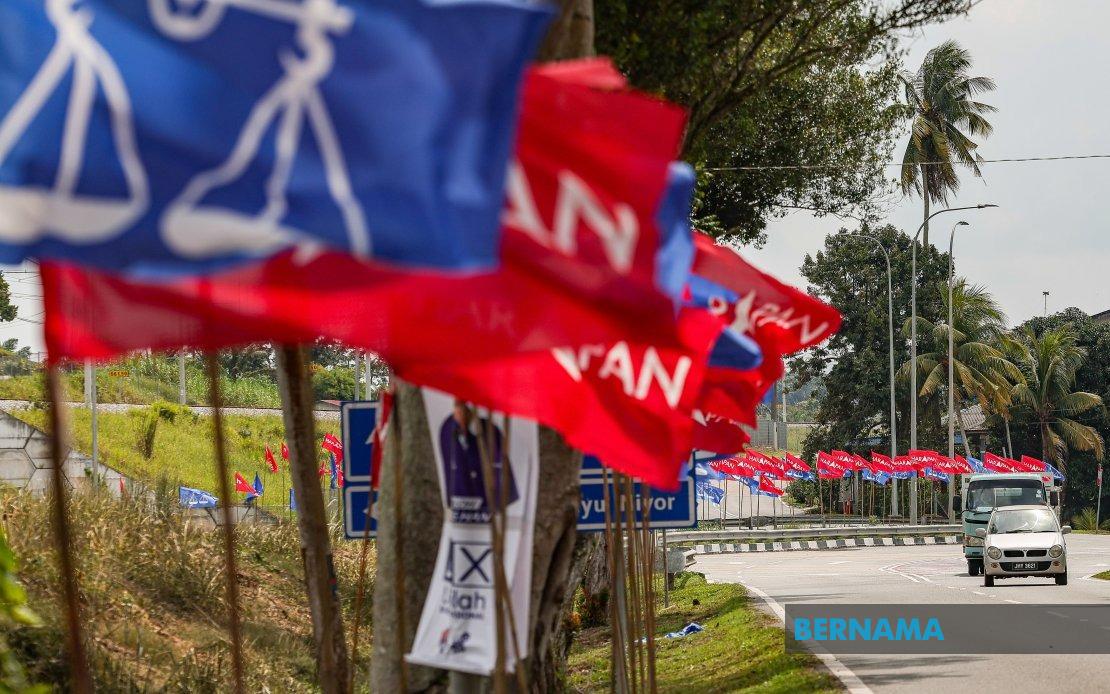
Pakatan Harapan's bid to regain the Larkin state seat hinges significantly on mobilising voter participation, according to candidate Suhaizan Kaiat, who argues that previous electoral outcomes underestimate the coalition's actual support base in the constituency. Speaking after engaging with residents in the urban Johor Bahru seat, Suhaizan expressed confidence that improved turnout during the 16th Johor state election on July 11 would fundamentally shift the contest in PH's favour, breaking a pattern established just two years ago when the incumbent wrested control from the opposition.
Suhaizan's optimism draws from historical performance data that suggests voter participation directly correlates with PH's competitiveness in Larkin. During the 2018 General Election, the then-Bersatu-backed Datuk Mohd Izhar Ahmad captured the seat for the broader opposition alliance, demonstrating that BN's hold could be broken under conditions of robust civic engagement. This historical baseline, Suhaizan contends, provides a more reliable predictor of electoral potential than the 2022 state election result, when turnout languished at just 51 per cent—a figure significantly depressed by pandemic-related restrictions and voter caution.
The distinction Suhaizan draws between general and state elections carries practical weight for understanding Malaysian electoral behaviour. State contests, particularly those scheduled mid-term and amid ongoing political flux, typically draw fewer voters than general elections, which carry national significance and higher media saturation. The 2022 Johor election's unusually low participation reflected both the transitional nature of state polls and genuine COVID-19 concerns that kept portions of the electorate home. This explanation reframes the 2022 loss not as a decisive rejection of PH but as an artefact of suppressed turnout during exceptional circumstances.
PH's pathway to reclaiming Larkin extends beyond its traditional base, encompassing strategic calculations about voter migration from Bersatu. The recent deterioration in relations between Bersatu and PAS—its former coalition partner—has created political space for realignment, particularly among Bersatu's support base. Since Bersatu is not fielding a candidate in Larkin this election cycle, those voters sympathetic to the party face a binary choice between PH and BN. Suhaizan's invocation of PH's previous partnership with Bersatu aims to legitimise the idea that Bersatu supporters can ethically pivot toward PH without abandoning their earlier political loyalties.
The three-way contest shape adds complexity to Larkin's electoral mathematics. Incumbent Mohd Hairi Mad Shah, representing BN's UMNO component, will defend a majority of 6,178 votes earned in 2022—hardly an insurmountable lead in a constituency with demonstrated responsiveness to changing political winds. Alongside Suhaizan and Mohd Hairi, independent candidate Norsinah Abu contests under the Bersama banner, introducing a third option that could fragment opposition consolidation if PH fails to motivate its base effectively. This three-cornered structure means victory margins could compress significantly if turnout surges, as even modest Bersatu voter migration could prove decisive.
For Malaysian political observers, Larkin represents a microcosm of broader Johor electoral dynamics heading into this state poll. The state has emerged as a genuine battleground following the 2022 reversal that handed BN critical momentum during a period when the federal government shifted toward Perikatan Nasional's control. Larkin's shift from the Bersatu-aligned candidate in 2018 to BN in 2022 illustrated how volatile Johor's urban constituencies have become, responsive to national political currents and local organisational capacity in equal measure. The contest therefore extends beyond the seat itself, reflecting PH's ability to recover lost ground in a state where it once held substantial parliamentary representation.
Demographic and socioeconomic profiles of Larkin's electorate reinforce Suhaizan's turnout thesis. As an urban constituency encompassing significant portions of central Johor Bahru, Larkin encompasses younger voters, middle-class professionals, and working-class communities whose electoral participation varies substantially with perceived relevance and campaign intensity. These demographics typically show higher responsiveness to general elections, where national issues dominate discourse, than to state contests perceived as secondary. However, Johor's recent political turbulence—including transitions between federal governments and shifting state-level coalitions—has elevated state election salience, potentially driving participation upward from the depressed 2022 baseline.
Suhaizan's emphasis on voter turnout also implicitly acknowledges PH's organisational challenges in mobilising the base for state-level contests. Unlike general elections, which benefit from national campaign machinery, media attention, and clear ideological stakes, state polls require labour-intensive ground organisation and locally-resonant messaging. PH's ability to drive Larkin voters to the polls depends on whether its campaign apparatus in Johor has sufficiently recovered from the demoralisation that followed the 2022 defeat. Early engagement activities like those Suhaizan conducted suggest efforts to rebuild such machinery, though systemic effectiveness remains unproven.
The political context immediately surrounding this election also influences turnout projections. Tensions within BN itself, including friction between UMNO and MIC in certain constituencies, combined with Bersatu's marginalisation following its shift toward PAS and then Perikatan structures, create conditions where previously settled voters might question their commitments. Additionally, the performance of the current PH-led federal government in delivering on promises across economic management, corruption prosecutions, and institutional reform will shape voter moods. If PH can demonstrate tangible federal achievements and frame the state election as an opportunity to extend such work, turnout in Larkin and comparable urban seats could rise substantially above 2022 levels.
The July 11 election encompasses 56 state seats across Johor with 172 candidates contesting, making this a significant state-level contest that will reset the political balance in Malaysia's economically vital southern state. Early voting on July 7 will provide initial indicators of turnout patterns, offering PH and other contestants early warnings about whether mobilisation efforts are succeeding. For Suhaizan specifically, the coming week represents a critical campaign period where the message that voter participation determines electoral outcomes must translate into actual polling booth attendance. Should turnout exceed 60 or 65 per cent—the range Suhaizan implicitly targets—his optimism about Larkin could well prove prescient.

