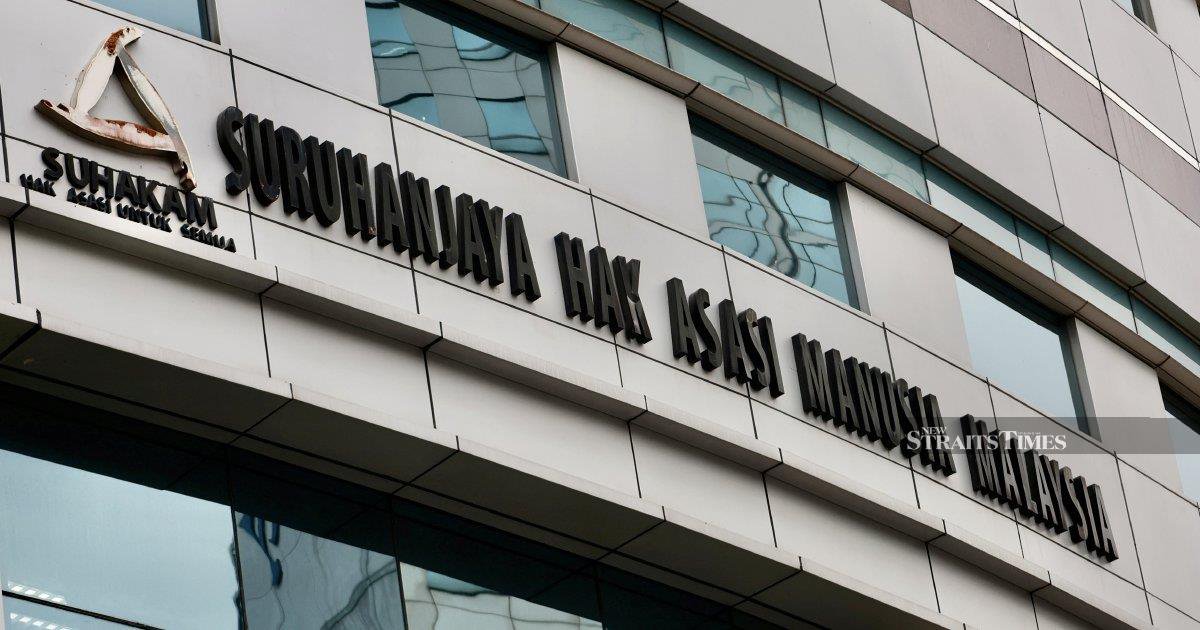
Malaysia's premier human rights watchdog, Suhakam, has registered serious alarm at the Court of Appeal's decision to preserve a freeze on judicial orders stemming from the High Court in connection with the involuntary disappearance of Pastor Raymond Koh. The commission's response underscores mounting frustration within civil society circles over procedural obstacles that continue to impede accountability mechanisms in one of the country's most prominent missing persons cases.
The appellate court's action to maintain the stay effectively halts the implementation of directives issued by the High Court, creating an indefinite suspension of investigative processes that Suhakam had hoped would advance towards closure. This procedural maneuver demonstrates how legal technicalities can be wielded to obstruct progress on cases involving allegations of state responsibility, a pattern that has drawn international scrutiny and domestic criticism from rights advocacy groups.
Pastor Koh's vanishing in February 2017 occurred under circumstances that have fueled persistent allegations of abduction by state agents, claims the government has consistently denied. Over six years after his disappearance, the case remains unresolved, leaving his family in a state of limbo whilst procedural wrangling in courts consumes precious time. The lengthening gap between alleged crime and resolution has become emblematic of broader challenges in Malaysia's justice system when confronting cases with sensitive political dimensions.
Suhakam's vocal concern reflects the commission's institutional mandate to champion accountability and transparency in matters touching fundamental liberties and bodily integrity. By articulating misgivings about the Court of Appeal's decision, the body signals to both the judiciary and executive that sustained judicial obstruction of investigative mechanisms carries reputational costs and contradicts Malaysia's international human rights commitments. Such public statements from a constitutionally mandated authority carry weight beyond mere rhetoric.
The stay mechanism itself—whilst a legitimate procedural tool within common law jurisdictions—becomes problematic when deployed indefinitely without clear pathways toward eventual resolution. Courts across Asia have grappled with balancing procedural rights against substantive justice needs, yet the duration and apparent permanence of freezes on investigation-related orders raises questions about whether procedural protections have evolved into de facto immunity shields. Observers note that comparable democracies typically impose temporal limits on such stays to prevent indefinite paralysis.
Forcing families into prolonged uncertainty whilst legal mechanisms stall represents a distinct harm beyond the original disappearance itself. The compounded suffering inflicted through bureaucratic delay extends emotional and financial strain across years, diminishing the practical value of eventual justice even if it materializes. International human rights bodies have increasingly recognized this phenomenon as a violation warranting specific remedies and prioritized court scheduling.
The case also illuminates broader concerns about enforced disappearances in Southeast Asia, where mechanisms of involuntary removal remain tools deployed across multiple jurisdictions. Malaysia's handling of the Pastor Koh matter shapes how domestic and international observers assess the country's commitment to investigating such allegations. The willingness to allow procedural freezes to persist sends signals that may influence behavior by potentially implicated parties and shapes regional discourse on accountability.
For Malaysian readers, particularly those from religious minority communities, the case resonates as a test of whether the legal system functions as a genuine forum for addressing state overreach. Religious liberty, bodily security, and the right to transparent investigation stand as foundational rights that transcend sectarian boundaries, yet their protection appears fragmented when procedures obstruct rather than facilitate fact-finding. Suhakam's intervention seeks to anchor these principles within visible institutional constraints on executive and investigative impunity.
The commission's expressed concern also reflects awareness that Malaysia's international reputation increasingly depends on demonstrating genuine willingness to investigate allegations of disappearance. Regional standing within ASEAN frameworks and standing before international mechanisms rest partly on credibility regarding accountability. Allowing procedural barriers to calcify into permanent investigation suspensions undermines these positioning efforts and provides ammunition to critics of Malaysian governance.
Moving forward, observers and stakeholders will scrutinize whether Suhakam's intervention catalyzes movement within the judicial system or whether procedural momentum continues its sluggish pace. The commission possesses limited enforcement authority but commands moral persuasion within Malaysia's civil society ecosystem and maintains standing to petition higher judicial forums. Whether such institutional pressure generates momentum toward investigation recommencement remains an open question, but Suhakam's amplified public concern signals that acceptance of indefinite investigative suspension faces expanding institutional resistance within Malaysia's accountability architecture.

