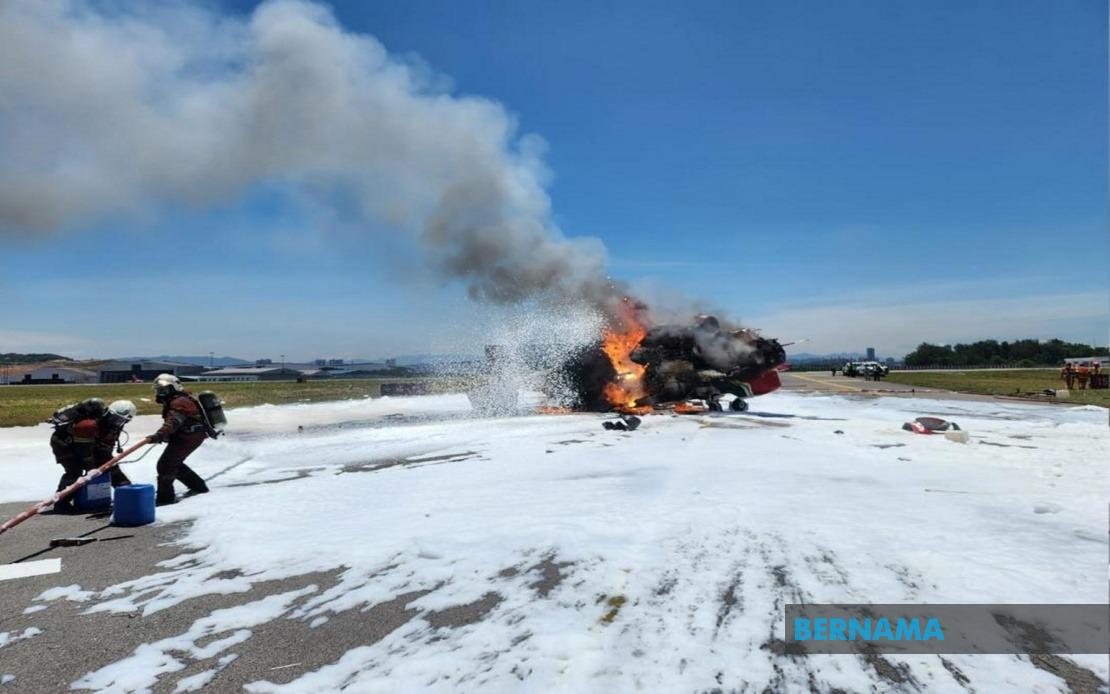
Sultan Abdul Aziz Shah Airport in Subang reopened its runway on Thursday afternoon following a serious incident involving a helicopter that caught fire during ground-based maintenance work. The aircraft had exploded while undergoing an engine run-up test, prompting authorities to temporarily suspend all flight operations as a precautionary measure. Within hours of the incident, the runway became serviceable again, allowing the airport to resume normal traffic flows and clear the backlog of delayed and diverted flights.
The incident unfolded at 12.28 pm when a Kamov KaV-32S helicopter, registered to a Ukrainian company, erupted in flames while parked at Taxiway Victor. The aircraft was undergoing routine maintenance that involved running the engines to verify their condition before returning to service. Four Ukrainian nationals—the pilot, co-pilot, and two additional crew members—were present during the test when the explosion occurred. One crew member sustained minor injuries from debris scattered by the blast, though the exact circumstances that triggered the fire remain under investigation by the relevant authorities.
The Malaysian Civil Aviation Authority (CAAM) moved swiftly to secure the airfield once the incident was reported. Capt Datuk Norazman Mahmud, the chief executive officer of CAAM, confirmed that all departures and arrivals were halted until the situation could be assessed and the runway cleared of potential hazards. The shutdown lasted approximately two hours and forty minutes, with the runway returning to operational status at 2.57 pm. This relatively brief closure prevented more extensive disruption to Malaysia's busiest secondary airport, which serves the Klang Valley region and handles a significant volume of domestic and regional traffic.
The temporary closure nonetheless had tangible consequences for passengers and airlines using the facility. Eight inbound flights destined for Subang were diverted to alternative airports, obliging passengers to travel onward by ground transportation or reschedule their journeys. Additionally, three departing aircraft faced delays as they awaited clearance to proceed once the runway reopened. Flight information display systems throughout the terminal building were updated with revised schedules as the situation evolved, keeping passengers informed of the changing operational status.
CAAM advised all travellers at the airport to consult directly with their respective airlines for the most current information regarding their specific flights. Airlines operating from Subang responded by notifying passengers of the disruption and reworking their schedules to accommodate the temporary closure. The coordination between airport authorities and carriers helped minimise passenger confusion, although some travellers experienced unexpected delays and the inconvenience of rerouting.
Sultan Abdul Aziz Shah Airport, located in the Subang district of Selangor, ranks among Malaysia's principal aviation hubs outside of Kuala Lumpur International Airport. The facility accommodates a diverse range of operations, including scheduled passenger services, cargo flights, and maintenance activities. The explosion at Taxiway Victor highlights the risks inherent in aircraft maintenance, even during seemingly routine procedures. Engine run-up tests, while essential for validating mechanical integrity, expose maintenance teams to potential hazards if equipment malfunctions or if safety protocols are not rigorously followed.
The incident raises broader questions about maintenance oversight and safety standards at Malaysian aviation facilities. While CAAM rapidly restored operations, the circumstances that caused the Kamov helicopter to catch fire warrant thorough investigation. Such incidents can provide valuable lessons for the aviation industry regarding procedural improvements, equipment inspection protocols, and emergency response coordination. The involvement of a foreign-registered aircraft and foreign crew also underscores the importance of ensuring that all operators at Malaysian airports comply with safety regulations regardless of their nationality or registration.
The quick restoration of runway operations demonstrated the effectiveness of the airport's emergency protocols and the responsiveness of ground personnel. However, the incident serves as a reminder of the importance of preventive maintenance and rigorous safety oversight. Airlines and maintenance organisations operating in Malaysia must ensure that their personnel are properly trained in hazard identification and that they maintain the highest standards of operational discipline during maintenance activities.
For the broader Malaysian aviation sector, this incident illustrates the interconnected nature of airport operations and the importance of maintaining robust safety cultures across all aviation activities. While the damage was contained and injuries were minimal, the temporary disruption underscored how incidents at secondary airports can have ripple effects throughout the transportation network. Passengers relying on Subang for their journeys experienced unexpected delays and inconvenience, highlighting the need for continuous vigilance in safety management.

