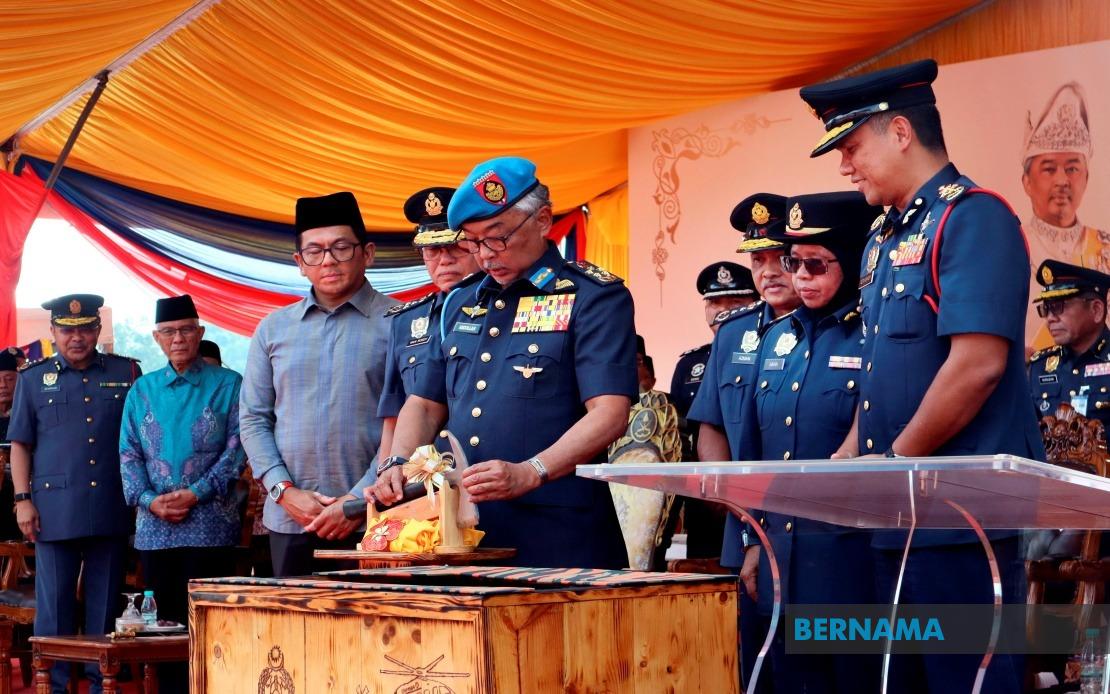
The Sultan of Pahang, Al-Sultan Abdullah Ri'ayatuddin Al-Mustafa Billah Shah, has publicly acknowledged the commitment of both federal and state administrations to channelling resources toward projects that directly enhance public welfare. Speaking during the official inauguration of the Sungai Lembing Fire and Rescue Station in Kuantan on July 2, the monarch highlighted the significance of sustained government investment in infrastructure that addresses genuine community needs, particularly in disaster prevention and emergency response capabilities.
Flood mitigation has emerged as a priority concern in Pahang, a state historically vulnerable to seasonal inundation. Sungai Lembing holds particular strategic importance in this context, as it frequently registers the earliest warning signs of flooding during monsoon seasons and serves as a predictive barometer for water levels throughout the Kuantan basin. The Sultan's specific acknowledgment of flood prevention work in this locality underscores the interconnected nature of watershed management across the state, where interventions in upstream areas have downstream implications for urban centres and residential communities.
In remarks delivered at the station opening, attended by Pahang Menteri Besar Datuk Seri Wan Rosdy Wan Ismail, Deputy Housing and Local Government Minister Datuk Aiman Athirah Sabu, and Deputy Economy Minister Datuk Mohd Shahar Abdullah, the Sultan emphasised the financial burden associated with such infrastructure undertakings. Large-scale flood defence systems, dyke reinforcement, and drainage improvement schemes require substantial capital deployment that stretches across multiple budget cycles, demanding disciplined fiscal prioritisation from state and federal treasuries alike.
Beyond acknowledging completed projects, the Sultan directed authorities to deepen waterways adjacent to populated zones, a directive that reflects growing recognition of nature-based and engineering solutions to flood risk. Deepening river channels increases water conveyance capacity, allowing them to accommodate higher volumes during intense precipitation without breaching their banks. This preventive approach aligns with modern disaster risk reduction philosophy, which emphasises structural mitigation over post-disaster recovery, though it requires significant upfront investment and ongoing maintenance.
The monarch also extended substantial recognition to personnel within the Fire and Rescue Department, characterising their work as demonstrating unwavering commitment across diverse emergency scenarios. From structural fires to vehicular accidents and natural disasters, these frontline responders operate continuously under demanding conditions, often with limited public visibility or appreciation for the risks they undertake. The Sultan's observation about regularly witnessing news of rescue operations emphasises how thoroughly embedded emergency services have become in daily civic life, responding to crises that threaten both lives and livelihoods.
Notably, Al-Sultan Abdullah has cultivated a personal practice of visiting disaster sites to provide royal acknowledgment and comfort to affected populations. This hands-on approach distinguishes his tenure and demonstrates commitment to understanding community vulnerabilities firsthand rather than relying solely on bureaucratic briefings. The Sultan's intention to continue such field visits, whenever circumstances and schedules permit, signals that the monarchy views direct engagement with emergency services as integral to institutional responsibility and public assurance.
The Sultan further identified a critical service gap in remote areas, proposing the establishment of a volunteer fire brigade in Kampung Bantal, Ulu Tembeling within Jerantut district. Geographic isolation in Pahang's interior regions means response times for professional emergency services can extend significantly, potentially transforming minutes into life-threatening delays during medical emergencies or structural fires. Community-based volunteer systems, common in rural regions across Southeast Asia, complement professional services by providing immediate initial response while awaiting professional teams, though they require training, equipment provisioning, and sustainability mechanisms.
For Malaysian observers, these remarks encapsulate tensions inherent in managing a large, geographically diverse state with significant urban and rural populations. Pahang's terrain encompasses everything from Kuantan's coastal industrial areas to interior hill country, each presenting distinct infrastructure and emergency response challenges. The Sultan's balanced recognition of both completed investments and remaining gaps suggests a nuanced understanding of ongoing development imperatives.
The flood mitigation emphasis also carries broader significance for Southeast Asia, where climate variability increasingly stresses water management systems. Monsoon intensification and localised extreme rainfall events have prompted regional governments to reassess drainage infrastructure adequacy and watershed management practices. Pahang's initiatives, while state-level, contribute to Malaysia's broader climate adaptation dialogue and may offer lessons for neighbouring jurisdictions facing comparable hydrological challenges.
Furthermore, the Fire and Rescue Station opening represents infrastructure expansion aimed at reducing emergency response latency in Kuantan and surrounding municipalities. Enhanced emergency response capabilities correlate with improved public safety outcomes, reduced property damage, and improved confidence in government's capacity to manage crisis situations. For a state balancing development ambitions with risk management, such facilities constitute essential public goods requiring sustained investment beyond initial construction.
The Sultan's remarks also implicitly reinforce intergovernmental coordination frameworks between federal and state authorities. Flood mitigation, emergency services deployment, and infrastructure development require alignment between multiple administrative levels, necessitating regular dialogue, resource sharing agreements, and integrated planning. The acknowledgment of both levels' contributions suggests these mechanisms are functioning, though perpetual challenges in resource allocation and implementation sequencing remain.
Looking forward, the proposals articulated during this ceremony—deepening rivers, establishing volunteer fire brigades in remote areas, and continuing strategic government investment—indicate that Pahang's approach to disaster resilience remains iterative rather than static. As climate variability intensifies and populations concentrate in vulnerable localities, such adaptive management becomes increasingly critical to protecting communities and sustaining development trajectories.

