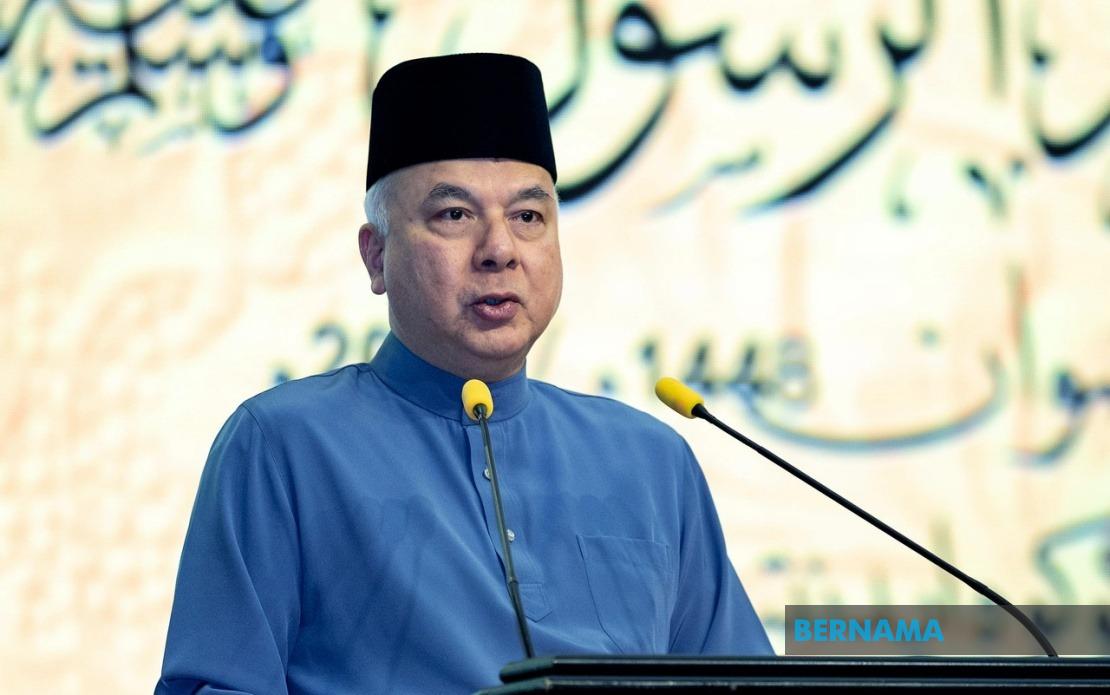
The Sultan of Perak, Sultan Nazrin Shah, has sounded an alarm about mounting fractures within the Muslim community, attributing these divisions to competing political agendas, divergent interpretations of Islamic teaching, ethnic tensions and individual self-interest. Speaking at a Maulidur Rasul celebration in Ipoh, the Sultan articulated concerns that resonate across Malaysia's diverse Muslim population, which encompasses numerous schools of Islamic thought and cultural traditions. His intervention comes at a time when Malaysia's political landscape remains fractured between competing coalitions, each claiming to represent Muslim interests while pursuing different policy directions and ideological positions.
The Sultan identified a troubling pattern in which the pursuit of personal advancement—whether through influence, status, material wealth or comfort—has begun to corrode the foundational values of Islamic brotherhood. This observation carries particular weight in contemporary Malaysia, where intra-Muslim political competition has intensified following recent electoral shifts and coalition realignments. The Sultan's implicit critique suggests that short-term political calculations increasingly take precedence over long-term community cohesion, a dynamic that has become evident in disputes over everything from religious administration to economic opportunities within Muslim-majority sectors.
According to the Sultan, Muslim leadership across the political, organisational and grassroots levels must fundamentally recalibrate their priorities. Rather than allowing partisan competition to consume energy and resources, these actors should deliberately de-escalate theological and political disputes while channeling efforts towards shared objectives that strengthen the ummah's collective standing. This represents a subtle but significant call for political restraint—one framed not as weakness but as strategic wisdom aimed at preserving community resilience in an increasingly complex global environment.
The Sultan highlighted a suite of constructive initiatives already underway across the Islamic world that merit expanded attention and investment. Islamic finance and banking represent a rapidly growing sector with genuine economic potential, yet they remain underutilised in Malaysia relative to their capacity. The halal industry, which has transformed into a major export-oriented business domain, offers opportunities for Muslim-majority nations to capture international market share while maintaining religious standards. Waqf systems—Islamic endowment mechanisms—provide an underexploited infrastructure for social welfare and community development. Digital dakwah (religious outreach) through contemporary communication channels allows Islamic teachings to reach younger, tech-native audiences. Strengthening family structures represents a foundational social priority that transcends political divisions. The Sultan's enumeration of these areas suggests a deliberate pivot from confrontational modes of Muslim engagement toward productive, economically-oriented collaboration.
A central tension the Sultan addressed involves the relationship between modernisation and Islamic identity preservation. Malaysia, like other Muslim-majority nations, faces constant cultural and informational pressures from global entertainment media, commercial systems and social platforms designed largely in Western contexts and often embodying secular or pluralistic value systems. Young Malaysians navigate daily exposure to these influences through smartphones and digital networks, creating genuine anxiety among religious scholars and conservative figures about identity erosion. The Sultan's framing avoids reflexive rejection of modernity; instead, he advocates for deliberate strategic navigation—achieving progress and technological advancement without surrendering core Islamic principles and cultural confidence.
This challenge is not merely abstract theological concern but has real manifestations in Malaysian society. Education policy, entertainment regulation, financial system design and social media governance all implicate questions about how Muslim identity interfaces with global modernisation. The Sultan's call for balanced approaches recognises that blanket rejection of modern tools and systems is neither feasible nor desirable, yet unguarded adoption poses genuine identity risks, particularly for younger generations whose formative experiences include substantial digital immersion.
The Sultan's remarks carried particular weight given his constitutional role in Perak's religious affairs and his standing as a respected voice within Malaysia's traditional Islamic establishment. His call for reducing unnecessary disputes and political rivalry represents something stronger than mere exhortation—it reflects accumulated frustration within royal circles about persistent intra-Muslim contestation. The presence of senior state officials including Menteri Besar Datuk Seri Saarani Mohamad underscored the official significance attached to these themes, suggesting that Perak's government intends to operationalise some of these priorities within its policy domain.
The Sultan's emphasis on Islamic organisations and movements taking the lead on unity carries implications for how various dakwah associations, professional Islamic bodies and community organisations allocate their resources and messaging. Rather than positioning themselves as competitors for religious authority or community representation, these entities might more constructively collaborate on shared educational, economic and social objectives. This represents a significant reorientation from the historically competitive dynamics that have characterised parts of Malaysia's Islamic civil society landscape.
Regionally, the Sultan's intervention joins broader conversations across Southeast Asian Muslim communities about maintaining authentic religious identity within globalised contexts. Indonesia, Brunei, Singapore and Thailand all host Muslim majority or minority populations grappling with similar tensions between tradition and modernity. Malaysia's particular constitutional framework—which grants significant autonomy to state rulers in Islamic affairs—creates space for royal leadership on these cultural and religious matters, distinguishing the Malaysian approach from governance structures in neighbouring countries.
The practical implications of the Sultan's remarks will likely materialise through Perak-level policy initiatives prioritising Islamic education quality, halal industry development, waqf modernisation and digital platforms for religious teaching. Whether his call for reduced political rivalry translates into actual de-escalation among competing Muslim political factions remains uncertain, given entrenched competitive dynamics at federal and state levels. Nevertheless, the Sultan's explicit framing of political dispute as contrary to Muslim community interests establishes a normative standard against which future Muslim leadership conduct may be measured and potentially critiqued by civil society observers and religious scholars who resonate with his communitarian vision.

