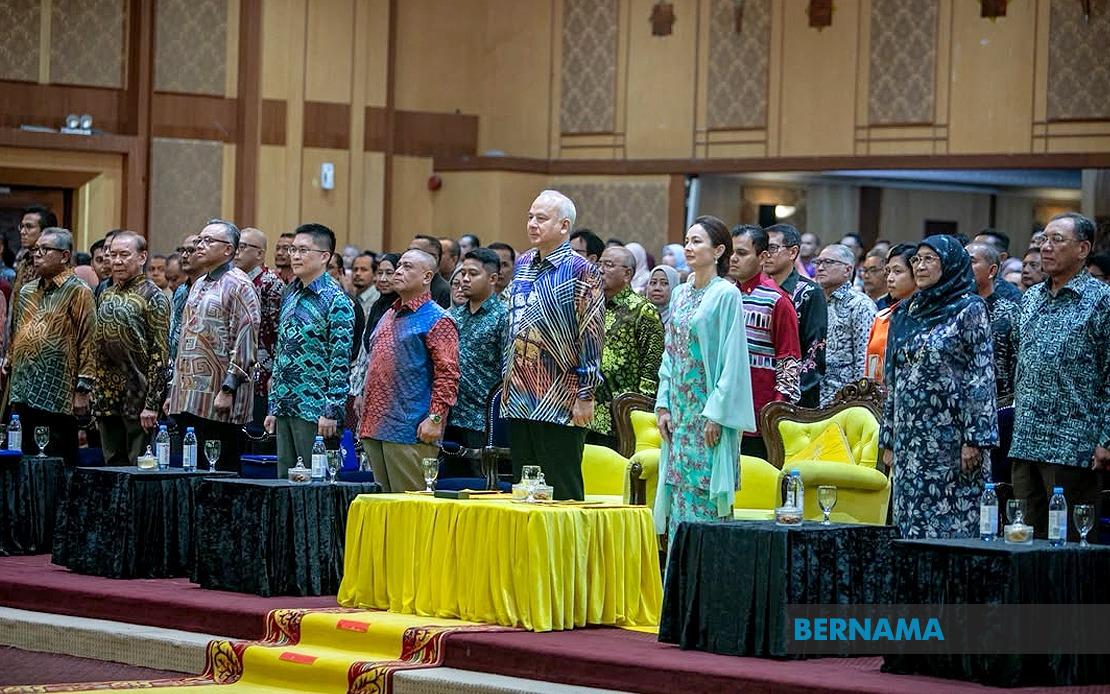
Sultan Nazrin Shah, the Sultan of Perak, attended an event honouring the nation's independence that underscored the state's commitment to building a patriotic and academically accomplished younger generation. The occasion, held at Bangunan Perak Darul Ridzuan in Ipoh on August 15, served as a flagship programme for the state's 2026 Merdeka Month celebrations, with an agenda extending far beyond conventional commemoration. Raja Permaisuri Tuanku Zara Salim, Menteri Besar Datuk Seri Saarani Mohamad, and Deputy Education Minister Wong Kah Woh accompanied the Sultan, signalling the significance attached to the initiative at both state and federal levels.
The programme has emerged as a comprehensive platform for nurturing student talent across multiple disciplines, from linguistic competitions to creative arts. According to Perak Education Department director Zulkafli Mohamed Mokhtar, participation exceeded expectations with 214,095 entries spanning 83.6 per cent of the state's primary and secondary school population. This breadth of involvement demonstrates that the event has transcended a ceremonial exercise to become an institutionalised mechanism for identifying and cultivating young talent. The scale of participation reflects deliberate efforts by education authorities to make the programme accessible and appealing to students across socioeconomic backgrounds throughout Perak's diverse districts.
Year-on-year growth metrics reveal the programme's expanding appeal and cultural resonance among students and educational institutions. A 15 per cent increase in participation compared to the previous year suggests that word-of-mouth endorsements and demonstrated outcomes are attracting greater numbers of competitors. This trajectory matters because it indicates that the initiative is gaining organic traction rather than relying solely on top-down mandates. For Malaysian policymakers grappling with concerns about declining civic engagement among young people, such data offers encouraging evidence that properly designed programmes can stimulate genuine enthusiasm for national values and self-development.
Director Mokhtar framed the initiative within the broader context of Malaysia Education Plan 2026-2035, situating the Merdeka Month celebrations as integral to long-term educational strategy rather than isolated annual events. This pedagogical integration reflects an understanding that patriotism and moral development require sustained reinforcement through multiple channels and touchpoints throughout a student's educational journey. The programme's emphasis on building self-confidence and discovering latent potential addresses recognized gaps in traditional academic-focused schooling, offering students structured opportunities to develop communication skills, creative expression, and public speaking abilities that often prove decisive in their future career trajectories.
The competition framework encompasses diverse disciplines including Malay language public speaking, English language presentations, choral speaking, choral recitation, choir performances, caricature drawing, essay writing, poetry composition, and poster design. This multifaceted approach acknowledges that talent manifests across linguistic, artistic, and performative domains, and that inclusive recognition encourages broader participation than competitions limited to narrow disciplines. The upper secondary Malay Language Public Speaking Competition champion Ifwat Arrafi Mohd Amin of SMK Tun Abd Razak, Bagan Datuk, and English public speaking winner E Johnnes Abysia from SMK Sungai Pari, Kinta Utara, represent the calibre of students emerging from these competitions.
The allocation of RM20,000 in cash as a special award for Best Achievement by District Education Office, presented to Kinta Utara District Education Office, demonstrates that recognition extends beyond individual students to incentivise institutional excellence. This dual-level award structure encourages education offices to invest resources in identifying and preparing competitive students, creating systemic motivation for district-level administrators to engage actively with the programme. In a Malaysian context where educational disparities between urban and rural districts remain pronounced, such targeted recognition and funding can help distribute competitive advantage more equitably across different regions of Perak.
Sultan Nazrin's direct participation in presenting awards carries symbolic weight beyond the ceremonial, signalling royal endorsement of the values embedded in the competition. In Malaysian constitutional monarchy, the Sultan's presence legitimates state initiatives and communicates that leadership structures across government take these programmes seriously. This messaging proves particularly valuable for students who might otherwise regard educational competitions as bureaucratic exercises disconnected from broader national aspirations. The Sultan's engagement with award presentations and subsequent exhibition tours demonstrates personal investment in acknowledging student achievement.
The programme's design reflects sophisticated understanding of how young people internalize national identity and values. Rather than relying on didactic instruction, the competitions create experiential learning environments where students actively engage with concepts of patriotism, heritage appreciation, and cultural expression. Essay writing on national themes, poetry composition exploring historical narratives, and caricature drawing depicting national symbols transform abstract civic concepts into concrete creative endeavours. This pedagogical approach aligns with contemporary educational psychology emphasizing active engagement over passive absorption.
For Southeast Asian context, Perak's Merdeka Month programme offers instructive lessons in how subnational governments can leverage annual national commemorations for broader educational development. While independence day celebrations in many countries devolve into ceremonial formality, the Perak initiative demonstrates potential for reimagining such occasions as catalysts for identifying and nurturing emerging talent pools. As regional nations grapple with questions about how to cultivate leadership capacity and maintain civic engagement among digitally-native youth populations, this model's emphasis on competition, public recognition, and structured opportunity merits examination.
The initiative appears responsive to articulated concerns about younger generations potentially disconnecting from historical awareness and national narratives. By embedding patriotic content within competitions across multiple domains, the programme acknowledges that different students connect with national identity through different mediums and disciplines. A student lacking linguistic prowess might discover their national consciousness through visual art, while another might experience profound connection through performance-based activities. This recognition of multiple pathways to engagement reflects sophisticated pedagogical thinking about how diverse young people can meaningfully participate in nation-building conversations.
Moving forward, sustaining this momentum will require continued institutional support and resource allocation as the programme matures. The marked growth in participation suggests potential scalability challenges, from logistics of managing larger cohorts to ensuring quality judging and feedback mechanisms remain rigorous. Malaysian education stakeholders monitoring Perak's experience may find useful templates for replication in other states, particularly regarding how to maintain programme quality and educational integrity while accommodating exponential participation growth.

