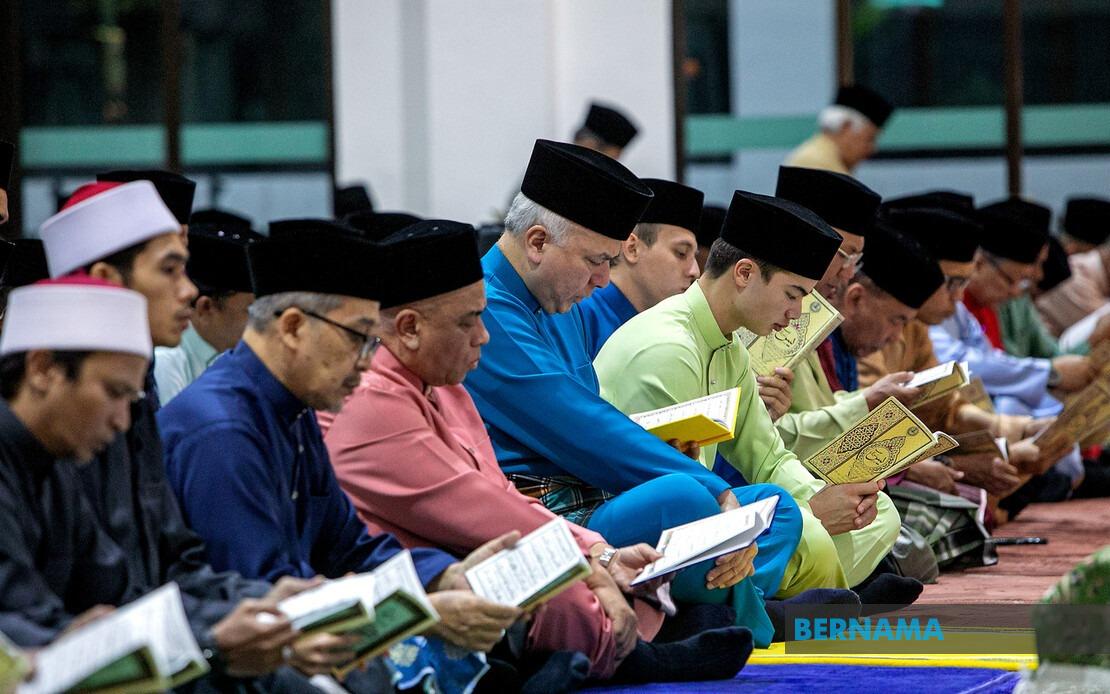
Sultan Nazrin Shah, the Sultan of Perak, participated in a significant religious observance on Friday evening that combined spiritual devotion with patriotic commemoration. The event brought together the monarchy, state administration, and the wider Muslim community at Masjid Imam As Syafie in Ipoh, where the ruler ceremonially opened the newly completed place of worship as part of the state-level National Day celebrations.
The mosque, which represents a substantial investment at RM8.7 million, has been constructed to accommodate approximately 1,600 worshippers at full capacity, positioning it as a major religious facility for the Ipoh metropolitan area. Its completion reflects the ongoing expansion of Islamic religious infrastructure across Malaysia's states, responding to growing congregational needs and demographic changes in urban centres. The facility's size and specifications indicate careful planning to serve not only daily prayer requirements but also larger gathering occasions throughout the Islamic calendar.
During the evening ceremony, Sultan Nazrin performed the formal inauguration by drawing back a curtain concealing a commemorative plaque—a symbolic gesture that transformed the space from construction project to functioning mosque. The ritual underscored the royal role in sanctioning and blessing community religious projects, a practice deeply embedded in Malaysian constitutional and cultural tradition. His presence elevated the occasion beyond a routine opening to an event of state significance, affirming the monarchy's continuing engagement with Islamic institutions across Perak.
Among those witnessing the inauguration were Menteri Besar Datuk Seri Saarani Mohamad and Tan Sri Mohd Annuar Zaini, president of the state Islamic Religious and Malay Customs Council (MAIPk). The attendance of senior government and religious figures demonstrated the institutional importance placed on the mosque's opening, with both civil administration and religious governance structures represented. Such coordinated presence reflects how mosque projects in Malaysia typically enjoy multi-layered political and administrative support.
The gathering itself drew approximately 1,000 congregants, indicating substantial community interest in the inauguration and the broader National Day observances being conducted at the venue. This attendance level suggests the mosque's location and facilities had already begun resonating with local Muslim residents even before formal opening, with the inauguration ceremony providing an opportunity to experience the new space while participating in religious observance.
Following the symbolic curtain ceremony, Sultan Nazrin joined the assembled worshippers in the doa selamat, a traditional prayer for blessing and protection. He subsequently participated in the Yasin recitation—the recitation of Surah Yasin from the Quran, a practice commonly performed during Islamic celebrations and commemorative occasions—alongside the tahlil, which involves the rhythmic repetition of Islamic phrases expressing God's oneness. These devotional acts, conducted jointly by the ruler and congregation, reinforced communal spiritual bonds while honouring the National Day significance of the gathering.
The imam leading these ceremonies was Muhammad Luqmaan Mohd Helmi, designated as Imam II at Masjid As Syafie, whose role in conducting the prayers reflected the mosque's establishment of a formal religious hierarchy and staffing structure. The imam's prominence in leading the state-level celebration indicated the mosque's rapid integration into Perak's Islamic institutional framework, despite its recent completion.
Sultan Nazrin subsequently joined the congregational Isyak prayer, the night prayer performed after sunset in the Islamic calendar. His participation in this obligatory prayer alongside ordinary congregants exemplified the religious egalitarianism that characterizes mosque practice in Malaysia, where rank and status are nominally secondary to devotional commitment. This act reinforced the symbolic message that National Day observance encompassed both civic patriotism and shared religious identity.
The timing of the mosque inauguration during National Day celebrations carries particular resonance in the Malaysian context, where August 31 represents the date of independence. Linking the opening of major religious infrastructure to this commemorative period signals the intertwining of national identity with Islamic faith in Perak's public consciousness. For many residents, the association between celebrating independence and inaugurating a new mosque subtly reinforces narratives about Islam's integral role in the Malaysian nation-state.
From a regional perspective, Perak's investment in modern mosque infrastructure reflects broader patterns across Southeast Asian Muslim-majority societies, where governments increasingly fund substantial religious facilities as expressions of state engagement with Islamic communities. The RM8.7 million expenditure represents meaningful capital commitment that extends beyond symbolic gestures to practical accommodation of worship and community gathering needs. Such projects have become standard markers of state attentiveness to Muslim constituents' spiritual requirements.
The mosque's capacity and location in Ipoh position it as part of the broader religious landscape serving Malaysia's urban Muslim populations. As cities expand and congregations grow, purpose-built facilities with substantial seating capacity become essential infrastructure rather than luxury additions. Masjid Imam As Syafie's inauguration therefore represents incremental progress in matching religious facilities to contemporary urban demographic patterns throughout the Klang Valley corridor and beyond.
Looking forward, the completion of this mosque signals Perak's continued prioritization of Islamic institutional development as a component of state governance and community services. The involvement of the Sultan and senior religious officials in the opening ceremony established precedent for future engagements with the facility, potentially positioning it as a venue for significant state religious events and celebrations throughout coming years. The mosque now stands ready to serve its designated community while symbolizing the intersection of monarchy, administration, and Islamic practice that characterizes Malaysian federalism.

