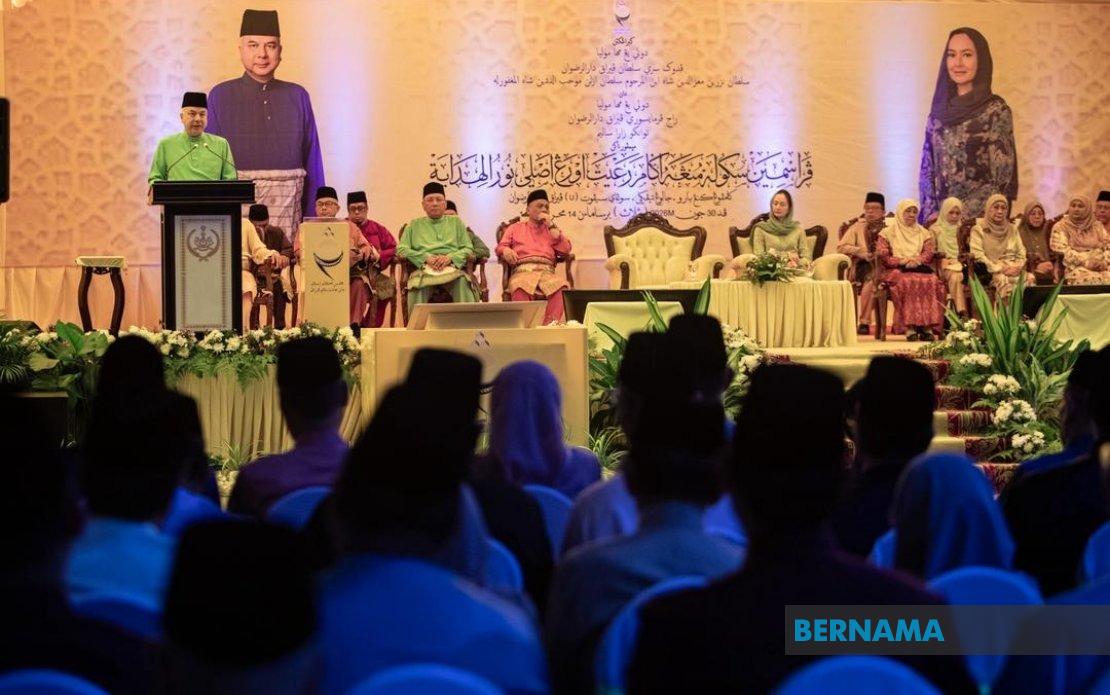
Sultan Nazrin Shah, the Sultan of Perak, has officially inaugurated Sekolah Menengah Agama Rakyat (SMAR) Orang Asli Nurul Hidayah in Kampung Kenang, Sungai Siput Utara, marking a watershed moment for educational advancement within the indigenous community of the state. The ceremony underscores the monarchy's commitment to bridging socioeconomic disparities through targeted institutional investment, a significant gesture given the historical marginalisation of Orang Asli populations across Malaysia's development agenda.
The high-profile occasion drew senior figures from Perak's political and administrative hierarchy, including Raja Muda Raja Jaafar Raja Muda Musa and Raja Iskandar Dzurkarnain Sultan Idris Shah. Menteri Besar Datuk Seri Saarani Mohamad joined the proceedings alongside Tan Sri Mohd Annuar Zaini, president of the Perak Islamic Religious and Malay Customs Council (MAIPk), and Datuk Harith Fadzilah Abdul Halim, director of the Perak Islamic Religious Department (JAIPk). This convergence of state leadership and religious authorities reflects the dual emphasis placed on both secular governance and faith-based education in advancing Orang Asli welfare.
The institution represents unprecedented educational infrastructure tailored specifically for Malaysia's indigenous populations. SMAR Orang Asli Nurul Hidayah stands as the nation's first Islamic secondary school exclusively serving Orang Asli students, a distinction that carries profound implications for addressing educational equity in rural and remote communities. Sultan Nazrin characterised the school not merely as a physical structure but as a transformative investment in securing generational prosperity for Orang Asli children who have historically faced systemic barriers to quality schooling.
Originally conceived as a dakwah and Quranic learning centre, the institution evolved over more than three decades into a comprehensive educational establishment merging conventional academic curricula with integrated Islamic instruction. This pedagogical approach reflects growing recognition among Malaysian policymakers that culturally sensitive, religiously grounded education may enhance engagement and retention rates among indigenous learners who have struggled within mainstream schooling systems. The curriculum's dual focus demonstrates an attempt to balance national educational standards with community-specific spiritual and cultural requirements.
Sultan Nazrin articulated education as fundamentally transcending the transmission of knowledge, positioning it instead as a comprehensive developmental process encompassing intellectual, spiritual, emotional and physical dimensions. This holistic philosophy aligns with contemporary educational discourse emphasising character formation alongside academic achievement, particularly relevant for communities historically experiencing socioeconomic marginalisation. The Ruler stressed that authentic education cultivates ethical citizenship and moral resilience, capacities essential for sustainable community progress.
The school's alumni trajectory provides compelling evidence of institutional effectiveness in generating social mobility. Former students have reportedly returned to serve their communities as educators and advocates, establishing a virtuous cycle wherein educational advancement translates into strengthened local institutional capacity. This pattern of graduate engagement within home communities represents an alternative pathway to development, countering the brain drain phenomenon wherein educated individuals migrate to urban centres, leaving origin communities depleted of human capital.
Sultan Nazrin emphasised that equitable educational access forms the cornerstone of national aspiration, regardless of socioeconomic background or geographical isolation. This framing directly addresses longstanding criticisms of Malaysia's development model, which has consistently concentrated resources in urban and developed rural areas while peripheral regions inhabited predominantly by indigenous peoples remain underserved. The SMAR Nurul Hidayah project symbolises governmental acknowledgement of these historical disparities and commitment to corrective intervention.
The school's strategic positioning within Perak's broader educational landscape deserves particular attention. Beyond producing academically proficient graduates, the institution explicitly prioritises preservation of Islamic values and moral character among younger generations, reflecting Malaysian policymakers' determination to integrate religious education into state-sponsored schooling. For Orang Asli communities, many of whom have encountered religious conversion pressures and cultural assimilation dynamics, this framework potentially offers protective mechanisms safeguarding indigenous spiritual practices whilst facilitating engagement with dominant religious institutions.
The institutional model pioneered at SMAR Orang Asli Nurul Hidayah holds implications extending beyond Perak's borders. As Malaysia's federal government intensifies focus on inclusive development and reducing regional inequality, this institution's achievements may inform replication across other states with substantial indigenous populations, including Pahang, Johor and Sarawak. The school demonstrates that targeted educational infrastructure, combined with culturally appropriate pedagogical approaches and genuine community engagement, can generate measurable advancement in communities historically excluded from Malaysia's modernisation narrative.
Sultan Nazrin's address positioned education as instrumental for unlocking societal progress, shaping individual character and elevating communal dignity. This rhetoric resonates beyond ceremonial occasion, articulating a vision wherein indigenous communities transition from developmental beneficiaries receiving external assistance toward active contributors commanding agency over their trajectories. The opening ceremony thus represents not merely infrastructural expansion but symbolic affirmation of indigenous populations' capacity and entitlement to shape their educational futures.
Looking forward, the sustainability of such institutions depends upon sustained resource allocation, retention of qualified educators and genuine integration of indigenous perspectives within curriculum development. The enthusiasm displayed by state leadership at the inauguration must translate into concrete policy support and financial commitment. For Malaysian policymakers monitoring this initiative, SMAR Orang Asli Nurul Hidayah's trajectory will provide empirical evidence regarding whether faith-based, culturally tailored education effectively addresses disparities afflicting Malaysia's indigenous populations or whether more fundamental structural reforms remain necessary.

