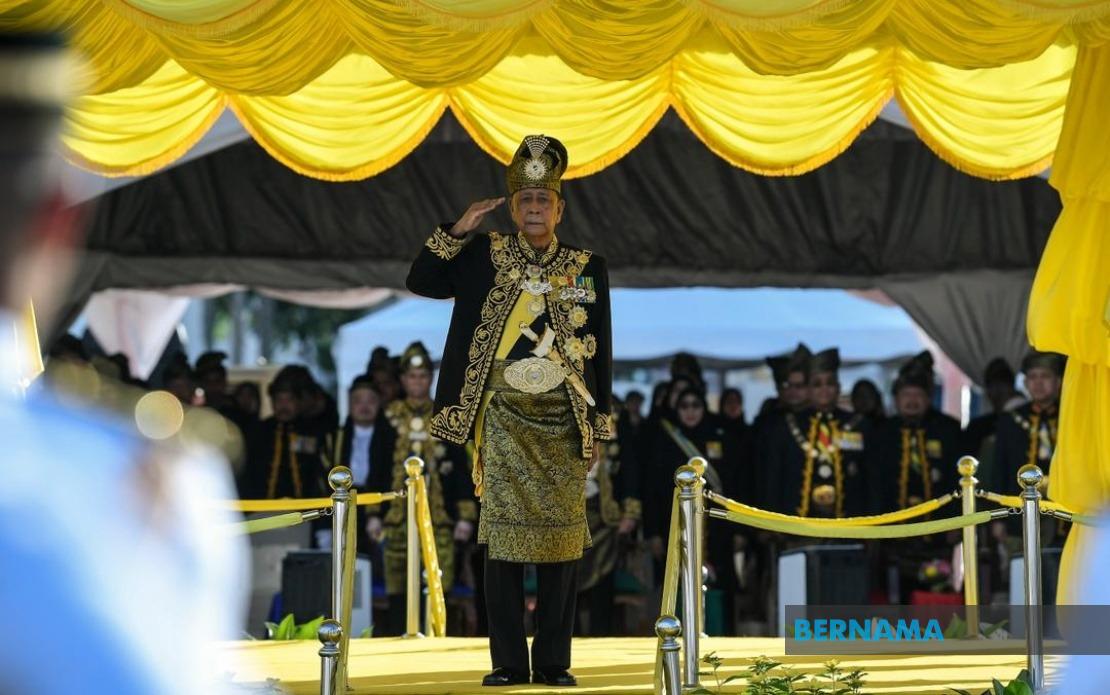
The Sultan of Kedah, Al Aminul Karim Sultan Sallehuddin Sultan Badlishah, presided over a full ceremonial parade at Dataran Medan Bandar in Alor Setar on July 5 to commemorate his 84th birthday, underscoring the state's continued observance of royal traditions and protocol. The occasion brought together senior figures from Kedah's political and military establishment to honour the reigning monarch in a display of pageantry and state ceremony.
Joining the Sultan at the event was the Raja Muda of Kedah, Tengku Sarafudin Badlishah Sultan Sallehuddin, whose presence reflected the broader significance attached to such royal occasions within the state's constitutional hierarchy. The attendance of the Raja Muda, as the heir to the Kedah throne, reinforced the dynastic continuity that characterises Malaysia's constitutional monarchy system, where state rulers play both ceremonial and symbolic roles within their respective realms.
The gathering also included prominent members of Kedah's executive branch, notably Menteri Besar Datuk Seri Muhammad Sanusi Md Nor and State Secretary Datuk Seri Norizan Khazali. Their presence, alongside members of the State Executive Council, demonstrated the civil administration's participation in honouring the state's supreme ruler. Such formal acknowledgments underscore the constitutional relationship between the monarchy and the state government, a cornerstone of Malaysia's federal system.
The military dimension of the celebration centred on a contingent from the 6th Battalion of the Royal Malay Regiment, which fielded 103 servicemen and three officers for the parade. Led by Major Muhammad Nasrullah Abdullah, the unit executed a formal guard of honour—a tradition deeply embedded in Commonwealth military practice and a standard element of royal ceremonies throughout Malaysia. The precision and formality associated with such displays reflect the disciplined military culture maintained within Malaysia's armed forces.
The ceremonial components extended beyond the ground parade itself. Lieutenant Mohamad Aiman Hanif Samsudin carried the national colours, while Warrant Officer 1 Mohd Fairuz Ramli bore the regimental standard. These roles, traditionally entrusted to officers of distinction, carry symbolic weight within military hierarchies and demonstrate the reverence accorded to such occasions. The RAMD Central Band, conducted by Captain Muhamad Fauzee Japar with assistance from Sergeant Mohd Shahrilaizad Bakhtiar, provided the musical accompaniment that characterises formal military ceremonies.
A notable feature of the celebration was the aerial component, which included a spectacular flypast involving military training aircraft. Two EC120B helicopters from the Flying Training Institute (INSPEN) 2 and three PC-7 MK II turboprop trainers from INSPEN 1 participated in the aerial display. These aircraft, which serve as platforms for training Malaysia's military and civilian pilots, performed coordinated flying that added visual spectacle to the ground-based proceedings. Such flypasts, while primarily ceremonial, also serve as opportunities to showcase Malaysia's aviation capabilities to the public.
The ceremonial finale involved a 21-gun salute, fired by the 41st Battery of the Royal Artillery Regiment (Ceremonial) under the command of Major Hafizan Md Ghani from the unit's Sungai Buloh Camp in Selangor. The 21-gun salute represents one of the oldest and most formal military honours accorded to heads of state and senior royal figures, a practice maintained across Commonwealth nations and observed consistently in Malaysia during state occasions and royal celebrations.
The scale and formality of the proceedings reflect the constitutional status of Malaysia's state rulers, who retain ceremonial powers and symbolic authority within their respective states despite the nation's transition to parliamentary democracy. The Sultan of Kedah's birthday celebration exemplifies how Malaysia continues to blend traditional royal protocols with modern state administration, maintaining ceremonies that connect contemporary governance to historical monarchical traditions.
For Kedah residents and observers elsewhere in Malaysia, such occasions serve as reminders of the constitutional monarchy's enduring role in the nation's political framework. While the Sultan's functions are largely ceremonial in nature, the state's commitment to honouring the ruler through formal pageantry demonstrates the continued respect accorded to the institution across Malaysian society. The involvement of both military and civilian leadership in the event underscores the unifying function that royal ceremonies perform, transcending narrow political divisions to emphasise shared national and state identity.
These birthday celebrations also reflect broader patterns observed across Malaysia's thirteen states, where variations in celebration style and scale often reflect local preferences and resources while adhering to common protocols of royal honour. The investment in formal military displays, coordinated aeronautical performances, and ceremonial artillery fire indicates the resources Kedah allocates to maintaining these traditions, affirming the state's commitment to honouring its constitutional head.
Looking forward, such occasions provide opportunities for reflection on the contemporary relevance of Malaysia's hereditary monarchies in an increasingly modernised nation. The integration of modern military technology and contemporary organisational practices with centuries-old ceremonial traditions demonstrates the flexibility of the institution to adapt while preserving its fundamental character and symbolic importance within Malaysian society.

