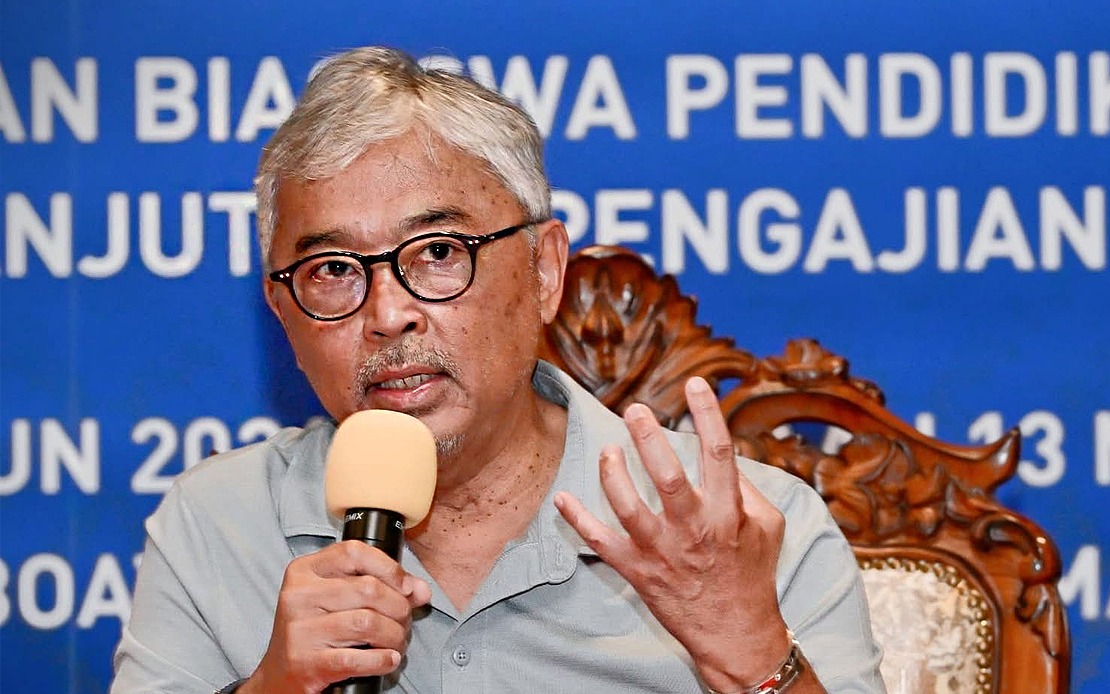
The Sultan of Pahang, Al-Sultan Abdullah Ri'ayatuddin Al-Mustafa Billah Shah, has made a direct appeal to universities throughout the state to expand their commitment to nurturing academic talent from disadvantaged communities, specifically targeting students from Tioman Island who currently face significant barriers to accessing higher education. Speaking through an official statement from the Pahang Sultanate, His Royal Highness underscored the moral obligation of educational institutions to bridge geographical and socioeconomic divides that often prevent gifted young people from remote areas from realizing their full potential.
The Sultan's intervention was prompted by the recent establishment of a scholarship programme by Institut Jantung Negara University College (IJNUC), which has selected two outstanding students from Tioman Island to pursue their tertiary studies at the institution in Kuala Lumpur. Rather than treating this as an isolated corporate social responsibility gesture, His Royal Highness has positioned it as a replicable model that other universities in Pahang should actively adopt and expand. The symbolic nature of the Sultan personally consenting to grace the scholarship presentation ceremony underscores the political and cultural importance he attaches to this initiative within the broader context of human capital development.
Tioman Island, while renowned as a tourist destination, faces persistent challenges in providing educational infrastructure and opportunities for its residents. The geographic isolation of the island creates practical difficulties for students seeking tertiary education, necessitating relocation to urban centers where both tuition and living expenses can be prohibitive for families with limited means. By calling upon institutional leaders to develop targeted scholarship schemes, the Sultan is addressing a systemic gap in educational access that disproportionately affects rural and island communities across Malaysia. This resonates particularly well across Southeast Asia, where similar challenges persist in archipelagic nations and remote regions.
In his address to the scholarship recipients, the Sultan delivered a characteristically motivational message emphasizing that academic excellence and merit should be the foundation of educational advancement, rather than accident of birth or family circumstance. He explicitly cautioned the two students against entertaining thoughts of failure, instead framing their success as carrying symbolic weight for their entire community. This messaging reflects a strategic approach to youth motivation that combines aspirational rhetoric with clear performance expectations, a technique common among Malaysian royal figures addressing educational matters.
The Sultan's commendation of Institut Jantung Negara extends beyond its educational initiatives to encompassing the institution's broader commitment to community service and corporate social responsibility. He highlighted the institution's consistency in implementing outreach programmes across Pahang, including in remote settlements such as Kampung Bantal, demonstrating that excellence in specialized medical services can coexist with sustained engagement in community development. This recognition serves to establish a template for institutional behavior, suggesting that universities with strong academic credentials have a corresponding obligation to redistribute benefits to underserved populations.
The regional context for this initiative merits consideration. Across Southeast Asia, the expansion of higher education access remains uneven, with significant disparities between urban and rural regions persisting despite decades of policy attention. Malaysia's experience in leveraging royal authority to promote educational equity offers lessons for neighboring countries grappling with similar challenges. The Sultan's intervention demonstrates how traditional institutions of governance can effectively mobilize support for contemporary educational development goals by framing scholarship access as both a moral imperative and a practical investment in national capability.
Institut Jantung Negara itself represents an important institutional actor in this narrative. As one of Asia's leading cardiac treatment centers with internationally recognized expertise, its decision to engage in scholarship provision signals that institutional prestige and community engagement are not mutually exclusive pursuits. The Sultan's particular appreciation for the institution's willingness to combine specialized medical excellence with accessibility initiatives reflects a sophisticated understanding of how institutional missions can be broadened to serve developmental objectives. This model may prove instructive for other specialized medical and technical institutions considering their own community engagement strategies.
The practical implications of the Sultan's call extend to questions of institutional capacity, funding mechanisms, and coordination among Pahang's various higher education providers. Universities will need to develop sustainable scholarship programmes that balance institutional budgets with equity objectives. The Sultan's intervention essentially creates informal pressure on these institutions to demonstrate responsiveness to royal guidance, a factor that carries particular weight in the Malaysian institutional context where monarchical preference can significantly influence resource allocation and institutional priorities.
For students on Tioman Island, the expansion of scholarship opportunities would fundamentally alter the educational landscape and career trajectories available to them. Currently, family financial capacity often determines whether talented young people can access tertiary education, a situation that represents both personal lost opportunity and collective national waste of human potential. Scholarships removing financial barriers would enable merit-based selection of university candidates, ensuring that institutional enrollment reflects intellectual ability rather than parental wealth.
The Sultan's emphasis on discipline, time management, and sustained focus reflects awareness that scholarship provision alone is insufficient; recipients must develop the academic and personal resilience necessary to succeed in competitive university environments. His explicit instruction that recipients serve as benchmarks for future cohorts acknowledges that early scholarship holders carry responsibility for encouraging other young people from their communities to aspire toward higher education. This creates a multiplier effect whereby successful scholars become living proof of possibility for their peers.
Looking forward, the Sultan's initiative may catalyze broader policy discussions about targeted scholarship frameworks within Pahang's higher education sector. Government agencies and institutional leaders might develop coordinated approaches to identifying and supporting gifted students from underrepresented communities, creating pipelines that nurture talent from secondary school through university completion. Such systematic approaches would transcend individual institutional initiatives, institutionalizing the equity objectives the Sultan has articulated.
The call also raises questions about how similar disadvantaged communities elsewhere in Malaysia might benefit from analogous interventions. While Tioman Island presents distinctive challenges, numerous other remote areas—whether in Sabah, Sarawak, or peninsular Malaysia—face comparable barriers to educational access. The Sultan's emphasis on universal responsibility within Pahang might inspire comparable initiatives in other states, gradually expanding the reach of scholarship programmes to multiple underserved populations.

