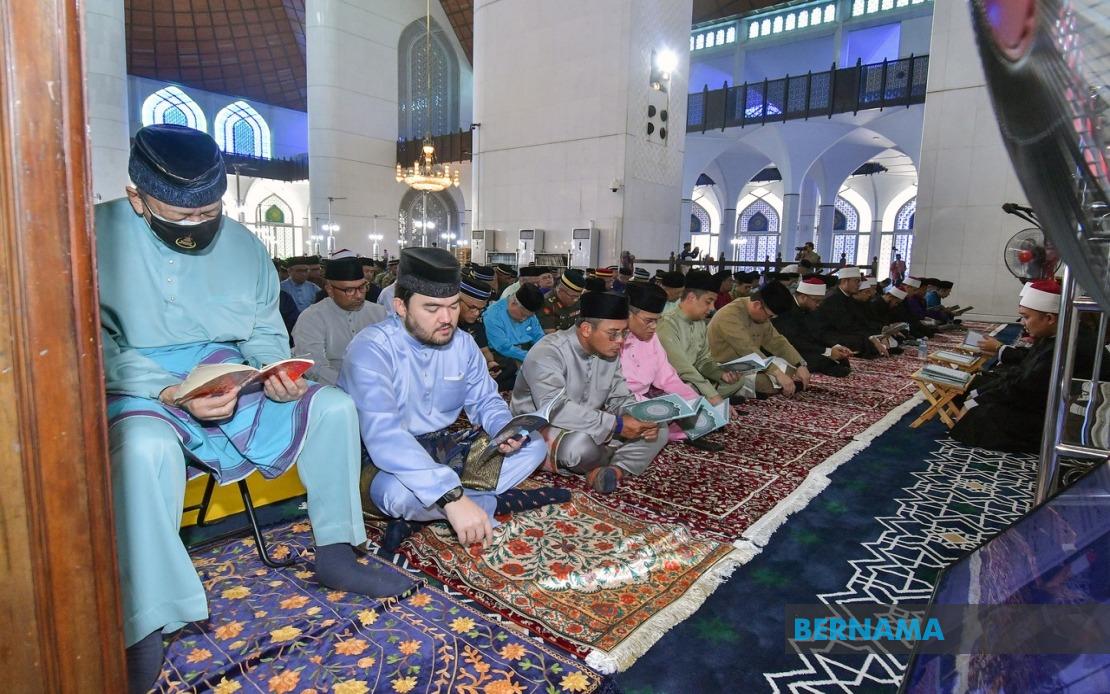
Sultan Sharafuddin Idris Shah, the ruler of Selangor, participated in a Surah Yassin recitation and tahlil ceremony on Wednesday at Masjid Sultan Salahuddin Abdul Aziz Shah in Shah Alam, underlining the state's spiritual preparations for the upcoming National Day observances. The religious gathering, held just two days before the formal state-level celebrations, reflected the intertwining of spiritual devotion and national commemoration that characterises Malaysia's observance of its founding day.
The Sultan's attendance was significant in signalling the state leadership's commitment to religious observance and community participation in the lead-up to the national occasion. Accompanying His Royal Highness was Tengku Amir Shah Sultan Sharafuddin Idris Shah, the Raja Muda of Selangor, demonstrating the broader royal family's involvement in the event. Upon his arrival at the mosque, Sultan Sharafuddin was formally received by Selangor Menteri Besar Datuk Seri Amirudin Shari and Dr Mohammad Fahmi Ngah, who chairs the State Islamic Affairs and Innovation Culture Committee, reflecting the coordination between state administrative and religious authorities for the occasion.
The gathering drew the participation of senior figures within Selangor's Islamic institutional framework. Datuk Mohd Shahzihan Ahmad, who leads the Selangor Islamic Religious Department, and Datuk Salehuddin Saidin, chairman of the Selangor Islamic Religious Council, were among those present, indicating that the event held official standing within the state's religious governance structures. Such representation underscores how Malaysia's plural governance system allocates distinct responsibilities for religious and cultural matters to state-level institutions, a characteristic feature of the federation's constitutional arrangements.
Approximately 1,000 worshippers participated in the recitation ceremony, a substantial gathering that extended beyond the usual mosque congregation to encompass members of security forces stationed throughout Selangor. The inclusion of military and police personnel reflects a broader Malaysian practice of integrating national observances with religious and spiritual activities, creating occasions where civic and sacred dimensions of national identity intersect. This approach resonates particularly in Selangor, Malaysia's most populous state and economic powerhouse, where such gatherings carry symbolic weight for the wider region.
Following the Yassin recitation, Sultan Sharafuddin performed Friday prayers and listened to a sermon titled "Merdeka Daripada Belenggu Kerakusan," which translates as "Freedom from the Shackles of Greed." The sermon topic itself merits attention, as it frames National Day not merely as a historical milestone but as an opportunity for moral and spiritual reflection. Muhammad Farhan Wijaya, the mosque's Grand Imam, delivered this discourse, connecting Malaysia's independence and sovereignty to broader ethical principles. This thematic emphasis on freedom from avarice suggests an intentional positioning of National Day celebrations around substantive values beyond ceremonial commemoration, particularly resonant given contemporary discussions about governance, accountability, and collective welfare across the region.
The religious observance formed part of Selangor's broader preparations for its state-level National Day festivities, which would culminate in formal celebrations at Kajang Stadium. These celebrations are scheduled for the evening of Sunday, August 30, and will operate under the theme "Malaysia MADANI: Kesejahteraan Dinikmati," meaning "Prosperity Enjoyed," which aligns with the national overarching theme. The coordination between the religious ceremony on Wednesday and the scheduled Sunday celebrations demonstrates how Malaysian states typically scaffold their National Day observances, progressing from spiritual and reflective dimensions to larger public spectacles and civic demonstrations.
Selangor's approach to National Day preparations holds particular significance within the Malaysian federation. As the wealthiest state and home to the capital region, Selangor sets patterns that other states frequently emulate or reference. The state's decision to prioritise religious observance as a prelude to National Day festivities carries implications for how Malaysia's plural identity—encompassing Islam as the religion of the federation, while maintaining space for other faiths and secular civic values—is publicly articulated and celebrated. Such integration also reflects the particular political and constitutional position of Selangor within Malaysian federalism, where state rulers maintain ceremonial and symbolic authority over religious matters.
The gathering at Masjid Sultan Salahuddin Abdul Aziz Shah, one of Selangor's most prominent mosques, carries additional symbolic weight. The mosque's grandeur and its role as a key religious institution in the state mean that events held there carry elevated visibility and significance within Selangor's public consciousness. The choice of this venue for the Yassin recitation thus represented more than a logistical decision; it positioned the spiritual observance within Selangor's institutional and cultural landscape, linking the state's religious infrastructure to its national identity commemoration.
For Malaysian readers and regional observers, Selangor's National Day preparations illustrate broader patterns within Southeast Asia's largest Muslim-majority democracy. The interweaving of religious observance, state administration, and national celebration reflects constitutional arrangements that grant significant autonomy to states over religious matters while maintaining overarching federal frameworks for national commemoration. This layered approach to governance and identity affirmation remains distinctive within the region and demonstrates how Malaysia negotiates the relationship between Islamic values, multiethnic citizenship, and secular state structures.
The emphasis on spiritual preparation for National Day also contextualises contemporary Malaysian politics within longer narratives about national purpose and collective identity. In a regional environment where questions about governance, development priorities, and social cohesion animate public discourse across Southeast Asia, Malaysia's integration of moral and ethical reflection into its national commemoration processes offers a particular framework for negotiating these tensions. The sermon topic itself—freedom from greed—engages substantive questions about the nature of independence and what national sovereignty should ultimately serve.

