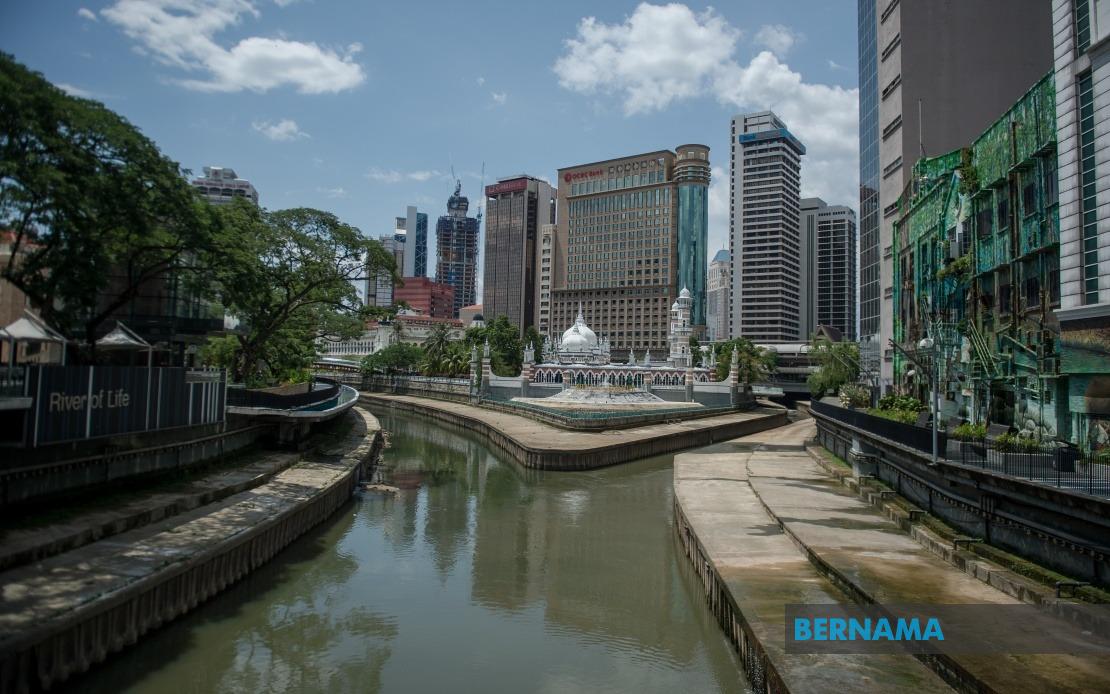
The Klang River, one of Malaysia's most urbanised and flood-prone waterways, has undergone a dramatic upgrade in its ability to manage water flows. Capacity levels have climbed to 22 per cent following ongoing dredging and riverbank works, a substantial leap from the dangerously low levels of less than 5 per cent that characterised the waterway before the current intervention began. This improvement signals meaningful progress in combating the recurring inundation that has plagued Selangor residents, though obstacles remain before full capacity targets are achieved.
Landasan Lumayan Sdn Bhd managing director Syaiful Azmen Nordin announced the milestone during a briefing at the Sultan Salahuddin Abdul Aziz Shah Building in Shah Alam, emphasising that the current phase of a comprehensive 56-kilometre project has reached 68 per cent completion. The initiative represents one of Selangor's most ambitious infrastructure undertakings, aimed at transforming a river historically constrained by sediment buildup and debris into a resilient drainage corridor capable of handling monsoon surges. The strategic focus on critical zones such as Taman Sri Muda, where residents endured severe flooding in previous years, reflects a data-driven approach to prioritising resources where risk is highest.
The removal of accumulated dredged material totalling 1.2 million cubic metres since 2017 has fundamentally altered the river's geometry. By widening the channel and deepening the bed, engineers have created substantially greater water-holding space, allowing the river to accommodate rainfall volumes that previously spilled over into adjacent residential and commercial areas. This mechanical intervention addresses the root hydraulic problem: insufficient cross-sectional area to convey peak flows during heavy precipitation events that characterise Malaysia's tropical climate, particularly during the northeast and southwest monsoons.
A critical distinction emerged during Syaiful Azmen's remarks regarding the recent floods that affected Selangor. He clarified that the river itself did not overflow, challenging the common perception that Sungai Klang was the culprit. Instead, localised flooding resulted from inadequate internal drainage infrastructure—a distinction with important policy implications. While the Klang River project addresses trunk drainage, municipal drainage systems and local stormwater networks require parallel investment. This separation of concerns suggests that flood mitigation in Malaysia demands coordinated action across multiple governance levels and infrastructure categories, not simply focus on the main river.
The continuous cleaning programme operating since 2017 has extracted more than 98,000 tonnes of discarded material at a cost of RM19.6 million, reflecting both the severity of pollution and the resource commitment required to restore water systems. Beyond hydraulic capacity, these efforts have demonstrably improved water quality, with classification metrics rising from Class 5 to Class 3 and Class 4 standards. This dual benefit—increased conveyance capacity coupled with environmental restoration—appeals to multiple stakeholder interests: flood-affected communities, agricultural users downstream, and environmental advocates concerned with ecosystem health.
Public awareness campaigns accompanying the physical works appear to have yielded measurable behavioural change. Annual waste loads deposited into the river have fallen from 16,000 tonnes to between 5,000 and 6,000 tonnes, suggesting that community cooperation with anti-littering initiatives has reduced artificial obstructions that otherwise impede flow. This reduction indicates that flood risk mitigation involves not merely engineering solutions but also sustained social mobilisation. The persistence of some annual waste volumes underscores ongoing challenges in changing disposal habits, particularly among informal settlements and businesses along the river corridor.
The project roadmap extends beyond the current phase, with federal government involvement planned for the Shah Alam to Mid Valley stretch. This delineation of responsibility between state and federal authorities reflects Malaysia's constitutional division of powers, though it raises coordination questions. Seamless capacity improvements require hydraulic continuity; if the state-managed upstream section reaches design capacity while the downstream federal section remains constricted, bottlenecks could still generate flooding. The project completion target of end-2025 provides a concrete deadline, though infrastructure projects in Malaysia frequently encounter delays from land acquisition, utility relocation, or weather disruptions.
When completed, the dredging works aim to achieve 40 per cent capacity across the river system. This target, while ambitious relative to historical levels, acknowledges that even modern urban rivers rarely operate at maximum capacity during routine conditions—some headroom is essential for safety margins and environmental flows. The 40 per cent figure suggests engineers have balanced flood protection against other river functions and land-use constraints along the densely populated Klang Valley corridor.
For Malaysian readers, the Sungai Klang project exemplifies both the possibilities and complexities of adapting infrastructure to climate realities. The Klang Valley, home to millions and containing critical economic assets, faces increasing precipitation intensity and urban heat island effects that accentuate runoff volumes. While dredging and channel widening provide near-term relief, long-term resilience may require additional interventions: retention ponds, green infrastructure, land-use zoning to limit development in flood-prone areas, and climate adaptation strategies. The 22 per cent capacity achievement demonstrates that technical solutions deliver measurable results, yet the remaining journey to 40 per cent and beyond reveals that flood risk management remains an ongoing struggle requiring sustained investment and coordination across government tiers, private entities, and communities themselves.

