The temporary Medan Selera Sungai Rengit has become a symbol of broken promises for dozens of traders operating in this coastal town within the Tanjung Surat state constituency. Nearly a decade after being displaced from their original location to make way for development, these small business owners remain stuck in substandard conditions, hoping that the winner of the 16th Johor state election will finally deliver on long-overdue improvements to their trading environment.
Sungai Rengit occupies a strategically important position in the region, serving as a vital commercial hub for residents and workers employed at the nearby Pengerang Integrated Petroleum Complex (PIPC). Despite this economic significance, the temporary food court where traders operate remains severely underdeveloped, with basic amenities still missing and infrastructure conditions deteriorating. The disconnect between Sungai Rengit's role as an industrial support town and the neglected state of its main trading establishment has created mounting frustration among the business community.
Traders describe their situation as increasingly untenable. They were initially told they would occupy the temporary site for approximately eighteen months, a timeframe that has stretched far beyond expectations with little transparency about the reasons for delays. The promised relocation to a permanent new site, which was supposed to resolve these problems, has failed to materialise as a viable alternative. What was meant to be a short-term arrangement has evolved into a permanent predicament, trapping traders in a cycle of uncertainty and deteriorating conditions.
Beverage vendor Lai Swee Hong, who has operated a stall for three decades, highlights the practical difficulties that undermine daily operations. The temporary food court lacks basic structural integrity, with stalls featuring only canvas canopies and plywood walls that provide minimal protection against elements or intruders. More critically, the alternative site the authorities identified suffers from poor location accessibility, restricted parking capacity, and unfavourable traffic patterns that would make it unviable for established traders whose customer bases have become accustomed to the current location. The current site, despite its limitations, remains strategically positioned relative to the industrial complex and residential areas it serves.
Security concerns have emerged as a parallel crisis affecting traders' economic viability. Without proper doors or locking mechanisms, the open stalls are vulnerable to theft, and multiple incidents over the past year have resulted in loss of goods and equipment. Food trader Wini Fasiha Zawawi has personally experienced losses including kitchen appliances, which represent significant capital investments for small operators running on thin profit margins. Despite police patrols and formal complaints lodged with local authorities, concrete security measures have not materialised, leaving traders in a precarious situation where they must balance keeping their businesses open with the constant risk of criminal loss.
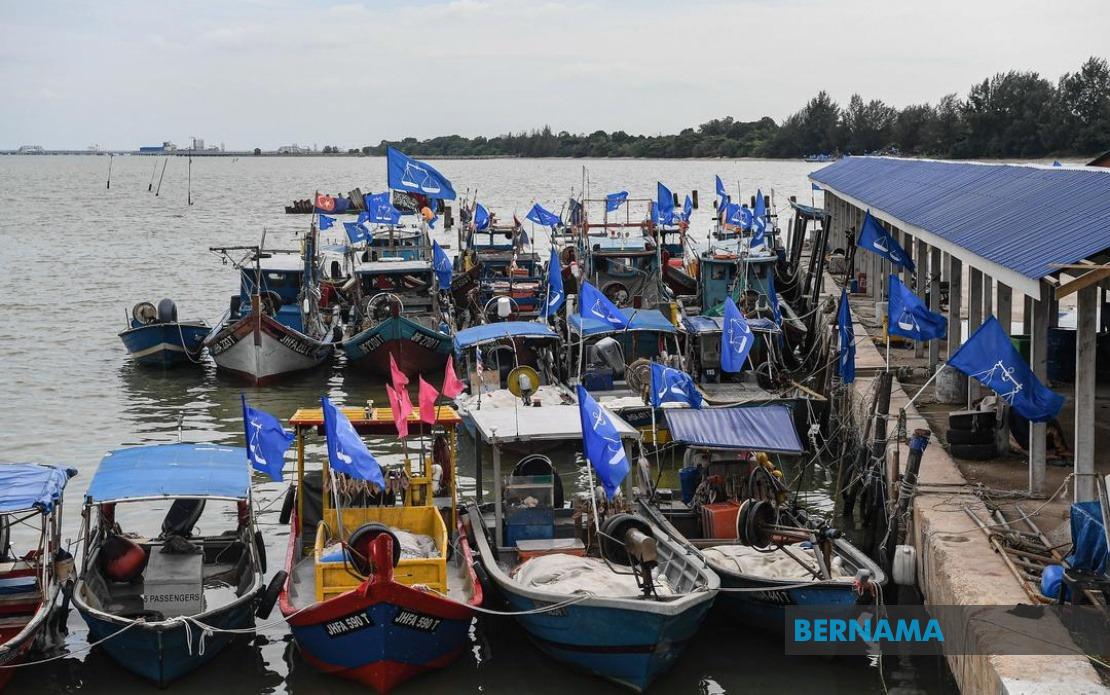
The fishing community in Kampung Sungai Rengit faces a different but equally pressing set of challenges rooted in economic sustainability. Veteran fisherman Sin Hock Hwee, who has spent five decades at sea since childhood, underscores how rising operational costs have begun to erode fishing margins. The current fuel subsidy programme provides essential relief that allows fisher folk to maintain viable livelihoods, but without enhancement or guaranteed continuation, many in the community face genuine hardship as global fuel prices fluctuate and input costs for fishing operations continue climbing.
Younger fishermen, represented by voices like Hidayat Isa, advocate for a more comprehensive approach that extends beyond subsidy maintenance. They seek proactive investment in jetty infrastructure, which directly impacts operational efficiency and safety for those working at sea. The absence of modern facilities at the fishing infrastructure represents an indirect drag on productivity and competitiveness. Additionally, young fishermen want their perspectives represented in policymaking discussions, ensuring that decisions affecting their futures reflect the realities they face rather than those of retired or semi-retired operators.
The Tanjung Surat state seat election has crystallised these community concerns into a political choice. The contest pits Pakatan Harapan candidate Faizul Abdul Ghani against incumbent Barisan Nasional representative Aznan Tamin. For Sungai Rengit's traders and fishermen, this electoral exercise represents an opportunity to shift priorities at the state assembly level. Whichever candidate prevails on July 11 will face immediate pressure to demonstrate responsiveness to infrastructure and economic welfare issues that have accumulated over years of apparent neglect.
The timing proves significant within the broader context of the 16th Johor state election, which encompasses 172 candidates competing for 56 state seats across the state. Sungai Rengit's particular grievances—temporary facilities that have become permanent, security deficiencies, and economic pressures facing resource-dependent communities—resonate with similar challenges in other coastal and industrial constituencies throughout Johor. The election outcome may thus signal broader patterns about whether voters prioritise incumbent stability or seek change-oriented leadership.
For the Sungai Rengit community, the transition to a new elected representative offers a chance to reset relationships and escalate demands that have languished under previous representation. Traders have articulated a preference for upgrading the current location rather than relocating, suggesting they have accepted pragmatic compromises if proper facilities are installed. Fishermen have similarly moderated expectations, focusing on continuation and modest enhancement of existing support schemes rather than demanding transformative intervention. These represent achievable objectives that any serious state assemblyman should be able to address.
The aspirations expressed by Sungai Rengit's traders and fishermen ultimately reflect broader principles about responsive governance and equitable development. These are not wealthy constituencies making extraordinary demands; they represent ordinary Malaysians seeking basic infrastructure, functional security, and stable economic conditions. The infrastructure deficiencies and security lapses documented here are not inevitable consequences of resource scarcity but rather results of policy priorities and implementation choices. Whether the newly elected representative from Tanjung Surat can translate campaign attention into concrete improvements will serve as a significant test of whether political accountability translates into tangible benefits for ordinary working Malaysians.

