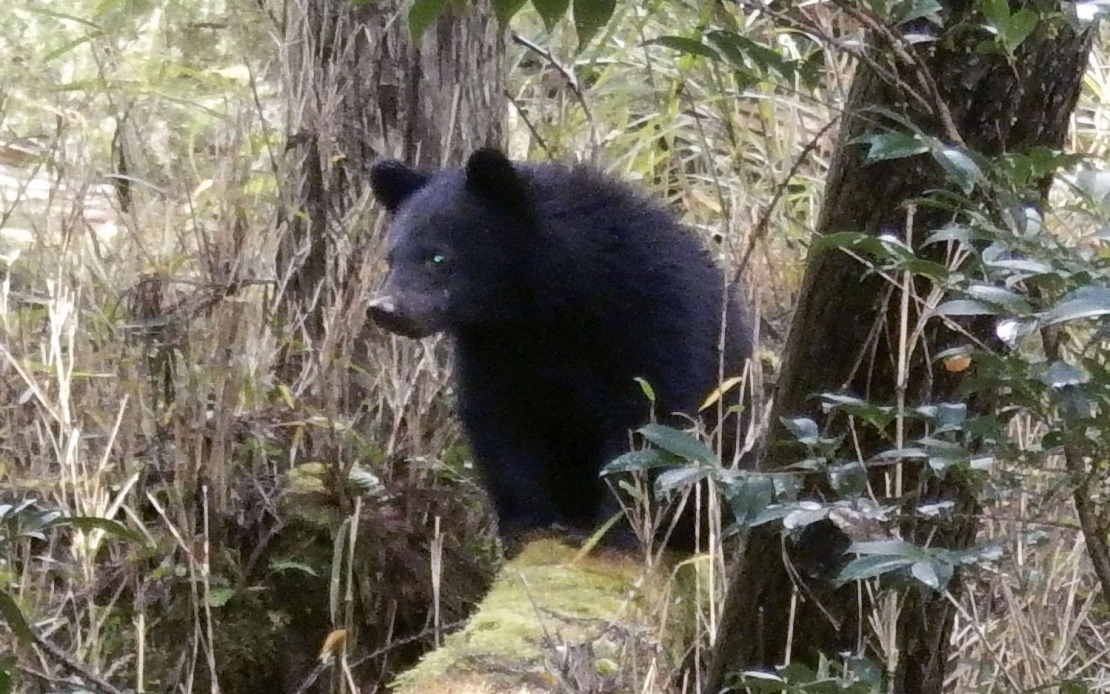
Japan's wildlife management crisis has taken an unexpected turn, as local government officials tasked with addressing soaring bear encounters now face a secondary crisis: an onslaught of abusive public complaints that threatens to cripple administrative operations. The Japanese Ministry of Internal Affairs and Communications released findings from a year-long survey showing that frontline staff handling bear-related issues are becoming targets of hostility from members of the public, creating a cascade of operational and safety concerns across more than 40 per cent of responding municipalities.
The scale of bear encounters in Japan has reached unprecedented levels. Government data recorded more than 50,000 bear encounters during the year through March, representing a startling doubling of incidents compared to the previous twelve months and marking the highest number on record. This dramatic spike in wildlife contact reflects broader environmental shifts and increased human-wildlife overlap, likely driven by changing forest ecology, food availability patterns, and urban expansion into bear habitats. The surge has forced local governments nationwide to mobilise resources for public safety responses, wildlife management operations, and community communication efforts.
Yet the administrative burden extends far beyond the physical management of bear incidents. Among the 40 prefectural and municipal governments selected for the survey, 17 reported that their operational capacity had been meaningfully disrupted by the volume and nature of complaints received from the public. This finding reveals a troubling disconnect between citizen concerns about wildlife policy and the actual capacity of local administrators to absorb public feedback while maintaining essential services. The disruption encompasses not merely time spent responding to communications, but the psychological and professional toll on personnel who find themselves caught between competing demands and public anger.
The nature of complaints varies widely in intensity and form. Ten of the 17 affected local governments reported fielding extraordinarily lengthy phone calls, with some exchanges lasting more than an hour, where callers demanded detailed justifications for bear management decisions. Five municipalities indicated they had been swamped with electronic submissions—emails and website comments—that created significant data management challenges. The content of these messages reveals deep ideological fractures within Japanese society regarding wildlife protection. Some complainants demanded blanket protection for bears, insisting "Don't you ever kill bears!" while others, perhaps responding to specific incidents, complained with equal vehemence that authorities had failed to take lethal action, asking "Why didn't you kill it?" after bears were captured and released.
Particular instances have escalated beyond conventional complaint channels into harassment territory. One local government reported that after announcing the capture and release of a bear, the resulting flood of conflicting comments created an unmanageable information environment. More alarmingly, a local government employee was photographed without consent by an individual advocating for bear protection, with those images subsequently posted online—an action that crosses into personal surveillance and raises serious questions about workplace safety and the boundaries of acceptable public activism.
These harassment patterns underscore an emerging social phenomenon in Japan where policy disagreements transform into personal targeting. The request to "put the governor on the phone" repeated across multiple calls suggests that some complainants view persistence and escalation as legitimate communication strategies. Such behaviour, while perhaps reflecting genuine passion about environmental ethics, nonetheless imposes measurable costs on public servants whose job was never intended to include absorbing unstructured public anger on an industrial scale.
The survey results have prompted local government leaders to appeal directly to Japan's central government for intervention. Several municipalities have explicitly called for the formulation of comprehensive response guidelines that could provide both operational protocols and, implicitly, protective boundaries for frontline staff. These requests acknowledge that local governments alone cannot resolve the tension between maintaining public engagement and protecting workers from harassment. The appeals suggest a recognition that this problem requires national-level policy attention and resource allocation.
A ministry official acknowledged the severity of the situation, stating that "measures are needed to reduce the burden on frontline staff." This relatively measured statement masks a more urgent reality: administrative systems designed for standard service delivery are buckling under pressure from an intersecting crisis of wildlife management and social polarisation. The official response indicates government awareness, though whether awareness will translate into substantive protective measures remains unclear.
For Southeast Asian observers, Japan's experience offers instructive lessons about the governance challenges emerging from human-wildlife conflict in densely populated regions. As countries across the region experience their own wildlife-human friction—whether involving elephants, tigers, or other megafauna—the Japanese case demonstrates that technological solutions and administrative capacity alone prove insufficient without social consensus-building and clear public communication strategies. Malaysia, Indonesia, and Thailand all face comparable tensions between conservation advocates, rural communities, and urban populations with varying stakes in wildlife policy outcomes.
Moreover, Japan's situation reveals how modern communication channels can amplify and weaponise disagreement. When citizens possess multiple pathways to voice complaints—phone lines, emails, websites, social media—governments struggle to distinguish between legitimate feedback and harassment campaigns. The targeting of individual employees represents a particularly troubling escalation, transforming policy disagreements into personal vendettas that can intimidate public servants and discourage others from working in sensitive administrative roles.
The fundamental challenge facing Japanese local governments reflects deeper questions about how democracies manage technically complex environmental issues amid polarised public opinion. Bear management involves legitimate trade-offs between human safety, wildlife conservation, ecological function, and property rights. No policy choice satisfies all stakeholders simultaneously. Yet the current environment, where officials face hours-long harangues and employees become surveillance subjects, suggests that civic space has narrowed in ways that prevent productive dialogue.
Moving forward, Japan's central government faces pressure to implement measures that simultaneously protect worker safety, maintain public accountability, and preserve space for genuine environmental advocacy. The Ministry of Internal Affairs and Communications must balance these competing demands while acknowledging that some level of public frustration about wildlife policy is inevitable and legitimate. How Japan navigates this challenge will likely influence how other densely populated Asian nations prepare for their own wildlife governance crises.

