Sustainable finance has transitioned from a niche market concern to a central strategy for major regional banks, driven by explosive growth in demand for electric vehicles, renewable energy infrastructure and climate-friendly housing across Southeast Asia. This pivot reflects both consumer appetite for low-carbon solutions and the recognition among financial institutions that green investments represent a significant and durable revenue stream rather than a compliance exercise.
The shift is most striking in the automotive sector, where adoption of electric vehicles has accelerated dramatically. Malaysia's EV sales doubled during 2025 according to the International Energy Agency, whilst Indonesia more than doubled year-on-year sales figures, indicating that consumer preference for lower-emissions transport is no longer confined to wealthy urban centres. This rapid uptake has generated immediate pressure on banks to develop specialised financing products, creating a virtuous cycle where supply of capital drives further EV adoption and commercial viability.
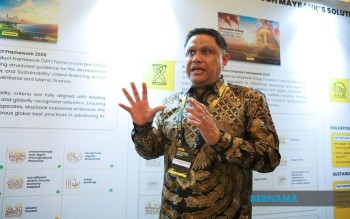
Maybank Group has positioned itself at the forefront of this transformation, announcing a RM300 billion commitment to mobilise sustainable finance across ASEAN between 2026 and 2030. The bank's Group Chief Sustainability Officer, Datuk Shahril Azuar Jimin, emphasised that implementation is already tracking ahead of schedule despite the programme launching less than six months prior. This momentum reflects genuine market demand rather than regulatory pressure alone, a distinction that carries important implications for the durability of these initiatives.
The scale of Maybank's ambition becomes apparent when compared against its previous five-year commitment. The bank mobilised RM176 billion in sustainable finance by the end of 2025, more than doubling its original RM80 billion target announced in 2021. This outperformance demolishes earlier arguments from sceptics who claimed limited investor demand for green products existed in the region. Instead, Datuk Shahril's assessment suggests that the constraint was never liquidity but rather institutional capacity and product development—banks simply lacked the frameworks and expertise to channel capital at scale.
In Malaysia specifically, government policy has amplified this momentum. The Energy Transition and Water Transformation Ministry expanded the residential quota under the Net Energy Metering (NEM) Rakyat programme by 100 megawatts in May 2025 after the existing allocation became fully subscribed. This rapid depletion of capacity demonstrates household enthusiasm for rooftop solar photovoltaic systems, creating bankable demand for financing products that support residential renewable energy installations. Such policy responsiveness, where supply constraints trigger immediate expansion, suggests policymakers recognise both the electoral appeal and economic necessity of facilitating household participation in the energy transition.
Maybank's product framework has substantially broadened to accommodate this widening scope of green investments. Beyond traditional environmental projects, the bank now offers transition finance—which supports companies moving toward sustainability—alongside EV financing, green mortgages, social finance and green bond issuance. This expansion reflects the reality that sustainability cannot be cordoned off as a separate financial system but must integrate with mainstream banking operations. A customer seeking a home loan increasingly expects environmental options, just as corporate treasurers expect banks to facilitate both conventional and green funding pathways.
Crucially, this evolution has reshaped the professional role of relationship managers within these institutions. Banking relationship management has traditionally focused on transaction execution and deal structuring. The sustainable finance transition demands that these professionals become advisors on climate and sustainability matters, capable of explaining how climate risks and opportunities affect client businesses and how specific projects generate social and environmental benefits. Maybank has invested substantially in capacity building and sustainability certification to equip relationship managers with this expanded skillset, recognising that product availability means little if sales personnel cannot articulate value propositions convincingly.
Indonesia represents a particularly significant market within this regional transformation. Maybank Indonesia mobilised approximately Rp17 trillion in sustainable financing during the 2021-2025 commitment period, establishing the subsidiary as a major player in the country's green finance market. Transportation has emerged as the strongest segment within Maybank Indonesia's sustainable financing portfolio, driven by surging EV demand. Notably, the bank has also extended sustainable finance to serve lower-income consumers through affordable housing financing and low-cost electric two-wheeler programmes, ensuring that green finance benefits extend beyond affluent purchasers of premium EVs and luxury sustainable housing.
Maybank Indonesia has become the vanguard for product innovation within the group, introducing environmental, social and governance deposit products that enable retail customers to direct capital toward companies meeting ESG criteria. These products represent a democratisation of sustainable investing, allowing ordinary depositors to align savings with values rather than restricting sustainable investment to wealthy institutional investors or high-net-worth individuals. Malaysia is expected to follow suit imminently, suggesting this innovation will scale across the regional footprint.
The bank is also preparing to develop green bond initiatives across Indonesia and the broader region, a move that links retail sustainable deposit products with institutional capital markets. Green bonds fund specific environmental projects and allow issuers to access capital from investors explicitly seeking sustainable investments. As Maybank Indonesia and parent company develop this capability, they will create channels through which regional savings can flow directly to renewable energy projects, affordable housing developments and transport infrastructure improvements.
This expansion of sustainable finance across major regional banks carries several implications for Southeast Asia's energy and climate trajectory. First, the achievement of renewable energy targets and EV adoption goals increasingly depends on financial institutions' capacity to mobilise capital at scale, make pricing competitive relative to conventional alternatives and reach consumer segments beyond affluent early adopters. Maybank's performance suggests regional banks possess both the appetite and capability to fulfil this role. Second, the mainstreaming of sustainable finance represents a structural shift rather than a temporary trend, as demonstrated by consistent outperformance against targets and rapid product proliferation across market segments.

