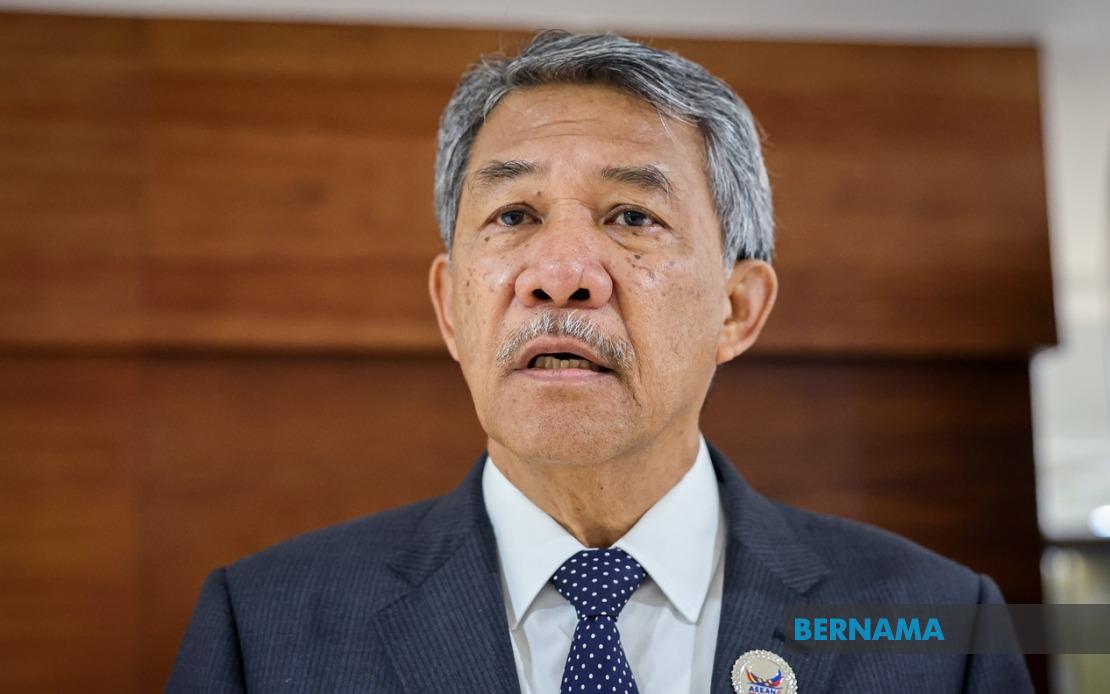
Four European countries—Sweden, Poland, Romania and Lithuania—have secured membership in the Treaty of Amity and Cooperation in Southeast Asia, marking a significant expansion of ASEAN's diplomatic reach beyond the region. The decision was formally announced during the 59th ASEAN Foreign Ministers' Meeting in Manila on July 21, with Foreign Minister Datuk Seri Mohamad Hasan confirming the four nations will complete their formal accession during a ceremonial signing scheduled for Friday, coinciding with the treaty's 50th anniversary celebration.
The approval came through the plenary session of the foreign ministers' gathering, held at the Philippine International Convention Centre. This acceptance reflects a broader pattern of international engagement with ASEAN's foundational diplomatic framework, as countries from across the globe increasingly seek to align themselves with the bloc's established norms of conduct. The Philippines, serving as ASEAN Chair for 2025, has branded these meetings under the overarching theme "Navigating Our Future, Together," emphasising collaborative approaches to regional challenges.
Since its establishment in 1976, the TAC has functioned as the cornerstone treaty governing interstate relations in Southeast Asia. The document enshrines fundamental principles including peaceful coexistence, mutual respect for sovereignty, non-interference in internal affairs, and commitment to peaceful resolution of disputes. These principles have become increasingly relevant in an era of growing strategic competition, offering a framework that allows nations with different interests and political systems to maintain constructive engagement. All eleven ASEAN member states have acceded to the treaty, giving it universal support within the regional bloc.
With these four new signatories, the TAC now encompasses 58 High Contracting Parties. The roster of non-Southeast Asian members illustrates the treaty's expanding global significance. Major powers including the United States, China, India and Japan sit alongside regional players such as Australia and New Zealand. European nations already on the list include Germany and Türkiye, while Middle Eastern states such as Saudi Arabia, Iran and Egypt have also committed to the framework. This geographic diversity underscores how ASEAN's diplomatic principles have transcended regional boundaries to attract support from nations spanning multiple continents and geopolitical camps.
According to Foreign Minister Mohamad Hasan, the ASEAN Secretariat in Jakarta is actively processing numerous additional applications from countries seeking to accede to the treaty. These pending requests will eventually be submitted to individual ASEAN member states for their separate consideration and approval. The accumulation of such applications suggests sustained international appetite to participate in ASEAN's institutional architecture, a development that carries both opportunities and complexities for the regional organisation.
The foreign minister's comments to media highlighted what he characterised as the international community's growing confidence in ASEAN as a stable and principled regional actor. He articulated the appeal of the treaty framework as a vehicle through which diverse nations can collaborate on preserving regional peace and stability, particularly relevant given contemporary security challenges spanning maritime disputes, terrorism, and great power rivalry. For countries geographically distant from Southeast Asia, accession to the TAC represents a commitment to respect ASEAN principles and a stake in regional outcomes.
For Malaysia and other Southeast Asian nations, this expansion carries multilayered implications. The arrival of major European players as TAC members could facilitate dialogue channels and cooperative mechanisms on non-traditional security issues, from climate change and pandemics to cybersecurity and counterterrorism. The inclusion of Nordic countries particularly—known for their focus on human rights and democratic governance—may introduce fresh perspectives into ASEAN discussions, though potentially also create friction over governance standards.
The timing of this expansion is noteworthy given contemporary geopolitical tensions. With major powers increasingly competing for influence in Southeast Asia, ASEAN's Treaty of Amity and Cooperation offers a neutral diplomatic space where nations can engage without necessarily choosing sides in broader strategic competitions. The willingness of both Western democracies and non-aligned nations to sign onto the same framework demonstrates its continuing relevance and the genuine appetite for rules-based engagement in regional affairs.
However, the rapid expansion of TAC membership also warrants careful consideration of implementation and enforcement mechanisms. As the roster of signatories grows, ensuring consistent adherence to the treaty's principles becomes more challenging. Disputes over interpretation—particularly regarding the principle of non-interference—have occasionally tested member commitment, especially when signatories face competing interests in the region. The addition of four more European states means greater geographic distance between some signatories and Southeast Asia, potentially affecting the treaty's practical utility as a mechanism for regional stability.
The 50th anniversary milestone being marked alongside these new admissions provides symbolic weight to ASEAN's enduring diplomatic framework. The treaty, negotiated during the Cold War era when Southeast Asia was fragmented by ideological conflict, has proven remarkably durable. Its capacity to accommodate countries with vastly different political systems and foreign policy orientations speaks to the universal appeal of the principles it embodies—principles that remain urgently needed in an increasingly multipolar world.
For Malaysia specifically, the expanding TAC membership network creates opportunities to deepen bilateral relationships with European nations while strengthening multilateral dialogue mechanisms. Malaysian policymakers may find the treaty framework increasingly valuable as a platform for raising regional concerns with major powers, particularly on issues affecting Malaysian interests in maritime security, trade, and investment flows.
The ASEAN Secretariat's processing of additional applications suggests this expansion may continue. Future admissions could include other European nations, African countries, or nations from other regions seeking formal association with ASEAN's diplomatic principles. As the treaty evolves from a primarily regional instrument into one with truly global membership, it may serve as a unique diplomatic bridge connecting Southeast Asia with distant regions, facilitating dialogue and cooperation on shared challenges from climate change to arms control.

