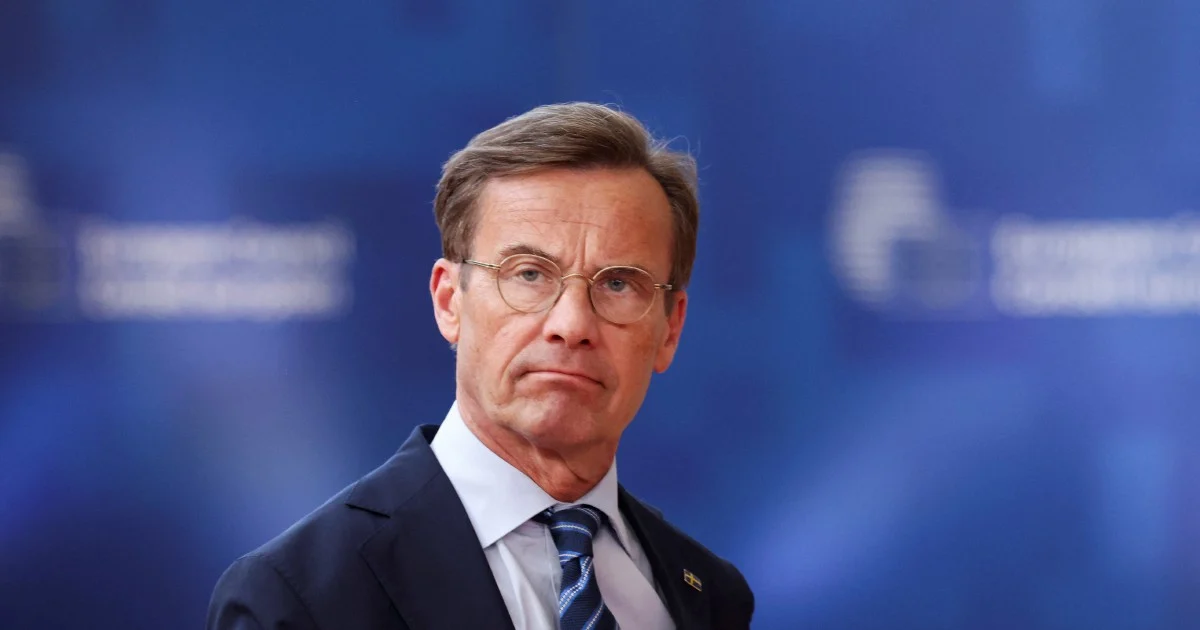
Swedish Prime Minister Ulf Kristersson has cultivated a remarkable political resilience, repeatedly sidestepping controversies that might have derailed other leaders. Throughout his four-year tenure leading Sweden's centre-right government, the Prime Minister has encountered one obstacle after another, yet each time emerged with minimal political damage. His latest challenge comes at a particularly sensitive moment, with fresh corruption allegations surfacing merely three months before Sweden holds its next legislative elections—a timing that could reshape the political landscape.
The ability to deflect criticism and move past damaging revelations has become a defining characteristic of the Kristersson administration. Whether through strategic messaging, shifts in media attention, or the vagaries of Swedish public opinion, the Prime Minister has demonstrated an uncommon capacity to absorb scandal without substantial electoral or parliamentary consequences. This pattern has puzzled observers and emboldened supporters who view his durability as a strength in navigating complex governance challenges.
For Malaysian and regional readers, the Swedish experience offers instructive parallels about political accountability and democratic resilience. Southeast Asian democracies frequently grapple with similar questions about how leaders respond to allegations of misconduct. The stark contrast between Kristersson's trajectory and the more severe consequences faced by leaders in other democracies underscores how institutional frameworks, media ecosystems, and voter tolerance levels shape political outcomes differently across societies.
The new corruption allegations emerge at a juncture when Swedish voters will soon render their verdict on the government's overall performance. Economic management, immigration policy, and social cohesion have dominated recent political discourse in Sweden, overshadowing some of the personal controversies that might otherwise dominate headlines. Kristersson's centre-right coalition has maintained relative stability despite minority government dynamics and shifting parliamentary mathematics, suggesting some public acceptance of the administration despite its turbulent passage.
Sweden's political culture emphasises institutional propriety and transparent governance, creating higher normative expectations for public officials compared to many other democracies. Yet even within this context, the Kristersson government has navigated considerable controversy. Previous scandals have ranged across multiple domains, yet the Prime Minister retained sufficient political capital to avoid collapse. This suggests either that voters compartmentalise personal misconduct from policy performance, or that opposition parties lack the parliamentary strength or public support to force meaningful consequences.
The timing of these fresh allegations warrants particular attention. Three months represents a compressed election cycle, yet sufficient time for narrative shifts and public attention fluctuations. If the allegations gain traction in mainstream Swedish media and capture voter consciousness, they could influence electoral outcomes. Conversely, if other issues dominate the campaign or if Kristersson's coalition successfully reframes the conversation around governance competence, the new scandal might follow the pattern of previous controversies.
From a Southeast Asian perspective, Sweden's experience illuminates broader questions about democratic governance. Malaysia and other regional democracies have witnessed different outcomes when political leaders face serious allegations. Some have experienced dramatic reversals of fortune, while others have demonstrated surprising capacity to maintain office. The variables determining these different outcomes—institutional independence, media freedom, opposition strength, and voter mobilisation—merit close examination across different democratic contexts.
Kristersson's centre-right coalition governs with support from Sweden's nationalist Sweden Democrats party, a partnership that itself generated considerable domestic and international controversy when formed. Managing this coalition while confronting personal allegations adds layers of complexity to his political position. The Sweden Democrats might view the Prime Minister's travails as opportunity or threat depending on their own political calculus, potentially affecting government stability independent of electoral outcomes.
Swedish media scrutiny operates under different parameters than many Southeast Asian newsrooms, emphasising investigative accountability and persistent questioning. Yet even this rigorous oversight has not translated into immediate consequences for Kristersson. This observation suggests that media exposure alone does not guarantee political consequences—the interpretation and amplification of scandals, combined with public receptiveness to criticism, ultimately determine impact.
The upcoming elections will provide clarity on whether Swedish voters view Kristersson's scandal-shedding as acceptable pragmatism or as disqualifying evidence of compromised governance. The election result will signal whether his political durability reflects genuine public confidence in his administration's performance, voter apathy about personal misconduct, or effective government messaging that separates the Prime Minister's character from policy outcomes.
For regional observers monitoring democratic resilience and accountability across different societies, the Swedish outcome carries significance beyond Scandinavia. It contributes to broader patterns about how scandal intersects with electoral outcomes in mature democracies. Whether Kristersson's coalition retains power or faces electoral reversal, his tenure illustrates fundamental tensions between institutional expectations, democratic processes, and individual leader trajectories that resonate across diverse political systems.

