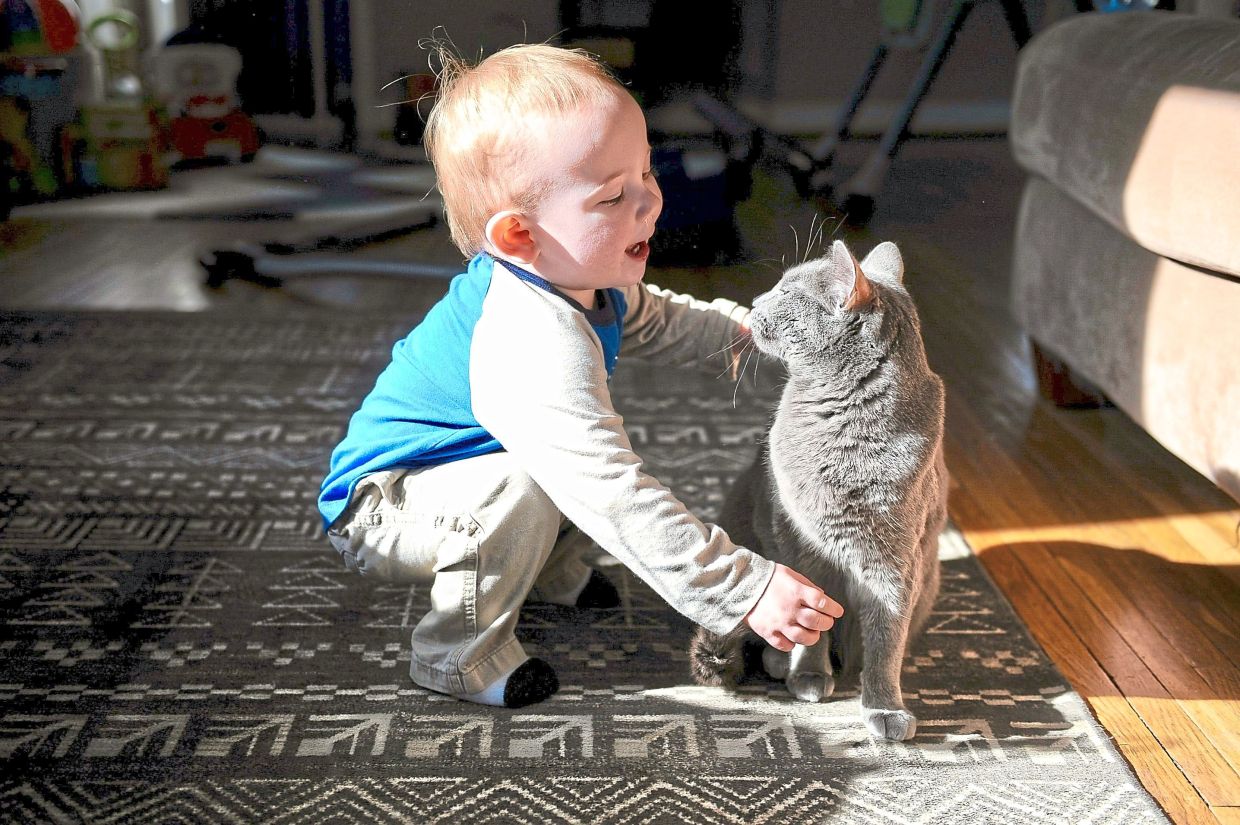
Childhood asthma remains one of the most prevalent chronic conditions globally, accounting for a significant share of paediatric hospital admissions, yet a longstanding assumption about household pet ownership may require rethinking. Researchers from Karolinska Institutet in Stockholm have published findings suggesting that cats in the home do not negatively affect asthma severity or control in children, potentially easing concerns for many families considering pet ownership or already living with feline companions.
Asthma affects an estimated 9.1 per cent of children worldwide and 11 per cent of adolescents, according to the Global Asthma Network, though these figures fluctuate considerably depending on geography, socioeconomic conditions and environmental factors. The disease burden falls particularly heavily on young populations in developed nations, where access to care may inadvertently increase diagnostic rates. Multiple established risk factors contribute to asthma development, including air pollution exposure, parental smoking, respiratory infections during early childhood, childhood obesity and pre-existing allergic conditions such as eczema or allergic rhinitis. Many parents and healthcare providers have long operated under the assumption that animal dander, particularly from cats, represents a significant additional risk factor worth avoiding.
This assumption has persisted largely on anecdotal evidence. Patients frequently report that contact with cats triggers or exacerbates their asthma symptoms, and this pattern has become deeply embedded in popular health guidance and family decision-making. However, the scientific literature addressing this question has remained surprisingly sparse and inconsistent. Available research has typically involved small, non-representative populations that may not reflect broader demographic patterns, leaving healthcare providers with limited robust evidence to offer concerned parents. The Swedish researchers therefore undertook an ambitious population-level investigation to resolve this longstanding uncertainty using comprehensive national health registers.
The study enrolled 30,277 children aged between four and 17 years who had been diagnosed with asthma or airway allergies. These young people were born between 2006 and 2020, allowing researchers to track them across the formative childhood years when asthma severity tends to stabilise. Participants were followed continuously over a 24-month period concluding in 2024, during which time the research team gathered detailed clinical information from multiple linked Swedish national databases. This data infrastructure approach proved crucial, as it enabled tracking of hospital diagnoses, emergency department visits, prescribed medications, standardised asthma control assessments and objective lung function measurements via spirometry testing.
A unique feature of this study design stemmed from Sweden's mandatory cat registration system, introduced in 2023 for all cats born after 2008. This registry allowed researchers to definitively identify which households maintained pet cats during the study period, eliminating guesswork about pet ownership. Among the cohort, approximately 9.4 per cent of children lived in households with registered cats, providing a substantial comparison group despite representing a minority. This clear categorical distinction between exposed and unexposed children strengthened the study's statistical power and reduced misclassification bias, a persistent problem in earlier investigations relying on parental recall or survey responses.
The findings demonstrated a striking absence of difference between children living with cats and those without. When examining moderate-to-severe asthma status based on medication prescribing patterns, 9.6 per cent of cat-exposed children received this classification compared with 10.1 per cent of unexposed children—a negligible and statistically insignificant variation. Acute asthma exacerbations, commonly termed attacks or flare-ups, occurred in 3.3 per cent of the cat-exposed group versus 3.5 per cent among those without cats. These parallel rates suggest that pet cat exposure, at least as measured through home residence, exerts no measurable negative influence on asthma disease activity in the population studied.
The research team further examined objective measures of lung function among a subset of 1,428 children for whom detailed spirometry data had been collected. Within this subgroup, 97 children, or 6.8 per cent, lived with cats. When comparing standard pulmonary function parameters between the two groups, no meaningful differences emerged, indicating that cat exposure had not produced detectable physiological changes in respiratory capacity. These objective measurements carry particular weight because they transcend potential reporting bias and directly assess the mechanical function of airways and lungs, providing concrete evidence that contradicts the notion that household cats compromise respiratory health in asthmatic children.
Dr Resthie R Putri, the study's corresponding author and a postdoctoral fellow at Karolinska Institutet, offered a plausible explanation for these counterintuitive results. Cat allergen exposure occurs ubiquitously throughout communities, not merely in homes that keep feline pets. Children attending schools, using public transportation or visiting friends' houses may encounter cat allergens in these shared spaces regardless of their own household composition. If undiagnosed or unrecognised allergen exposure occurs frequently across both groups, the distinction between registered home ownership and non-ownership becomes effectively blurred at the population level. This environmental saturation hypothesis suggests that the protective effect some might expect from avoiding home cat ownership may be illusory if exposures persist in other contexts.
However, the researchers acknowledged several methodological limitations warranting cautious interpretation. The dataset lacked information about which specific allergens individual children had been sensitised to through allergy testing, a detail that might have illuminated whether cat allergen represented a particular concern for susceptible subgroups. Furthermore, since Sweden's cat registration system was newly implemented at the time of this analysis, some households with cats born before 2008 may have been incorrectly classified as cat-free if owners had not registered older animals. Such misclassification, while presumably random and therefore unlikely to create artificial associations, could have obscured genuine effects within specific subpopulations.
For Malaysian families and Southeast Asian readers, the implications warrant consideration. Cat ownership remains less common in tropical Asian households compared with Northern European populations, yet asthma prevalence in the region remains substantial. The Swedish findings suggest that cat ownership alone need not dictate family decisions about pet acquisition or retention. Instead, focus might better concentrate on the established and modifiable risk factors: minimising air pollution exposure through indoor air quality management, enforcing smoke-free home environments, maintaining healthy body weight in children and systematically addressing allergic conditions through appropriate medical management. The study reinforces an increasingly important lesson in modern medicine: that commonsense assumptions about disease triggers, however intuitively appealing, require rigorous empirical testing before implementation in clinical practice and public health guidance.

