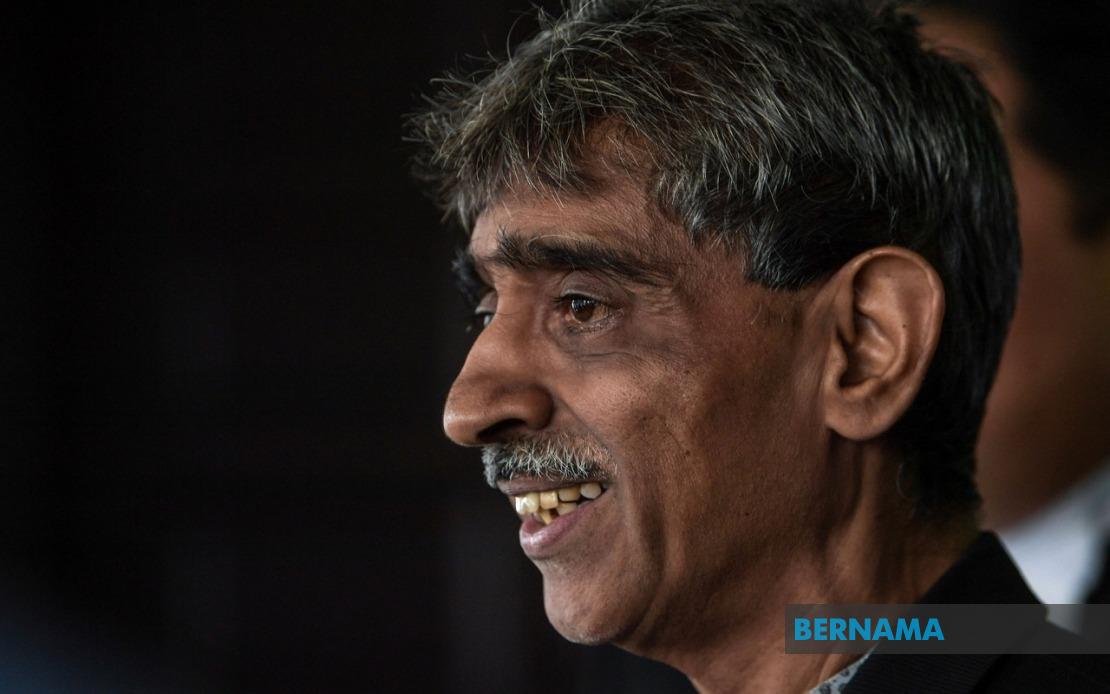
Criminal charges must be filed without delay against individuals implicated in Tabung Haji misconduct once investigators have compiled sufficient evidence, according to Mohamed Haniff Khatri Abdulla, a lawyer who participated in the Royal Commission of Inquiry examining the Islamic pilgrimage fund. He stressed that the pace and decisiveness with which authorities pursue legal action will fundamentally shape whether ordinary Malaysians regain confidence in an institution that has held the savings of millions of hajj-bound citizens.
The lawyer's intervention underscores a critical juncture facing Malaysian law enforcement and the Attorney General's Chambers as they translate the RCI's findings into actual courtroom battles. Haniff emphasised that public perception hinges not merely on whether wrongdoing occurred, but on whether the system demonstrates the political will to hold powerful figures accountable. The principle of equal justice—that no person, regardless of rank or connections, escapes accountability—carries particular weight in a case involving public funds entrusted to a government-linked institution.
Haniff articulated a concern that extends beyond Tabung Haji itself: the Malaysian public must understand that prosecutions are proceeding based on completed investigative work supported by concrete evidence, not political calculations. He cautioned against allowing the narrative to harden around the notion that charges are being brought simply because of a change in government or factional scoring. Framing matters correctly requires strategic communication from authorities, who should release information in measured stages that explain the investigative foundation underpinning each legal action.
The dimensions of the investigation remain vast and deliberately compartmentalised. According to information available to Haniff, approximately 200 individuals have been interviewed by the Royal Malaysia Police and the Malaysian Anti-Corruption Commission. These interviews span multiple domains: governance failures, suspect investment decisions, and potential breaches of fiduciary duty. The sheer number of witnesses suggests that building a comprehensive evidentiary base will demand considerable time and coordination among law enforcement agencies.
Recognising these complexities, Haniff proposed an institutional solution: the Attorney General's Chambers should establish a dedicated task force comprising three experienced Deputy Public Prosecutors versed in both anti-corruption law and conventional criminal procedure. Such a unit would evaluate investigation papers submitted by PDRM and MACC through an integrated lens, ensuring consistency and efficiency as two agencies with divergent investigative protocols feed material into the prosecution pipeline. The proposal reflects a practical acknowledgment that without coordinated oversight, delays and duplication will accumulate.
The timeline that Haniff projected—suggesting the investigation will require another three to six months minimum—reflects the reality that serious financial crime prosecutions cannot be rushed without jeopardising the integrity of legal proceedings. Shortcuts that cut corners during investigation invariably become vulnerabilities when defence counsel cross-examines witnesses and challenges evidence in court. Malaysian jurisprudence has repeatedly demonstrated that hasty prosecutions collapse under judicial scrutiny, ultimately doing more damage to public confidence than measured deliberation.
Former Court of Appeal judge Datuk Yaacob Md Sam reinforced this caution, drawing on his experience as a conducting officer in multiple RCI inquiries. He explained that an RCI report, however thorough, does not itself constitute admissible evidence or create a legal obligation to prosecute. The Commissions of Inquiry Act 1950 explicitly limits the RCI's role to fact-finding and recommendation; the report's conclusions carry no binding force in criminal or civil courts. This structural reality means that enforcement agencies must substantially duplicate the investigative work, gathering testimony and documentation through their own procedures to ensure admissibility.
Yaacob emphasised that all relevant evidence must be re-examined by PDRM and MACC through the lens of specific criminal statutes. What the RCI characterised as governance failure or poor judgment must be translated into elements of particular offences—whether breach of trust, criminal breach of fiduciary duty, cheating, or corruption. This translation requires legal expertise and cannot be performed by the RCI itself, which operates outside the adversarial criminal process.
The distinction Yaacob drew carries profound implications for Malaysian governance. RCIs serve a vital investigative function, but they cannot substitute for the independence and procedural rigour of criminal prosecution. The separation of powers embedded in this arrangement—inquiry commission findings as catalyst, but law enforcement and prosecution as gatekeepers—protects against weaponising commissions for political purposes. It also ensures that only those against whom evidence meets the criminal standard face trial.
For Malaysian depositors who have watched Tabung Haji's value erode and governance crumble, these procedural constraints may feel frustratingly abstract. Yet they exist precisely to ensure that prosecutions, when they come, will withstand appeal and survive public scrutiny. Hasty convictions that are later overturned would deepen cynicism about institutional accountability far more than patient, evidence-driven prosecution.
The Tabung Haji situation also reflects broader challenges facing Malaysia's law enforcement and judicial institutions as they confront complex financial crimes. Coordinating between PDRM and MACC, managing public expectations without prejudging outcomes, and translating institutional failures into prosecutable offences all demand capability that Malaysian agencies are still developing. Haniff's proposal for an Attorney General's task force acknowledges this reality and offers a practical pathway to improving performance.
Ultimately, the credibility of Malaysia's response to Tabung Haji misconduct will be measured not by headlines announcing arrests, but by the proportion of cases that reach conviction in court and withstand appellate review. Every prosecution that succeeds validates the institution; every one that collapses erodes it further. The challenge facing authorities is to move decisively while respecting the procedural foundations that make justice durable and legitimate.

