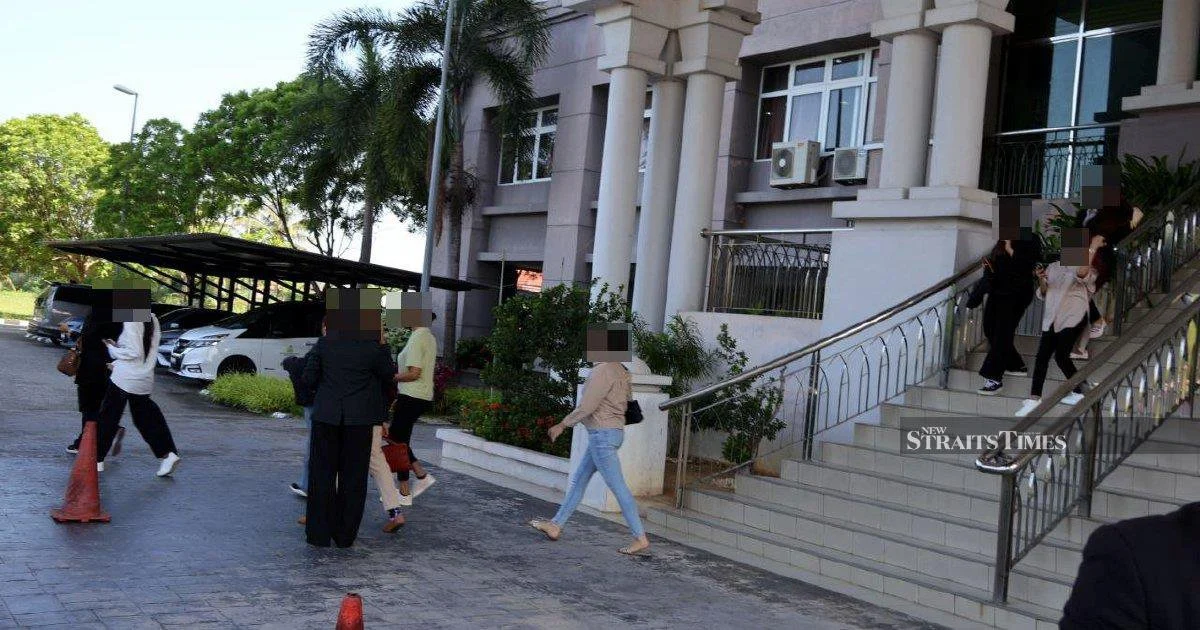
The Syariah Lower Court in Kota Baru has postponed the trial of 14 men charged with cross-dressing, following an incident that occurred at an apartment located on Jalan Mahmood in the Kelantan capital during the preceding year. The adjournment represents the latest procedural development in what has become a closely watched legal matter within Malaysia's religious court system.
The postponement comes as the prosecution and defence continue their preparations for the substantive hearing of the charges. Religious authorities in Kelantan have maintained that the case falls within the jurisdiction of the Syariah Court, which has statutory authority under Islamic law to adjudicate matters concerning alleged violations of Islamic moral codes. The specific nature of the allegations centres on the defendants' alleged engagement in cross-dressing, an activity that religious authorities in Malaysia's northern states have increasingly subjected to legal scrutiny in recent years.
The incident underlying the charges took place within a residential building in one of Kota Baru's central districts, drawing immediate attention from enforcement officials operating under Kelantan's Islamic administrative framework. The scale of the operation—involving 14 individuals—underscores the systematic nature of the alleged conduct and highlights growing concerns among religious authorities regarding community compliance with Islamic behavioral standards.
Delay in trial proceedings is not uncommon in Malaysia's Syariah Court system, where docket pressures and the complexity of gathering evidence for cases involving religious law frequently result in multiple adjournments. The postponement of this particular trial may indicate that either party requires additional time to obtain witness statements, documentary evidence, or expert testimony relevant to the charges. Court schedules are often extended to accommodate the investigative requirements specific to religious law cases.
The case reflects broader tensions within Malaysian society regarding religious enforcement, individual freedom, and the scope of Syariah Court authority. While Islamic jurisprudence in Malaysia traditionally emphasizes moral regulation, the increasing use of legal mechanisms to prosecute cross-dressing has sparked debate among civil society groups, human rights advocates, and legal scholars concerning proportionality and the appropriate balance between religious values and personal liberty. For many international observers and domestic critics, the prosecution of individuals solely for their clothing choices raises questions about the proper boundaries of religious law enforcement.
From a legal standpoint, the charges represent an interpretation of Islamic law that seeks to regulate appearance and self-presentation in accordance with traditional gender norms. Kelantan's Syariah Courts have been at the forefront of such prosecutions, reflecting the state's more stringent approach to religious compliance compared to other Malaysian jurisdictions. This divergence in enforcement intensity across states has created a patchwork of religious law application, where the same conduct may be treated differently depending on geographic location.
The postponement also reflects the operational challenges facing Syariah Courts in managing their increasing caseloads while maintaining procedural fairness to all parties. Both the prosecution and defence require adequate preparation time to present their cases effectively, and court administrators must balance the desire for expedited justice against the necessity for thorough examination of evidence and legal arguments. Multiple adjournments can extend the total duration of proceedings significantly, sometimes frustrating all stakeholders involved in the process.
The outcome of this trial will likely have implications extending beyond the immediate defendants. Religious authorities and enforcement agencies across Malaysia will monitor the proceedings and judgment closely, as the court's decision may establish precedent regarding how broadly cross-dressing charges can be prosecuted under existing Syariah law. Conversely, the judgment may influence public discourse about the appropriateness of such prosecutions and potentially prompt legislative review of relevant religious ordinances.
For the 14 men awaiting trial, the postponement represents both a delay in resolution and continued legal uncertainty. Extended proceedings can create substantial personal, professional, and psychological burdens on defendants, particularly when allegations carry social stigma. The extended timeline also raises questions about the efficiency of Malaysia's religious legal system and whether current procedures adequately protect defendants' rights to expeditious hearings.
The incident and subsequent legal action illustrate the complex intersection of religious authority, state power, and individual rights that characterizes contemporary Malaysia. While religious courts operate with constitutional legitimacy, their enforcement practices increasingly warrant public scrutiny and informed debate about fundamental principles of justice, proportionality, and human dignity. As the trial progresses, observers across Southeast Asia will continue following this case as a barometer of religious law enforcement trends in the region.

