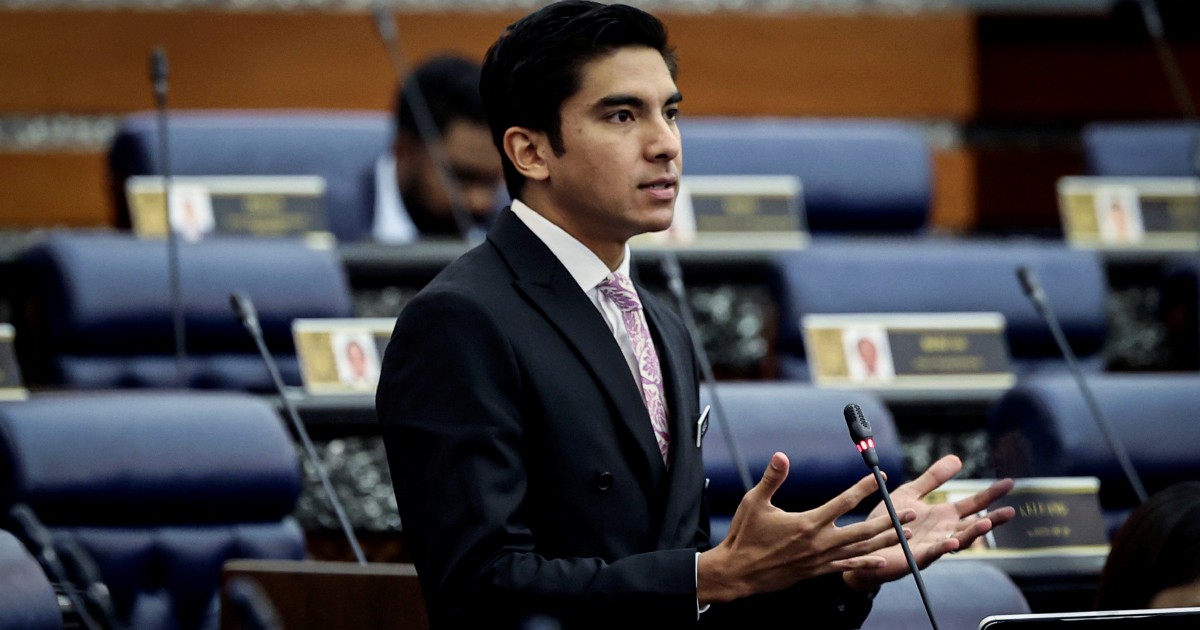
Syed Saddiq Syed Abdul Rahman, the Muda member of parliament representing Muar, has delivered a scathing critique of the opposition's decision to boycott the parliamentary discussion surrounding the Tabung Haji Royal Commission of Inquiry findings. The controversy centres on the opposition's refusal to participate in what many consider a crucial debate affecting the financial interests of over 10 million ordinary Malaysians who maintain savings accounts with the Islamic pilgrimage fund.
The boycott represents a significant political stand, though the motives behind it remain contested. Opposition lawmakers have historically used parliamentary withdrawals as a protest mechanism when they believe proceedings lack legitimacy or fail to serve national interests. However, Syed Saddiq's position reflects a contrary interpretation—that engaging constructively with the RCI report, regardless of political disagreements, serves the fundamental duty of elected representatives to protect depositor interests.
Tabung Haji occupies a unique position within Malaysia's financial landscape. As a government-linked savings institution specifically designed to facilitate Malaysian Muslims' pilgrimage to Mecca, it commands extraordinary trust and cultural significance. The scheme operates with religious undertones that transcend ordinary banking relationships, making depositor confidence exceptionally fragile. When controversies emerge regarding fund management or governance, public concern extends beyond typical investor anxiety to encompass questions about institutional integrity and stewardship of religiously significant savings.
The Royal Commission of Inquiry itself was established to investigate matters of governance, financial management, and operational practices at Tabung Haji. Such independent examinations typically carry substantial weight in parliamentary discussions, offering lawmakers evidence-based findings upon which to base policy decisions or legislative recommendations. The RCI's conclusions, whatever their nature, represent documented investigative work that parliament should address comprehensively rather than through selective engagement.
Syed Saddiq's criticism underscores a fundamental tension in Malaysian politics between principled opposition and pragmatic governance. While opposition parties maintain legitimate rights to contest government actions and challenge official narratives, certain institutional matters demand cross-partisan consensus. A parliamentary debate affecting 10 million depositors arguably falls into this category, where party politics should yield to collective responsibility for public welfare. The Muar MP's intervention suggests that some lawmakers, regardless of coalition alignment, view the opposition's stance as prioritising factional interests over constituent protection.
The timing and nature of the RCI debate carries additional weight given broader economic concerns affecting Malaysian households. Rising living costs, uncertain employment prospects, and volatile investment returns have intensified public reliance on structured savings schemes like Tabung Haji. Many depositors view their accounts as long-term financial anchors essential to retirement planning and religious obligation fulfilment. When parliamentary processes that scrutinise such schemes encounter disruption, ordinary Malaysians understandably worry whether their representatives adequately champion their interests.
Debates surrounding Tabung Haji's governance have periodically surfaced over recent years, touching on investment performance, administrative expenses, and senior management accountability. These discussions reflect wider questions about how government-linked institutions balance fiduciary duties to depositors with broader policy objectives. Parliamentary scrutiny of RCI findings offers an opportunity to reinforce governance standards and demonstrate accountability. Opposition participation, even if framed as critical engagement, would amplify scrutiny rather than dilute it.
Syed Saddiq's position also reflects Muda's positioning as a reform-oriented political force seeking to distinguish itself within Malaysian politics. By emphasising constituent protection over partisan positioning, the Muar MP articulates a governance philosophy that appeals to voters fatigued by conventional political theatre. This framing suggests that modern Malaysian politics increasingly rewards leaders who demonstrate tangible concern for ordinary citizens' material welfare rather than those who engage in symbolic protest gestures.
The opposition's motivations for boycotting parliamentary procedures warrant consideration. Opposition lawmakers may contend that current parliamentary processes lack transparency or that RCI procedures themselves contained procedural flaws warranting rejection of findings. Such positions, if substantiated, would represent principled stands rather than casual political tactics. However, from the perspective of the 10 million depositors whose financial security hangs in the balance, the legitimacy of opposition grievances becomes secondary to the practical need for comprehensive parliamentary engagement with governance findings.
Moving forward, the debate surrounding Tabung Haji governance illustrates how financial institutions serving millions of Malaysians require political consensus regarding oversight and accountability. Whether through amendment to parliamentary procedures, renewed opposition participation, or alternative engagement mechanisms, stakeholders must identify pathways toward inclusive scrutiny of Tabung Haji's operations. Allowing institutional governance to languish unexamined amid political disagreement ultimately serves no one's interests, least of all the depositors whose trust these institutions depend upon.
Syed Saddiq's intervention may catalyse reconsideration of the opposition's tactical approach. As Malaysian politics increasingly emphasises governance competence and institutional reform, political parties gain credibility through demonstrable commitment to protecting ordinary citizens' welfare rather than through manoeuvres perceived as playing petty politics. For the opposition, engaging substantively with Tabung Haji governance discussions—even while maintaining critical positions regarding government conduct elsewhere—would reinforce their positioning as serious custodians of national interests.

