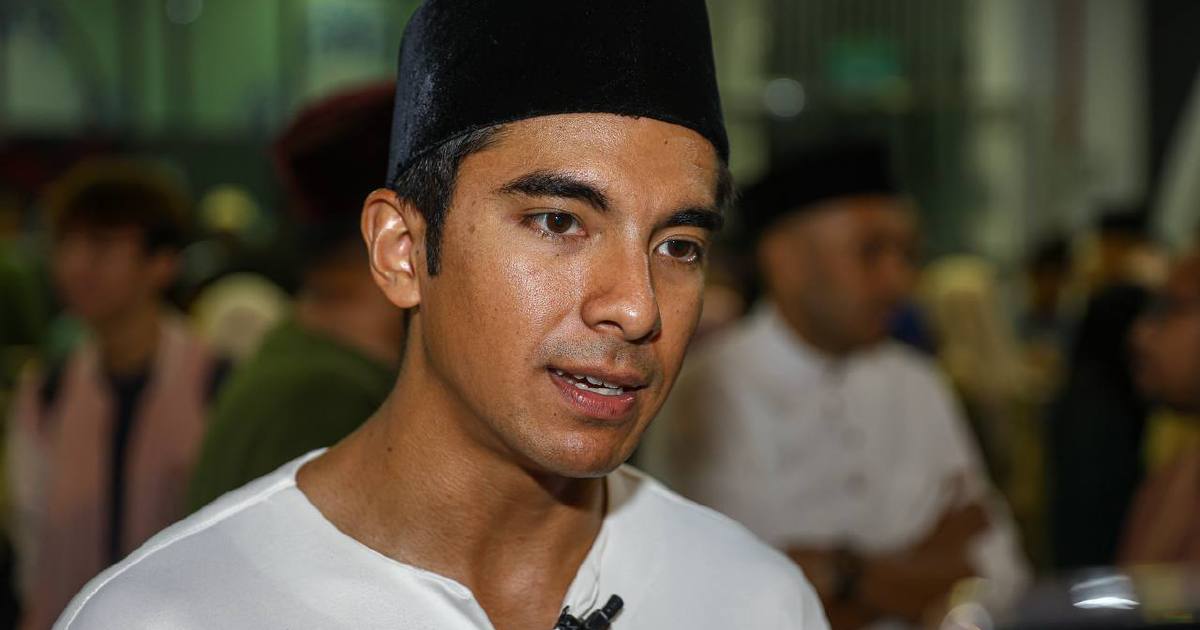
Muar Member of Parliament Syed Saddiq has signalled a sense of resignation ahead of an imminent Federal Court judgment affecting his political career, telling supporters and the media that he is prepared to accept whatever the court decides. The young politician's comments reflect the high stakes involved in the case, which has cast uncertainty over his role in parliament and his position within the Malaysian political landscape during a critical period for the country's governance.
Syed Saddiq's statement represents a significant moment in Malaysian politics, coming as the judiciary prepares to issue a ruling that could reshape the fortunes of one of the country's more prominent figures from the younger generation of lawmakers. His willingness to publicly defer to judicial authority signals both confidence in the legal process and an acknowledgment that the matter now rests beyond his direct control. The measured tone of his remarks contrasts sharply with the intensely polarised nature of Malaysian political discourse, where high-profile legal cases frequently become flashpoints for partisan mobilisation and public controversy.
The Federal Court's forthcoming decision carries implications that extend well beyond Syed Saddiq's individual circumstances. As a member of parliament and a figure who has occasionally positioned himself as a voice for reform within Malaysia's political establishment, the outcome will have consequences for party dynamics, coalition politics, and broader perceptions of how the judiciary handles cases involving sitting legislators. The case has attracted considerable public and media attention, reflecting the enduring fascination with how Malaysia's legal system addresses infractions by high-ranking political figures.
Syed Saddiq's invocation of faith in his recent public statements demonstrates a rhetorical shift that many Malaysian political figures adopt when confronting significant legal junctures. This approach, rooted in the country's predominantly Muslim culture and the broader religious values prevalent across Malaysian society, allows him to frame his predicament within a spiritual context rather than a purely legal or political one. Such framing can resonate with his constituent base and the general public, presenting acceptance of judicial outcomes as aligned with religious principle rather than defeat or vindication on narrowly political grounds.
The political ramifications of the Federal Court's ruling will likely depend on the nature and severity of the judgment. If the decision results in outcomes such as conviction, sentencing, or loss of parliamentary privileges, it would represent a substantial blow to Syed Saddiq's political trajectory and influence within his party and parliament. Conversely, an acquittal or favourable judgment could rehabilitate his standing and allow him to resume a more prominent role in legislative and party affairs. Either outcome will send signals to other politicians about the risks and consequences of legal vulnerability in Malaysia's complex political environment.
For Malaysian citizens and observers of the nation's political system, the case exemplifies the ongoing tension between political accountability and judicial independence. The public's perception of whether the Federal Court acts with impartiality or responds to political pressures remains contentious, with different segments of society interpreting judicial outcomes through sharply divergent ideological lenses. Syed Saddiq's case has become a focal point for these broader debates about institutional integrity and the rule of law in Malaysia.
The timing of the Federal Court's anticipated ruling also intersects with the broader Malaysian political calendar and the various coalition dynamics that shape parliament's functioning. Depending on his parliamentary status following the judgment, the composition of the government, the opposition, and the balance of legislative forces could shift in subtle but meaningful ways. For a relatively evenly balanced parliament such as Malaysia currently possesses, such changes can have material consequences for the passage of legislation and the stability of whatever administration holds office.
Syed Saddiq's public composure and spiritual framing of his predicament may also reflect strategic calculations about media management and maintaining political viability. By presenting himself as accepting of the court's authority and trusting in divine justice, he attempts to position himself as principled and uncontroversial regardless of the outcome. This approach seeks to insulate him from accusations of defying legitimate judicial processes or appearing to mobilise supporters in protest against court decisions, both of which could damage his broader political credibility and relationships with other parliamentary figures.
The case also highlights how legal challenges can constrain and redirect the careers of younger Malaysian politicians. Syed Saddiq's trajectory represents the experiences of several figures from Malaysia's younger generation who entered parliament with expectations of significant influence but encountered substantial legal obstacles. The accumulated effect of such cases on the pool of available political talent and the types of individuals willing to seek high office deserves serious consideration in assessing Malaysia's long-term political development.
As the Federal Court deliberates and prepares to announce its decision, the Malaysian public and political class await clarity on how judicial determination will reshape parliamentary dynamics and the fortunes of one of the country's younger politicians. Whether Syed Saddiq's faith-based approach to accepting the outcome reflects genuine spiritual conviction or calculated political messaging, the court's judgment will represent a consequential moment in Malaysian jurisprudence and political history. The coming weeks will test not only the court's independence but also the resilience and adaptability of Malaysia's political figures in responding to judicial pronouncements that can fundamentally alter their careers and influence.

