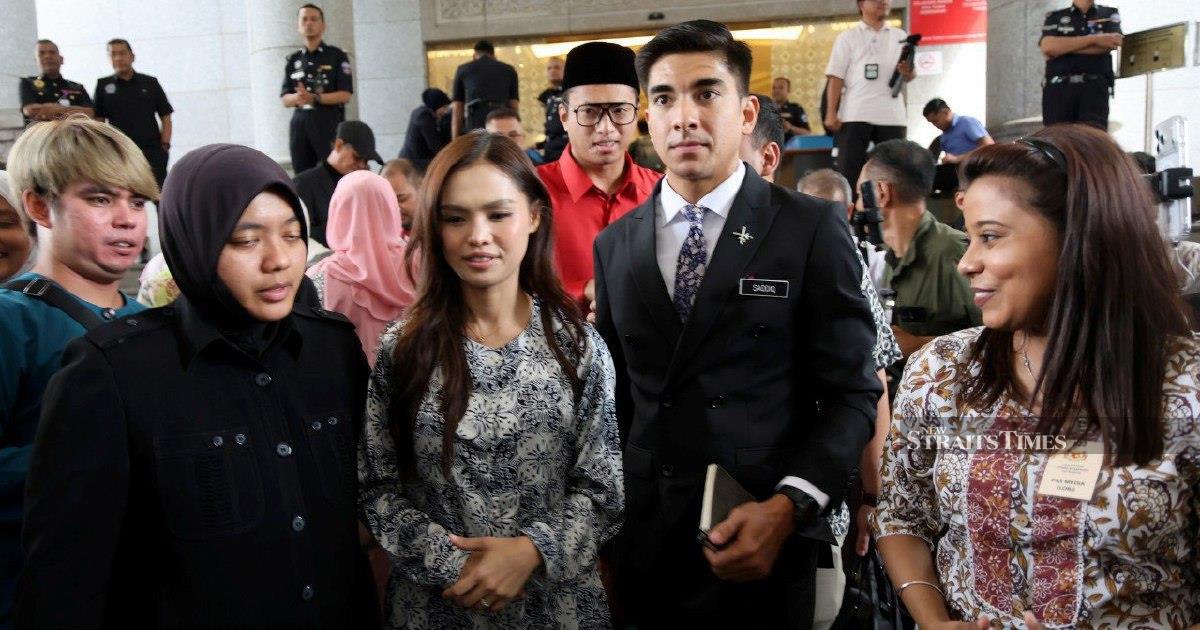
Muar member of parliament Syed Saddiq Syed Abdul Rahman has placed his personal commitments firmly ahead of any near-term political calculations concerning the youth-oriented Muda party, following his recent legal vindication in court. The 34-year-old legislator has not actively explored or pursued a return to the party helm, choosing instead to dedicate his attention to his upcoming marriage.
Syed Saddiq's decision to deprioritise Muda's leadership succession comes at a significant juncture for the party, which has experienced considerable turbulence since his departure. The political landscape surrounding Muda has shifted considerably, with various internal dynamics and external pressures reshaping the party's trajectory. His explicit focus on marriage and family life suggests he remains mindful of balancing his public parliamentary duties with private obligations—a distinction that carries weight in Malaysian political culture, where public figures often face scrutiny over their personal affairs.
The Muar MP's acquittal in court addressed legal concerns that had overshadowed his political career in recent years. This development removes a significant obstacle that had previously constrained his political manoeuvrability and public standing. However, rather than immediately leveraging this legal clearance to advance his position within party structures, Syed Saddiq has adopted a measured approach that prioritises life milestones beyond the political arena.
Muda, founded in 2020 with considerable optimism about attracting younger voters and injecting fresh perspectives into Malaysian politics, has faced mounting challenges in establishing itself as a sustainable political force. The party's trajectory has been marked by internal debates, questions about its strategic direction, and fluctuating fortunes in electoral contests. Leadership continuity and succession planning remain contentious issues within the organisation, with multiple stakeholders holding divergent visions for the party's future orientation and policy priorities.
Syed Saddiq's reluctance to immediately reassert control over Muda reflects broader considerations about political timing and personal readiness. Malaysian politics frequently demonstrates that seemingly secure positions can shift dramatically when political landscapes reconfigure. His strategic patience may indicate careful consideration of whether a leadership return would position him advantageously given current circumstances, or whether alternative arrangements might serve both his interests and Muda's developmental needs more effectively.
The timing of his marriage also carries implications for his political schedule and public visibility. Malaysian political culture traditionally recognises marriage as a stabilising life event, and the commitment to prioritising this milestone may resonate positively with constituents and party members who value personal responsibility and family values. This framing positions Syed Saddiq as someone grounded in conventional life transitions rather than purely motivated by political advancement.
For Southeast Asian observers monitoring Malaysian youth politics, Syed Saddiq's situation exemplifies the complex negotiation between personal aspirations and political ambitions. Muda represents an experiment in generational change within Malaysia's political ecosystem, and the trajectory of its potential leaders carries significance beyond party-specific concerns. The uncertainty surrounding Syed Saddiq's future involvement with Muda introduces questions about leadership succession within Malaysia's youth-oriented political formations and whether generational cohorts can sustain institutional development across multiple electoral cycles.
The broader political environment in Malaysia continues to reshape possibilities for emerging leaders and parties seeking to carve out distinct electoral niches. Muda's positioning within this landscape depends significantly on questions about leadership clarity and strategic coherence. Syed Saddiq's current focus on personal matters rather than Muda's direction may create opportunities for other party figures to consolidate influence or chart alternative courses, potentially reshaping internal power distributions.
Looking ahead, Syed Saddiq's eventual decision regarding Muda involvement will likely depend on multiple convergent factors: the consolidation of his personal circumstances following marriage, evolving assessments of the political landscape, internal party dynamics that may develop in his absence, and his own strategic calculations about whether leadership roles would advance or constrain his broader political objectives. His stated priority on marriage commitments provides him space to observe and evaluate these circumstances without public pressure demanding immediate declarations about his political intentions.
The implications of his acquittal extend beyond Muda's immediate succession questions, potentially affecting his broader standing within Malaysian politics and his capacity to mobilise support across different constituencies. How Syed Saddiq manages this period of reduced direct party involvement while completing significant personal transitions will likely influence both his subsequent political positioning and Muda's institutional development over the coming months and years.

