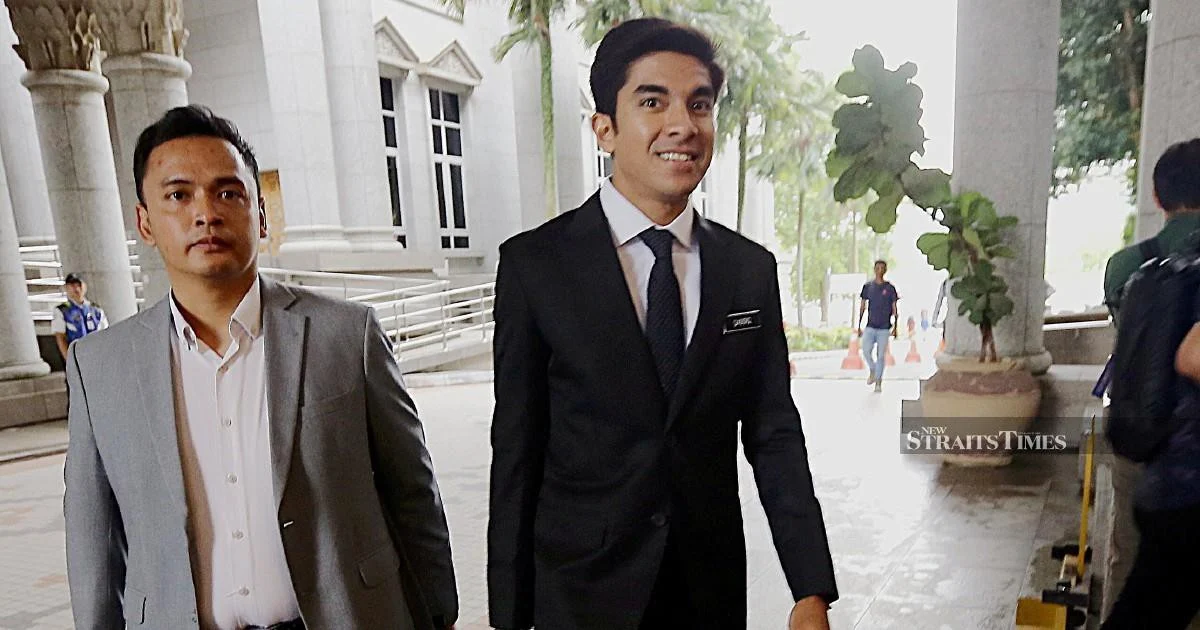
The Muda party is moving forward with its electoral ambitions in Johor by fielding Amir Fiqri "Amir Jack", a close associate of Muar member of parliament Syed Saddiq Syed Abdul Rahman, as its candidate for the Maharani constituency. The appointment signals Muda's continued push to build political presence in the southern state and represents a calculated deployment of established networks to strengthen its foothold ahead of what is expected to be a competitive electoral battle.
Amir Jack currently serves as a special officer in the office of Syed Saddiq, positioning him within the upper echelons of the reformist party's political machinery. This role has given him direct exposure to parliamentary operations and constituent engagement, experience that the party believes will serve him well in translating policy platforms into grassroots support. His candidacy forms part of Muda's broader strategy to recruit individuals with existing political infrastructure and credibility rather than fielding entirely newcomers to the electoral arena.
The Maharani seat represents a strategically important contest within Johor's political landscape. As one of the constituencies where Muda intends to mount serious competition, the selection of a candidate with ties to an established MP underscores the party's determination to contest vigorously rather than concede ground to larger, entrenched political machines. The constituency's demographic composition and historical voting patterns will likely shape how effectively Amir Jack can mobilise support across different voter segments.
Muda's decision to field four candidates across Johor reflects the party's assessment that multiple parliamentary constituencies offer realistic pathways to representation. This measured approach, rather than contesting every seat, suggests strategic focus on areas where party machinery and candidate profiles align with voter sentiment. Amir Jack's placement in Maharani indicates the party views this as one of its stronger opportunities in the state contest.
The relationship between Syed Saddiq and Amir Jack extends beyond simple employment. Syed Saddiq has built Muda on principles of grassroots mobilisation and younger demographic appeal, values that inform how the party recruits and deploys personnel. By elevating someone from his immediate circle to electoral candidacy, Syed Saddiq signals continuity in party direction and confidence in individuals who have worked within his political ecosystem. This also reflects broader trends in Malaysian politics where personal networks significantly influence candidate selection, particularly among newer parties still establishing institutional frameworks.
For Malaysian voters, particularly those in Johor, this development highlights how political parties continue leveraging personal relationships and institutional proximity as pathways to electoral candidacy. While established parties have long traditions of identifying and grooming candidates through various mechanisms, younger movements like Muda must demonstrate they can translate organisational capability into electoral performance. Amir Jack's candidacy will serve as a test case for whether association with a respected parliamentarian translates into voter support at the state level.
The Maharani contest will unfold within the broader context of Johor politics, where competition typically involves the Barisan Nasional coalition, Perikatan Nasional, and increasingly, opposition alliances incorporating PKR and DAP. Muda's positioning as a centrist reform party, distinct from both the traditional government machinery and the established opposition, requires candidates who can credibly articulate this differentiation to voters. Amir Jack's campaign messaging will need to address why Muda offers a superior alternative to voters currently aligned with larger political formations.
The forthcoming Johor election represents a critical inflection point for Muda's trajectory as a political force. Since its formal registration, the party has sought to establish itself as a viable electoral option particularly among younger and urban constituencies. Performance in state-level contests like Johor directly influences the party's negotiating position in potential future coalition arrangements and its capacity to attract additional talent from established parties. Strong results would validate Muda's strategic choices; disappointing outcomes would prompt reassessment of candidate selection and campaign approaches.
Amir Jack's personal profile and background will substantially influence his capacity to connect with Maharani voters. His tenure as a special officer provides him with understanding of parliamentary machinery and policy issues, but electoral success at state level demands different skillsets including localised community engagement and responsiveness to constituency-specific concerns. How effectively he transitions from behind-the-scenes parliamentary support to frontline political candidate will significantly shape his electoral prospects.
The announcement also reflects Muda's confidence in maintaining and growing party membership, particularly among professionals and younger political activists willing to contest under its banner. Unlike established parties with historical roots in particular constituencies, Muda must continuously demonstrate that candidacy represents a viable political vehicle rather than a quixotic venture. Fielding candidates closely associated with successful parliamentarians like Syed Saddiq helps address this perception challenge by providing voter reassurance through established political credentials.
As Johor's electoral campaign develops, Amir Jack will necessarily define his political identity beyond his role as Syed Saddiq's aide. While that association provides initial credibility and organisational support, voters in Maharani will ultimately evaluate him on his own policy positions, campaign commitment, and demonstrated understanding of local concerns. His campaign will represent a broader test of whether Muda can translate parliamentary representation into expanded state-level presence.
%22%2F%3E%3C%2Fpattern%3E%3C%2Fdefs%3E%3Crect%20width%3D%22100%25%22%20height%3D%22100%25%22%20fill%3D%22url(%23ph1hlthg)%22%2F%3E%3Crect%20width%3D%22100%25%22%20height%3D%22100%25%22%20fill%3D%22url(%23ph1hlthp)%22%2F%3E%3Ctext%20x%3D%2250%25%22%20y%3D%2250%25%22%20text-anchor%3D%22middle%22%20dominant-baseline%3D%22central%22%20fill%3D%22rgba(255%2C255%2C255%2C0.95)%22%20font-family%3D%22Georgia%2C%20'Times%20New%20Roman'%2C%20serif%22%20font-weight%3D%22700%22%20font-size%3D%22151%22%20letter-spacing%3D%22-0.02em%22%3EMalaysian%3C%2Ftext%3E%3C%2Fsvg%3E)
%22%2F%3E%3C%2Fpattern%3E%3C%2Fdefs%3E%3Crect%20width%3D%22100%25%22%20height%3D%22100%25%22%20fill%3D%22url(%23ph11w77g)%22%2F%3E%3Crect%20width%3D%22100%25%22%20height%3D%22100%25%22%20fill%3D%22url(%23ph11w77p)%22%2F%3E%3Ctext%20x%3D%2250%25%22%20y%3D%2250%25%22%20text-anchor%3D%22middle%22%20dominant-baseline%3D%22central%22%20fill%3D%22rgba(255%2C255%2C255%2C0.95)%22%20font-family%3D%22Georgia%2C%20'Times%20New%20Roman'%2C%20serif%22%20font-weight%3D%22700%22%20font-size%3D%22226%22%20letter-spacing%3D%22-0.02em%22%3EPolice%3C%2Ftext%3E%3C%2Fsvg%3E)
%22%2F%3E%3C%2Fpattern%3E%3C%2Fdefs%3E%3Crect%20width%3D%22100%25%22%20height%3D%22100%25%22%20fill%3D%22url(%23ph56tdng)%22%2F%3E%3Crect%20width%3D%22100%25%22%20height%3D%22100%25%22%20fill%3D%22url(%23ph56tdnp)%22%2F%3E%3Ctext%20x%3D%2250%25%22%20y%3D%2250%25%22%20text-anchor%3D%22middle%22%20dominant-baseline%3D%22central%22%20fill%3D%22rgba(255%2C255%2C255%2C0.95)%22%20font-family%3D%22Georgia%2C%20'Times%20New%20Roman'%2C%20serif%22%20font-weight%3D%22700%22%20font-size%3D%22320%22%20letter-spacing%3D%22-0.02em%22%3EIran%3C%2Ftext%3E%3C%2Fsvg%3E)