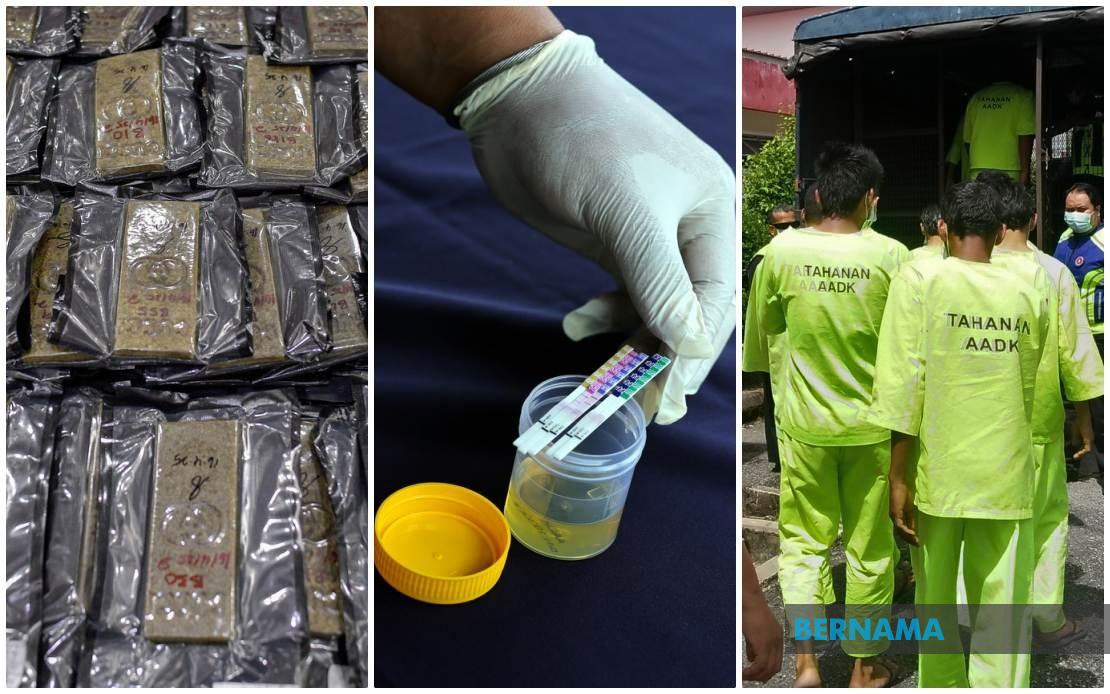
The synthetic drug crisis gripping Malaysia has reached alarming proportions, with Home Minister Datuk Seri Saifuddin Nasution Ismail revealing that 141,817 cases were logged last year. The trajectory is deeply concerning: cases climbed from 145,526 in 2023 to 192,852 so far in 2024, signalling an accelerating problem that demands urgent intervention across law enforcement, public health, and community sectors. These figures underscore how Malaysia's drug landscape has fundamentally shifted, with traditional narcotics ceding ground to laboratory-manufactured substances that pose unprecedented challenges for authorities and treatment providers alike.
Synthetic drugs, particularly amphetamine-type stimulants, now dominate the abuse statistics, representing approximately 70 per cent of all recorded drug offences nationally. This concentration reflects a profound change in user preferences and supply chain dynamics. Where heroin, cannabis, and kratom once dominated, methamphetamine—locally known as syabu—has become the substance of choice for Malaysian abusers. The transition reveals how global drug markets evolve rapidly, with traffickers adapting production and distribution to meet shifting demand and exploit enforcement gaps. For Malaysian authorities, combating this shift requires fundamentally different investigative and rehabilitation strategies than those developed for traditional opiates.
Geographical analysis conducted by relevant agencies including the National Anti-Drugs Agency (AADK), Ministry of Health, and Royal Malaysia Police reveals a troubling concentration of cases along the east coast corridor. This pattern is not random; rather, it reflects complex factors including proximity to trafficking routes, socioeconomic conditions, population demographics, and the availability of rehabilitation infrastructure. The east coast's vulnerability to synthetic drug penetration suggests that regional approaches to enforcement and prevention may prove more effective than blanket national strategies. Pendang district recorded the highest incidence rates, followed by Kuala Krai, with Bachok, Besut, and Mersing similarly burdened, indicating that smaller towns and rural areas face disproportionate challenges in accessing treatment and prevention services.
A particularly troubling development is the emergence of fentanyl, a synthetic opioid exponentially more potent than morphine and capable of causing fatality in tiny quantities. While current prevalence remains limited compared to amphetamine-type stimulants, the recent detection of fentanyl in adulterated vape products signals the beginning of what could become a catastrophic public health emergency. The Malaysian government has responded by amending the Drug Dependants (Treatment and Rehabilitation) Act and the Dangerous Drugs Act 1952 to classify fentanyl as a scheduled substance, enabling law enforcement to prosecute possession and trafficking. However, fentanyl's microscopic potency and the ease with which it can be concealed and diluted into other products present enforcement difficulties that conventional drug control methods may struggle to address.
The demographic pattern of drug abuse is particularly concerning, with nearly 75 per cent of cases involving individuals aged between 15 and 39. This concentration among young Malaysians represents not merely a public health crisis but a socioeconomic and social development challenge with generational implications. Young people constitute Malaysia's demographic dividend, yet large numbers are becoming entrapped in cycles of addiction, incarceration, and marginalisation. The prevalence of drug-related cases among adolescents and young adults raises questions about educational gaps, mental health support, employment opportunities, and family structures that may predispose youth to substance abuse. Prevention and early intervention strategies targeting this age group must address underlying vulnerabilities rather than relying solely on enforcement responses.
Prison statistics dramatically illustrate the magnitude of the problem. Approximately 70 per cent of Malaysia's incarcerated population has direct links to drug-related offences, whether convicted or awaiting trial. In facilities such as Machang prison, drug-related cases approach 100 per cent of the inmate population. These figures reveal that Malaysia's criminal justice system has become substantially a drug enforcement mechanism, with implications for prison management, rehabilitation capacity, and resource allocation. Overcrowding exacerbated by drug offenders complicates efforts to provide meaningful rehabilitation, education, and skills development. Furthermore, the high proportion of remand prisoners awaiting trial suggests backlogs in the judicial system that delay resolution of cases and prolong detention.
The government has implemented multifaceted responses drawing upon community-based prevention, school-based education programmes, family intervention initiatives, and workplace prevention strategies. Coordinated action involving the AADK, police, customs authorities, and health agencies represents an acknowledgement that drug control requires integrated approaches spanning enforcement, prevention, and treatment. However, the continuing upward trajectory of case numbers suggests that current interventions, while comprehensive in scope, may be insufficient in scale or effectiveness. The challenge lies not merely in designing appropriate policies but in adequately resourcing their implementation across Malaysia's geographically dispersed communities, particularly in rural and less developed regions where treatment facilities and trained personnel remain scarce.
Technological advancement has paradoxically complicated enforcement efforts. The proliferation of online platforms facilitating drug transactions has created borderless marketplaces where unregulated sales occur with minimal oversight. These digital platforms operate beyond traditional regulatory frameworks and evade conventional law enforcement methods dependent upon physical surveillance and controlled purchases. Buyers and sellers interact anonymously, transactions occur across jurisdictions, and payment methods leave difficult-to-trace digital footprints. This technological dimension of the drug trade presents an emerging frontier in Malaysian drug enforcement, requiring investment in cybercrime capabilities, international cooperation, and regulatory innovation. The shift toward online transactions also reflects changing consumer behaviour and suggests that demand reduction strategies must increasingly target digital spaces.
Malaysia's position within global drug trafficking networks presents additional complexity. While the Home Minister did not characterise Malaysia as primarily a consumption market, the questions raised regarding transit hub and distribution centre status warrant serious examination. Malaysia's geography, with multiple maritime boundaries, established port infrastructure, and location within Southeast Asia's trafficking routes, creates inherent vulnerability to being exploited for transnational drug movement. The emergence of synthetic drugs—particularly those manufactured in clandestine laboratories—alongside traditional heroin and other products suggests that Malaysian criminal networks may be engaging in multi-commodity trafficking rather than specialising in single substances. Understanding whether Malaysia functions primarily as a market, transit point, or production node has significant implications for enforcement strategy and international cooperation frameworks.
The escalation from 145,526 cases in 2023 to 192,852 in 2024 within merely six months suggests an unsustainable trajectory if current trends continue. This acceleration cannot be attributed solely to improved detection and reporting, though enhanced enforcement certainly contributes. The genuine expansion of synthetic drug use reflects supply-side factors including increased manufacturing capacity, distribution network development, and demand-side factors encompassing changing user preferences and evolving social circumstances. Addressing this crisis requires simultaneous action across multiple domains: law enforcement must disrupt supply chains and incapacitate trafficking organisations; public health systems must expand treatment capacity and accessibility; education programmes must reach vulnerable populations with evidence-based prevention messaging; and social development initiatives must address the underlying vulnerabilities that make substance abuse attractive or psychologically necessary for many Malaysians.
The synthetic drug crisis carries profound implications for Malaysia's development agenda and regional stability. High prevalence of addiction, incarceration, and associated social disruption diverts human capital from productive economic activity, burdens public health and criminal justice systems, and perpetuates cycles of poverty and marginalisation within affected communities. For neighbouring Southeast Asian nations, Malaysia's experience serves as both warning and reference point. The speed with which synthetic drugs have displaced traditional narcotics suggests that other ASEAN countries with similar vulnerabilities may face comparable trajectories. Regional cooperation mechanisms, intelligence sharing on trafficking routes and manufacturing locations, and harmonised regulatory approaches may prove essential in addressing what is fundamentally a transnational challenge that respects no borders and transcends purely national solutions.