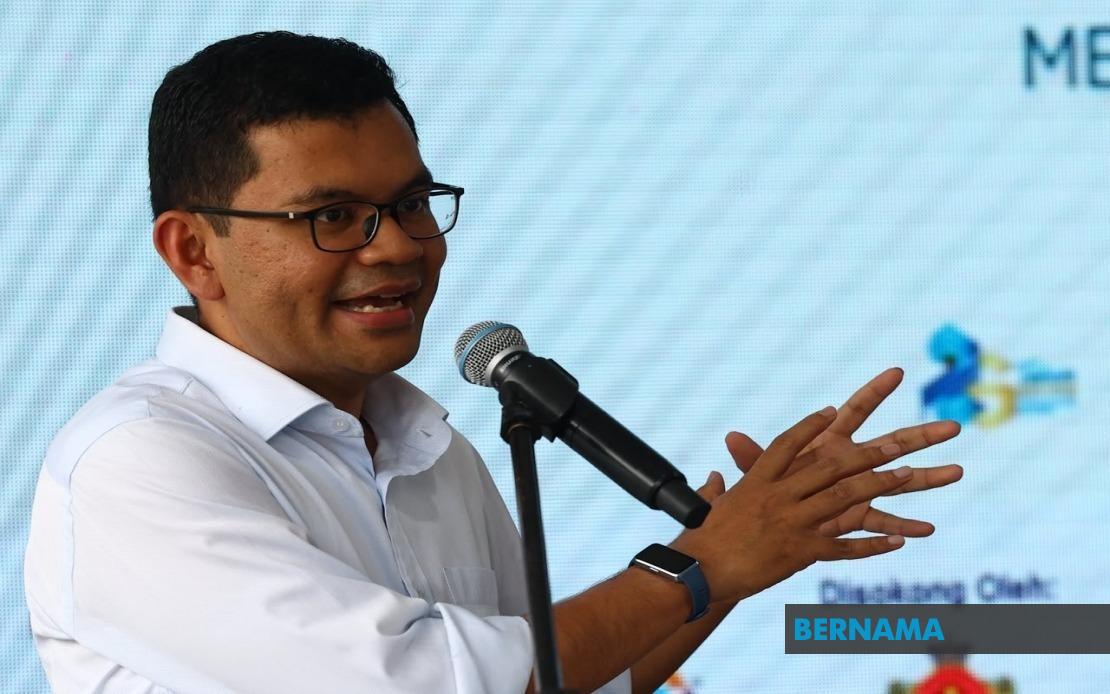
Economy Minister Akmal Nasrullah Mohd Nasir has sounded the alarm over a troubling pattern of negligence and poor governance that continues to undermine public sector project delivery across Malaysia. Speaking in Alor Setar on August 6, he pointed to the intersection of complacency, weak oversight mechanisms, and diffused responsibility as the primary culprits behind the persistent drain on state finances earmarked for infrastructure and essential services. Despite the nation's near seven decades of independence and multiple changes in political leadership, these structural weaknesses remain largely unaddressed, allowing similar failures to repeat in successive administrations.
The minister's remarks were prompted by persistent difficulties surrounding the Kedah water treatment plant project, an initiative directly funded through the public purse. Rather than merely assigning blame to particular individuals or previous administrations, Akmal Nasrullah framed his intervention as a systemic diagnosis intended to catalyse genuine reform in how government agencies plan, execute, and monitor capital projects. His willingness to publicly critique implementation failures reflects a growing recognition within the ministerial ranks that incremental improvements and business-as-usual approaches will not suffice to arrest the haemorrhaging of public resources.
Some quarters have pushed back against Akmal Nasrullah's decision to air these grievances publicly, suggesting that such matters fall outside his purview as Economy Minister and that his remit should be confined to high-level economic policy formulation. Others have characterised his stance as unusually candid for a government minister, implying that such forthright criticism breaches established protocols of administrative discretion. However, the minister has rejected these objections, arguing that the line between policy and implementation accountability is artificial and counterproductive. He contends that a minister's responsibility extends beyond drafting legislation to encompass ensuring that the mechanisms for translating policy into concrete outcomes function effectively and with integrity.
The Kedah water treatment plant serves as a case study illustrating how institutional inertia and weak internal controls can derail even well-intentioned projects. Akmal Nasrullah has been personally tracking the initiative's progress across multiple organisational iterations, from its original placement under the Energy Transition and Water Transformation Ministry (PETRA) through to its subsequent oversight by the Economy Ministry. Throughout this period, he identified numerous red flags and raised concerns about design, procurement, and delivery processes. Despite his interventions, the necessary corrective measures were not implemented with sufficient urgency or rigour.
The warning signs that Akmal Nasrullah repeatedly flagged eventually materialised into substantive problems, vindicating his earlier concerns but also underscoring a troubling organisational reality: senior officials failed to act decisively on information provided by a cabinet-level minister. This suggests that accountability mechanisms within the civil service operate weakly, with junior officials potentially immune from consequences for inaction and senior executives often unable to enforce compliance without triggering bureaucratic resistance. The gap between identification of problems and their resolution points to fundamental weaknesses in how authority is exercised and how responsibility is enforced within government hierarchies.
At the heart of Akmal Nasrullah's critique lies a deeper argument about institutional culture and mindset rather than mere procedural shortcomings. While government policies inevitably evolve in response to shifting social, economic, and technological circumstances, the underlying attitudes and professional standards that should govern public administration have not kept pace. He suggests that no amount of policy refinement will address wastage if the individuals responsible for implementation remain either indifferent to waste or incapable of preventing it. This diagnosis has profound implications for how Malaysia might approach civil service reform, particularly in inculcating a stronger sense of personal accountability for stewardship of public funds.
The broader Malaysian context amplifies the significance of Akmal Nasrullah's intervention. Southeast Asian nations have long grappled with the challenge of translating ambitious development plans into reliable infrastructure and services. Countries in the region frequently report substantial cost overruns, schedule delays, and quality shortfalls in government-funded projects. Malaysia's relatively advanced institutional framework and democratic oversight mechanisms should theoretically position it to perform better than neighbours, yet anecdotal evidence and individual cases suggest that implementation gaps remain endemic. If a minister with portfolio responsibility cannot move the needle on a single problematic project despite repeated interventions, questions arise about the viability of larger systemic reform without more structural changes.
The minister's emphasis on the need for changed attitudes points toward a potential pathway forward, though one that may prove arduous to navigate. Generating a genuine cultural shift in how public servants approach their responsibilities for managing taxpayer resources requires sustained leadership, institutional incentives, public scrutiny, and consequences for failure. It also demands that senior leaders like Akmal Nasrullah continue to exercise their influence to push accountability upward and downward through administrative hierarchies. His willingness to challenge comfortable orthodoxies and to insist that government ministers bear responsibility for implementation outcomes, not merely policy design, may gradually reshape expectations around governance performance.
For Malaysian taxpayers and citizens reliant on public services, the practical implications are substantial. Water security, power generation, transportation networks, and healthcare systems all depend on government's capacity to execute capital projects efficiently and to specification. When these projects encounter chronic delays or deliver substandard outcomes, the human cost extends beyond the purely financial. The Kedah water treatment plant, though perhaps a modest project in national terms, represents the class of essential infrastructure that underpins quality of life. Akmal Nasrullah's insistence on accountability and his refusal to accept complacency may gradually influence how project management is conducted across government agencies, though meaningful progress will likely require complementary actions from other stakeholders including Parliament, the media, and civil society watchdogs.

