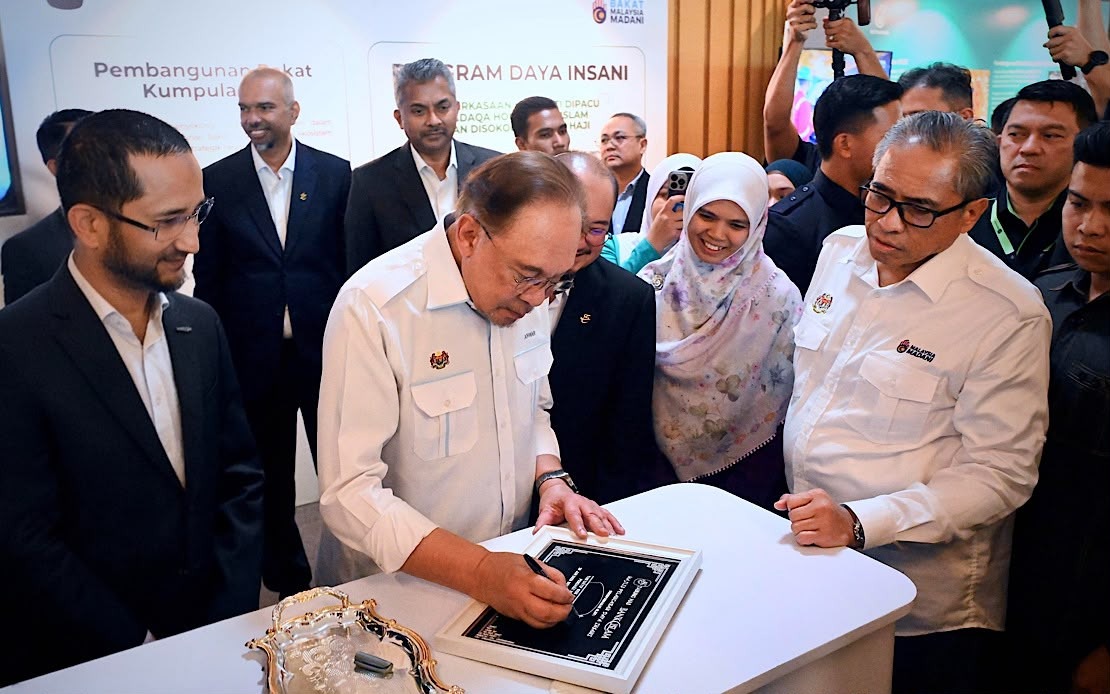
Malaysia's Tabung Haji and Bank Islam have jointly unveiled an ambitious youth development programme designed to lift economically vulnerable young people into stable, well-remunerated careers. The initiative, branded DAYA INSANI—standing for Asnaf Youth Development Programme for Inclusive and Sustainable Empowerment—carries an initial commitment of RM1 million and forms part of the broader MADANI Talent agenda championed by Prime Minister Datuk Seri Anwar Ibrahim at its launch in Sendayan, Negeri Sembilan.
The programme reflects a strategic recognition among Malaysia's Islamic finance sector that human capital development remains one of the most enduring investments in national prosperity. Tabung Haji and Bank Islam have structured DAYA INSANI to combine three complementary pillars: intensive vocational and professional training, direct exposure to real industry environments, and guaranteed job placement through pre-identified corporate and institutional partners. By embedding these three elements into a cohesive pathway, the scheme seeks to eliminate what has traditionally been the weakest link in youth employment programmes—the often-uncertain transition from classroom to workplace.
The financial and professional partnerships underpinning the initiative extend across a diverse ecosystem of skill-building institutions. The Kulim Hi-Tech Park Skills Centre will produce technically proficient workers capable of operating sophisticated manufacturing and industrial equipment. Meanwhile, Kolej Universiti Bestari and Kumpulan Medic Iman Sdn Bhd will collaborate to prepare nursing professionals, addressing a persistent shortage in Malaysia's healthcare sector. The Malaysian Professional Accountancy Centre will shepherd participants toward certified accountancy qualifications, whilst Showme Education will train therapists across mental health and rehabilitation disciplines. This institutional breadth signals recognition that asnaf youth require pathways into both blue-collar technical trades and white-collar professional roles.
The programme already demonstrates tangible momentum. A nursing diploma initiative, launched in 2024 with UCB and KMI Healthcare, currently enrolls nineteen students, with one graduate already successfully employed. A technical training cohort at Kulim Hi-Tech Park commenced in June with thirteen participants, with organisers targeting rapid expansion to one hundred trainees within months. These early cohorts suggest the operational mechanisms are functioning effectively and that demand among eligible youth is substantial. The programme is expected to benefit over one hundred asnaf youth and orphans in its immediate phase, though scalability remains contingent on securing additional funding.
A critical dimension of DAYA INSANI lies in its fundraising structure. Beyond the initial RM1 million from Tabung Haji, the scheme explicitly invites contributions from corporate entities, philanthropic institutions and high-net-worth individuals. This hybrid financing model—combining anchor government backing with private sector participation—reflects evolving thinking around sustainable social enterprise financing in Malaysia. Rather than depending entirely on single-source public funding, which remains vulnerable to budgetary constraints, the programme creates multiple revenue streams. This approach aligns with the broader shift toward blended finance mechanisms where social outcomes are pursued through partnerships combining different capital sources.
For Malaysian policymakers, DAYA INSANI arrives at a moment when skill mismatches are creating parallel labour market crises. Many employers report difficulty filling technical and professional positions, even amid youth unemployment. Simultaneously, economically disadvantaged young people, particularly orphans and recipients of zakat assistance (asnaf), often lack the networks, mentorship and initial capital required to enter formal education or training pathways. DAYA INSANI addresses this mismatch by explicitly targeting the asnaf population—those whom Malaysia's Islamic zakat system recognises as requiring support—and channelling them directly into sectors with demonstrated employer demand and wage growth trajectories.
Tabung Haji Group Managing Director Mustakim Mohamad framed the initiative within a distinctly Islamic philosophical framework, characterising human capital investment as the optimal utilisation of communal resources for the ummah's collective future. Bank Islam's chief executive, Raja Datin Paduka Teh Maimunah Raja Abdul Aziz, similarly emphasised the programme's alignment with principles of social finance—an approach prioritising community welfare and equitable economic participation alongside financial sustainability. This theological and ethical grounding distinguishes DAYA INSANI from purely commercial youth employment schemes, positioning it within Malaysia's institutional commitment to inclusive development.
Regionally, the initiative carries significance beyond Malaysia's borders. Throughout Southeast Asia, youth underemployment and skill gaps constrain economic mobility, particularly among low-income communities. Malaysia's demonstration that Islamic finance institutions can effectively mobilise capital for large-scale vocational empowerment may offer a replicable model for neighbouring economies with substantial Muslim populations and comparable demographic challenges. The programme's emphasis on systematic partnership between financial institutions, government bodies and private industry provides a template that could be adapted across ASEAN contexts facing analogous labour market disruptions.
The broader MADANI Talent framework contextualising this launch signals government intent to position Malaysia competitively as regional demand for skilled workers intensifies. Automation and industrial digitalisation are reshaping labour requirements across Southeast Asia, creating urgent pressure to upskill workforces. By explicitly investing in disadvantaged youth—those most likely to be excluded from market-driven skill acquisition—Malaysia demonstrates a commitment to inclusive prosperity that may enhance social cohesion whilst simultaneously addressing genuine labour shortages. DAYA INSANI represents this commitment translated into operational reality.
Looking forward, programme success will depend on sustained fundraising momentum, employer commitment to hiring graduates, and capacity to maintain quality across rapid expansion. The track record of early cohorts will be crucial—employers will base future participation decisions partly on the competence and reliability of initial programme graduates. Additionally, retention beyond job placement remains essential; many youth employment schemes show strong placement rates but subsequent employment stability varies widely. DAYA INSANI's long-term impact will ultimately hinge on whether participants remain gainfully employed and experience meaningful wage and skill progression within two to three years of placement, indicators that remain to be demonstrated.
For Malaysian youth from economically disadvantaged backgrounds, DAYA INSANI offers genuine access to career pathways previously accessible only through private training providers or family networks. By integrating skills training, industry exposure and employment placement within a unified framework supported by Malaysia's largest pilgrimage fund and a major Islamic bank, the scheme provides both economic opportunity and the institutional credibility that many young people require when navigating transitions to adulthood. Whether DAYA INSANI achieves its transformative aspirations will substantially depend on implementation rigour and sustained institutional commitment beyond the programme's flashy launch phase.

