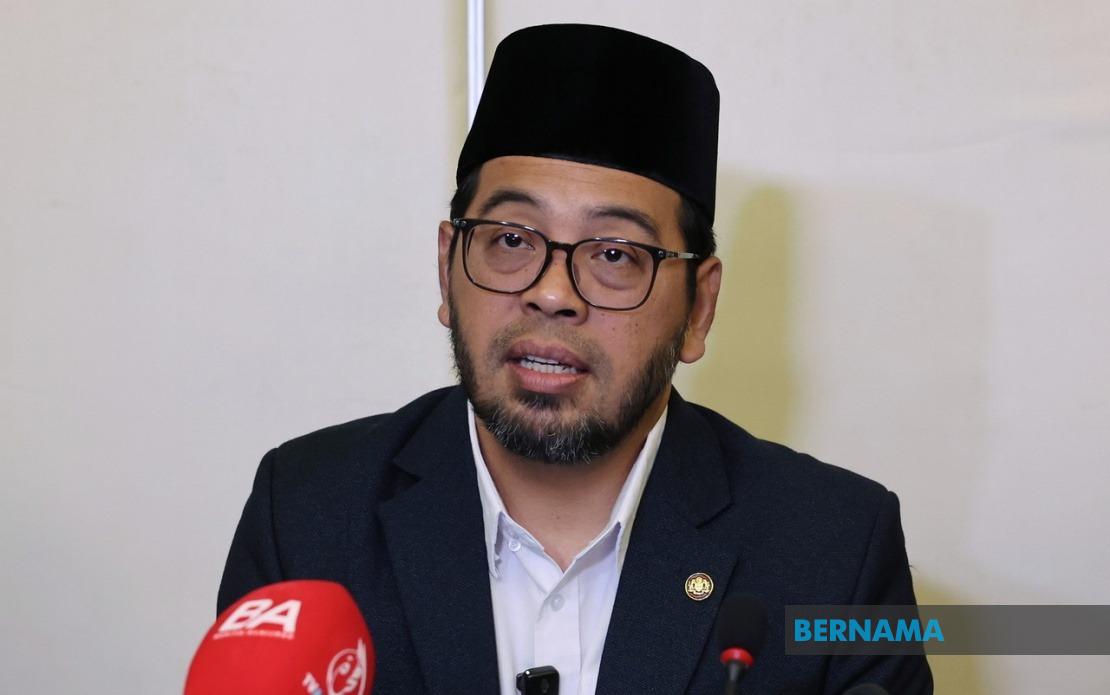
Malaysia's religious affairs minister has declared that Tabung Haji (TH), the country's Islamic pilgrimage savings fund, has emerged significantly strengthened following an intensive institutional recovery programme undertaken since the MADANI Government took office in late 2022. Speaking during a special parliamentary sitting, Dr Zulkifli Hasan outlined how the fund has moved past a period marked by difficult legacy assets and competitive challenges that had accumulated within the organisation dating back to 2018.
When the current administration assumed responsibility for the nation's governance, TH was grappling with the consequences of accumulated operational and financial difficulties. Rather than rushing to release findings or impose sweeping changes immediately, the government determined that the institution required breathing room to conduct thorough internal reforms. This measured approach was designed to allow new management structures and processes to take root before subjecting the organisation to public scrutiny and investigation. With those rehabilitation efforts now substantially complete, officials have judged the moment appropriate to release comprehensive findings and subject them to parliamentary debate.
The shift toward transparency reflects confidence in the institution's improved standing. Zulkifli expressed appreciation toward the reformed management and all parties who contributed to restoring TH's operational and financial health. This includes the awarding of five World's Best Haj Management Awards across four consecutive years, a recognition that signals international validation of the fund's current capabilities and governance standards. The accolades underscore how capable and integrity-driven leadership can effectively navigate a large institutional turnaround, particularly one involving substantial public trust.
The catalyst for this parliamentary address stems from the Cabinet's unanimous decision on 29 July to publicly release and debate the Royal Commission of Inquiry report on Tabung Haji for the first time. That report, prepared by a commission chaired by former Chief Justice Tun Mohamed Raus Sharif and comprising five experts in public administration, banking, finance, Islamic law and accounting, examined institutional weaknesses spanning 2014 to 2020. The 211-page document identified governance gaps and issued 25 recommendations for strengthening operations, with three-quarters already implemented by early August.
Crucially, the Cabinet decision also triggered immediate enforcement action. The Malaysian Anti-Corruption Commission and Royal Police have launched comprehensive investigations into the misappropriation allegations contained within the RCI findings, resulting in the detention of several individuals implicated in potential breaches of trust. This enforcement response directly fulfils the directive issued by His Majesty Sultan Ibrahim, King of Malaysia, that inquiries into RCI findings be conducted comprehensively, transparently and without compromise, ensuring that every element is thoroughly examined.
Zulkifli emphasised the sacred nature of the funds under TH's stewardship, pointing out that the organisation holds deposits from parents saving incrementally for their children's futures, as well as accumulated savings from teachers, petty traders, pensioners, farmers, fishermen, rubber smallholders and taxi operators. These are not investment portfolios managed by sophisticated institutional players seeking maximum returns. Rather, they represent the accumulated aspirations of ordinary Malaysians whose primary motivation is achieving the hajj pilgrimage to Mecca, one of Islam's Five Pillars.
The minister stressed that when an institution entrusted with deposits of such spiritual and emotional significance experiences a breach of trust, transparency becomes non-negotiable. The government cannot obscure uncomfortable findings behind statistical language, dismiss problems as minor institutional irregularities, or allow partisan political narratives to override the interests of depositors and the broader Muslim community. Every decision affecting TH must therefore be grounded in principles that restore and maintain public confidence in the fund's stewardship.
This approach carries particular significance for Southeast Asia's Muslim populations, many of whom view Tabung Haji as a trusted repository for hajj savings across the region. The fund's integrity affects not merely Malaysian pilgrims but also patterns of trust in Islamic financial institutions across the broader region. A successful recovery and transparent acknowledgement of past failures can reinforce confidence in carefully managed institutional reform, while conversely, perceived cover-ups could undermine trust in similar organisations elsewhere.
The investigation into TH's operations must therefore serve multiple purposes beyond prosecuting individual wrongdoers. It requires establishing precisely where institutional safeguards failed, documenting how systemic weaknesses permitted problems to persist across multiple years, and identifying the specific governance reforms necessary to prevent recurrence. The RCI process, initiated under the previous government in 2021 with members formally appointed in January 2022, was deliberately designed to achieve precisely this comprehensive institutional accounting.
Zulkifli noted that implementation of the RCI's recommendations represents an ongoing commitment extending beyond the 75 per cent already completed. Remaining recommendations are being actively pursued, suggesting that the institutional recovery programme is understood as a continuing process rather than a discrete project with a fixed endpoint. This sustained focus aligns with international best practice in institutional reform, where change is embedded progressively rather than imposed suddenly.
The government's decision to release the RCI report publicly, coupled with immediate enforcement investigations, represents a departure from patterns where such investigations have historically remained confidential or proceeded with limited public visibility. This transparency serves multiple stakeholders: depositors gain clarity regarding what occurred and what steps are being taken; the broader Muslim community obtains reassurance that governance failures have been addressed; and the enforcement agencies demonstrate commitment to accountability regardless of institutional sensitivity or political considerations.
For Malaysian policymakers and regional observers, the Tabung Haji recovery process illustrates how institutional reform can proceed when government provides adequate time for internal restructuring before imposing public scrutiny, while ultimately committing to full transparency and enforcement accountability. The demonstrated capacity of the fund to achieve international recognition for hajj management excellence within this recovery timeframe suggests that institutional turnarounds, though challenging, remain achievable with sustained focus and professional leadership.

