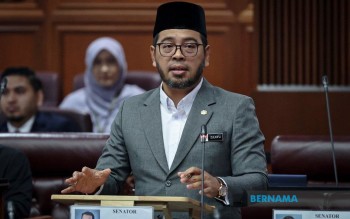
Tabung Haji (TH) is pursuing the remainder of a substantial arbitration award from Saudi Arabia-based property developer Al-Rawda Real Estates Development & Project Management Co Ltd, having received only a fraction of the sum ordered by arbitration. The pilgrimage fund has collected 14.9 million Saudi riyal from the awarded 899 million Saudi riyal—approximately 1.6 per cent of the total—despite exhausting conventional enforcement routes. Minister in the Prime Minister's Department (Religious Affairs) Dr Zulkifli Hasan disclosed that TH has now engaged specialist asset-tracing consultants to locate and pursue Al-Rawda's remaining assets, marking an escalation in recovery attempts that reflect the scale of TH's exposure to this troubled transaction.
The underlying investment represents one of the most contentious cases identified in the recently published Royal Commission of Inquiry report into TH's financial collapse. Between 2015 and 2017, TH structured an extraordinarily generous lease arrangement for four premium hotels located in Islam's holiest cities—Makkah and Madinah—committing approximately RM1.55 billion in upfront capital. The agreement granted Al-Rawda operational control of these hospitality assets through a management contract that entitled TH to receive lease income of 2.49 billion Saudi riyal over the agreement's lifespan. In return for this substantial commitment, TH received only a personal promissory note from Al-Rawda's owner, Dr Mashhoor Ali Omar Almadoodi, an arrangement that proved perilously inadequate when the operator subsequently defaulted.
Dr Zulkifli characterised the transaction as extraordinary and fundamentally atypical of normal commercial practice, underscoring the governance failures that the RCI investigation had uncovered. From March 2019 onwards, Al-Rawda ceased remitting the contracted rental income to TH, effectively freezing a critical revenue stream for the pilgrimage fund. Rather than capitulating to this breach, TH initiated enforcement proceedings within the Saudi Arabian legal system, setting in motion arbitration that would ultimately vindicate the fund's position. The arbitration tribunal issued its Final Award on April 16, 2023, ruling comprehensively in TH's favour and ordering Al-Rawda to remit 899 million Saudi riyal in compensation and damages.
The implementation of this arbitration judgment has proven deeply problematic. Al-Rawda's apparent inability or unwillingness to satisfy the award reflects either insolvency, asset concealment, or deliberate avoidance strategies. When Dr Zulkifli informed Parliament of the situation in mid-August, he noted that TH had exhausted standard enforcement mechanisms against the company, only to discover that Al-Rawda possessed insufficient liquid assets or accessible property to satisfy the judgment. This discovery prompted TH to negotiate a settlement agreement in November 2024, an attempt to recover funds through negotiated payment instalments rather than protracted legal combat. The settlement collapsed almost immediately when Al-Rawda remitted merely 14.9 million Saudi riyal and then abandoned its payment obligations, forcing TH to terminate the agreement and revert to aggressive asset recovery.
The decision to employ specialist asset-tracing consultants signals TH's determination to pursue every available avenue for recovery. These firms typically deploy forensic accounting methodologies and cross-border investigation techniques to identify concealed or transferred assets, particularly in cases where debtors have engaged in systematic asset concealment strategies. This approach is especially relevant in Gulf markets where business networks remain interconnected and complex ownership structures can obscure ultimate beneficial interests. For Malaysian investors and institutions operating in the Middle East, this case illustrates the institutional vulnerabilities that emerge when Islamic finance arrangements prioritise speed and convenience over rigorous due diligence and robust security mechanisms.
The broader context reveals that Al-Rawda was merely one among fourteen troubled investments that collectively triggered TH's financial crisis and necessitated the RCI investigation. The pilgrimage fund's exposure to this single Saudi developer represented a symptom of systemic weakness in investment governance, risk assessment, and operational oversight spanning the period from 2014 to 2020. The RCI's investigation ultimately produced a 211-page report released publicly on July 29, identifying fundamental management deficiencies and recommending twenty-five corrective actions. By late July, TH management had implemented seventy-five per cent of these recommendations, indicating accelerated institutional reform in the wake of the scandal's exposure.
The government established the RCI in 2021 following mounting public concern about TH's deteriorating financial position and mounting evidence of mismanagement and imprudent investment decisions. The inquiry formally commenced with member appointments on January 20, 2022, and subsequently presented its preliminary findings to the King on August 30, 2022. The public release of the full report months later provided Malaysian citizens and oversight bodies with comprehensive documentation of institutional failings that had stretched across six years. The Al-Rawda case encapsulates these failures—the upfront commitment of RM1.55 billion for hotel leases, the reliance on personal guarantees rather than institutional securities, the failure to implement effective monitoring mechanisms, and ultimately the organisation's vulnerability to default by international counterparties.
Recovery of the outstanding arbitration award faces substantial practical obstacles beyond mere legal action. Saudi Arabia's business environment presents challenges for foreign creditors seeking to enforce judgments against local entities, particularly when those entities enjoy political or financial connections. The asset-tracing initiative acknowledges this reality by attempting to identify transferable assets or concealed ownership structures that might provide alternative enforcement pathways. Should this initiative prove successful in locating Al-Rawda's assets, TH would then need to navigate cross-border enforcement mechanisms to convert identified assets into liquid funds.
For Malaysian policymakers and institutional investors, the TH case yields several critical lessons. Investments in international property and infrastructure require proportionate security mechanisms aligned with the capital deployed. Personal guarantees from individual principals, regardless of their stated prominence, provide inadequate protection when institutional defaults occur. Operational oversight and periodic financial audits must occur with frequency sufficient to detect deteriorating payment performance or asset dissipation before substantial losses accumulate. Furthermore, the extraordinary nature of upfront capital commitments—especially those exceeding conventional industry norms—should trigger heightened governance scrutiny rather than expedited approval.
The ongoing asset-tracing effort represents TH's final substantial opportunity to recover meaningful portions of the outstanding arbitration award. The fund's credibility and financial stability depend partly on demonstrating institutional resolve to pursue all available recovery mechanisms. Yet the case also illustrates a harder reality: sometimes capital deployed into international investments proves irrecoverable regardless of judicial victory or governmental determination. TH's experience may ultimately prove more valuable as a cautionary narrative for Malaysian institutions operating in Gulf markets than as a successful recovery model. The fund's management now faces the practical challenge of advancing recovery while simultaneously rebuilding investor confidence through transparent governance and demonstrably improved institutional controls.

