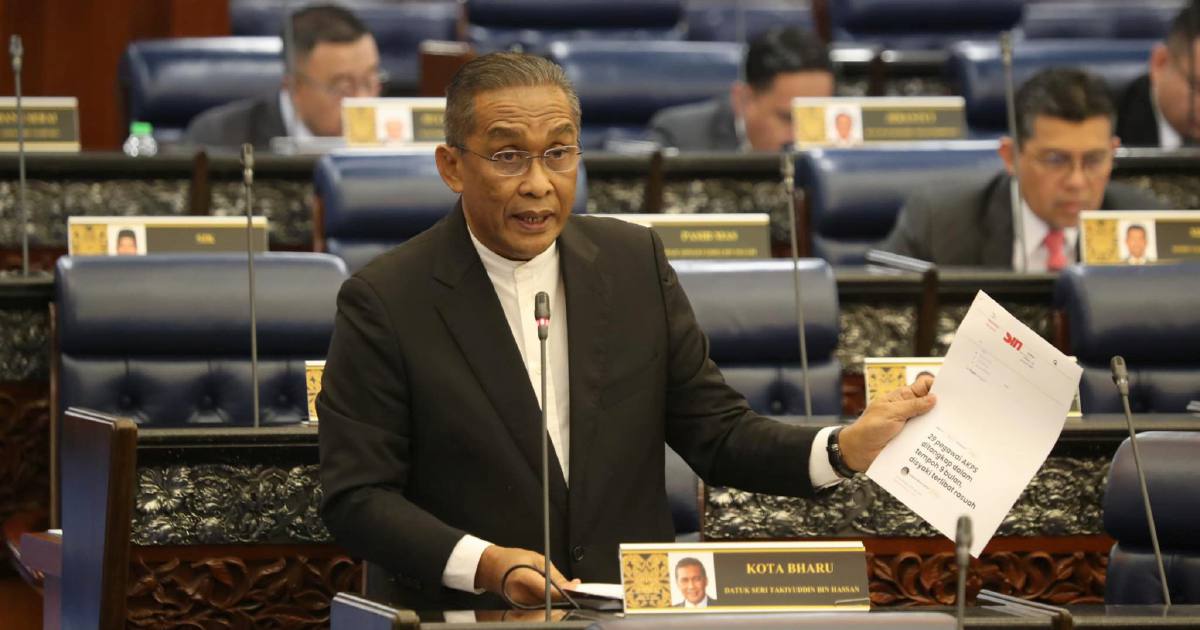
Opposition chief whip Datuk Seri Takiyuddin Hassan has called for the special parliamentary sitting to discuss the Royal Commission of Inquiry report on Tabung Haji to be deferred, insisting that the government's top leadership should be present during such a significant proceeding. The Kuala Terengganu MP argues that a matter of this importance warrants the attendance of Prime Minister Datuk Seri Anwar Ibrahim, whose presence would lend proper weight to the proceedings and ensure comprehensive engagement with the serious issues at stake.
The timing of Takiyuddin's intervention reflects growing calls within Parliament for more measured handling of the Tabung Haji inquiry findings. The RCI report represents the culmination of an extensive investigation into Malaysia's premier hajj savings scheme, an institution that holds particular significance for the country's Muslim population and operates as a critical financial platform for pilgrimage planning. The inquiry has touched upon governance structures, financial management, and administrative practices that affect millions of Malaysian savers.
Tabung Haji's role in Malaysian society extends beyond mere financial services. The organisation manages savings for millions of Malaysians intending to perform the pilgrimage to Mecca, making it both a religious trust and a substantial repository of public funds. Any findings concerning its operations carry implications for public confidence in Islamic financial institutions and government stewardship of religiously-designated funds. The RCI's conclusions therefore demand serious parliamentary attention and responsible deliberation.
Takiyuddin's position highlights a broader tension within Malaysia's parliamentary system regarding the conduct of significant inquiries and debates. The opposition chief whip suggests that procedural propriety and substantive engagement should take precedence over legislative schedules. His stance implies that rushing through discussion of a major governance investigation may undermine the quality of parliamentary scrutiny and public discourse surrounding the findings.
The call for postponement also reflects parliamentary conventions around cabinet attendance and parliamentary business. In Westminster-style democracies like Malaysia, major policy debates and inquiries typically command attendance from relevant ministers and senior government figures. The Prime Minister's participation in discussing such a significant matter would demonstrate government accountability and allow legislators to pose questions directly to the nation's chief executive, rather than to junior representatives.
From a practical governance perspective, the presence of the Prime Minister would facilitate more substantive exchanges about potential remedial measures, policy reforms, and government responses to RCI recommendations. Legislative bodies function most effectively when key decision-makers participate directly in deliberations, enabling real-time clarification and commitment to actions arising from parliamentary debate. Without such engagement, discussions may become procedurally complete but strategically incomplete.
The Tabung Haji RCI report has been anticipated within political and financial circles for its potential to reshape how Malaysia's hajj savings scheme operates. Should the inquiry have identified systemic weaknesses or governance failures, the government's response will require high-level decision-making authority. Parliamentary debate without such authority present risks creating disconnects between legislative recommendations and executive implementation capacity.
Takiyuddin's intervention also underscores the significance opposition parties place on this matter. His role as chief whip positions him as a key coordinator of opposition parliamentary activities and parliamentary business negotiations. His public call for postponement carries weight among fellow opposition MPs and potentially influences government scheduling decisions, as minority input can shape parliamentary timetables through negotiation and consensus-building.
For Malaysian observers, particularly those with savings accounts in Tabung Haji, the nature and pace of parliamentary discussion around the RCI report carries immediate relevance. Account holders have legitimate interest in understanding what the inquiry found and how policymakers intend to respond. Deliberations conducted at the highest levels, with full cabinet participation, provide greater assurance that findings will translate into meaningful action rather than perfunctory acknowledgment.
The postponement request also reflects concern about the quality of parliamentary discourse in an era when legislative sittings face significant time constraints and competing agendas. Special sittings dedicated to specific topics allow for deeper engagement than crowded routine parliamentary calendars. However, their effectiveness depends partly on participation levels and the seniority of officials willing to defend government positions and commit to courses of action.
Within Southeast Asia's broader context, how Malaysia handles major governance inquiries affects regional perceptions of the country's institutional strength and transparent policymaking capacity. Comprehensive, well-attended parliamentary debates on significant findings signal mature democratic institutions and serious engagement with public accountability. Conversely, rushed proceedings suggest institutional weakness or unwillingness to subject governance matters to rigorous scrutiny.
The Tabung Haji situation encapsulates recurring challenges within Malaysia's parliamentary system: balancing procedural efficiency against substantive deliberation, managing legislative calendars while accommodating priority matters, and ensuring executive accountability without disrupting government operations. Takiyuddin's proposal seeks to reconcile these tensions by deferring rather than cancelling the debate, preserving parliamentary engagement while permitting fuller government participation.

