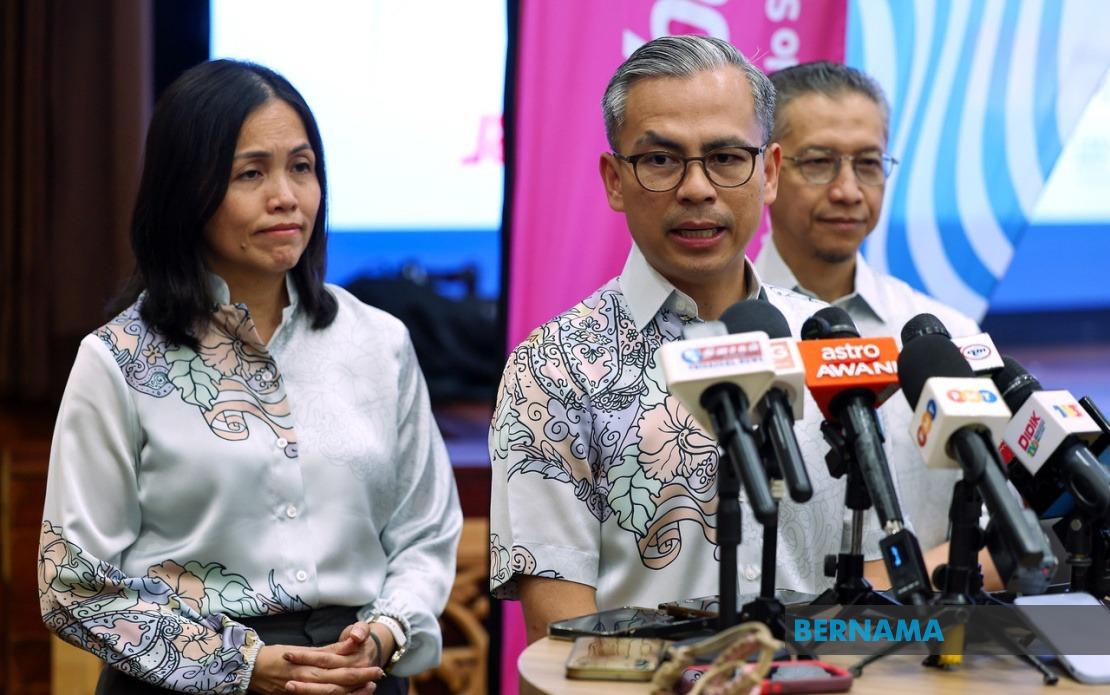
The Royal Commission of Inquiry report on Lembaga Tabung Haji has been formally transmitted to multiple enforcement and regulatory bodies for comprehensive investigation, Communications Minister Datuk Seri Fahmi Fadzil announced in Putrajaya. The referral follows the Prime Minister's earlier commitment to pursue cases identified in the inquiry, with responsibility distributed across several agencies tasked with examining the various findings documented in the report.
The investigation will be handled by a multi-agency taskforce representing different jurisdictions and regulatory domains. The Royal Malaysia Police will lead criminal investigations, while the Malaysian Anti-Corruption Commission will examine potential corruption-related offences. Financial oversight falls to Bank Negara Malaysia and the Inland Revenue Board, which will assess monetary irregularities and tax implications respectively. Additional involvement from agencies responsible for enforcing the Anti-Money Laundering, Anti-Terrorism Financing and Proceeds of Unlawful Activities Act reflects concern about potential financial crimes of an international nature within the fund's operations.
The RCI report, released publicly on July 29, detailed extensive governance and operational deficiencies spanning the 2014-2020 period under previous administrations. The inquiry documented systematic weaknesses in how the fund—which manages savings and investments for Malaysian pilgrims—was managed during this critical window. The commission formulated 25 recommendations for institutional reform, with the fund management having already implemented 75 per cent of these proposals as of late July this year, demonstrating responsiveness to the findings even before the formal investigation phase commenced.
During a special parliamentary sitting yesterday, lawmakers from both government and opposition benches debated the report's implications. Finance Minister II Datuk Seri Amir Hamzah Azizan and Minister in the Prime Minister's Department (Religious Affairs) Dr Zulkifli Hasan presented additional details during this legislative review. The debate highlighted the political sensitivity surrounding Tabung Haji, which manages funds for millions of Malaysians with deep religious and financial significance. Thirty-nine MPs participated in the session, indicating broad parliamentary engagement with the investigation outcome.
The question of extending the RCI to cover the subsequent 2021-2025 period has emerged as a secondary political issue. Lawmakers from both Barisan Nasional and Pakatan Harapan coalitions have called for a second inquiry to examine whether governance failures continued beyond the original inquiry's timeframe. Fahmi indicated that establishing an additional RCI would require approval from both the Cabinet and the Yang di-Pertuan Agong, emphasising the formal constitutional processes involved in such decisions. The potential for a second inquiry reflects parliamentary concern that institutional problems may not have been fully resolved simply through management changes.
Fahmi characterised the attendance of Parti Pribumi Bersatu Malaysia MPs at yesterday's debate as demonstrating appropriate political maturity on an issue transcending partisan lines. He contrasted this with other Perikatan Nasional opposition parties, particularly PAS and members aligned with former Prime Minister Hamzah Zainudin, who boycotted the proceedings entirely. The absence of these lawmakers proved controversial given their ministerial involvement when the RCI was originally established in 2021 during the preceding administration.
The minister's remarks about the boycott carried pointed implications regarding accountability and political responsibility. He observed that legislators who held cabinet positions when the inquiry was initiated and conducted failed to participate in the parliamentary debate addressing its findings, suggesting they were unwilling to defend their earlier roles in Tabung Haji oversight. This political dimension underscores how the inquiry has become entangled in broader coalition dynamics, complicating what might otherwise be purely administrative or legal matters.
Some opposition MPs staged a walkout during the ministerial briefing and subsequent debate, objecting to Speaker Tan Sri Johari Abdul's decision to proceed without Prime Minister Datuk Seri Anwar Ibrahim's presence at the special sitting. The procedural dispute reflected tensions between the government and opposition regarding parliamentary protocols and the appropriate format for discussing matters of national importance. Despite these objections, the debate proceeded with government members and cooperating opposition lawmakers contributing to the legislative record.
For Malaysian citizens with Tabung Haji accounts, the transition from inquiry to formal investigation introduces uncertainty regarding potential outcomes. The multi-agency approach suggests authorities are considering diverse angles—from corruption and anti-money laundering concerns to tax compliance issues. Whether the investigation will result in prosecutions, administrative remedies, or simply regulatory reform remains unclear at this stage, though the breadth of agencies involved indicates the government views the discovered irregularities seriously. The reputational and financial implications for the fund itself could influence public confidence in an institution critical to Islamic finance in Malaysia.
The investigation also carries implications for Malaysian governance more broadly. The Tabung Haji case demonstrates institutional vulnerabilities that transcend single organisations, potentially prompting reviews of oversight mechanisms across other government-linked companies and funds. The political consensus, despite coalition divisions, that investigation was necessary suggests recognition that fiduciary failures affecting millions of citizens demand accountability irrespective of which administration bore responsibility. The coming weeks will reveal whether the investigation apparatus proves sufficiently robust to resolve questions raised by the inquiry or whether additional measures become necessary.

