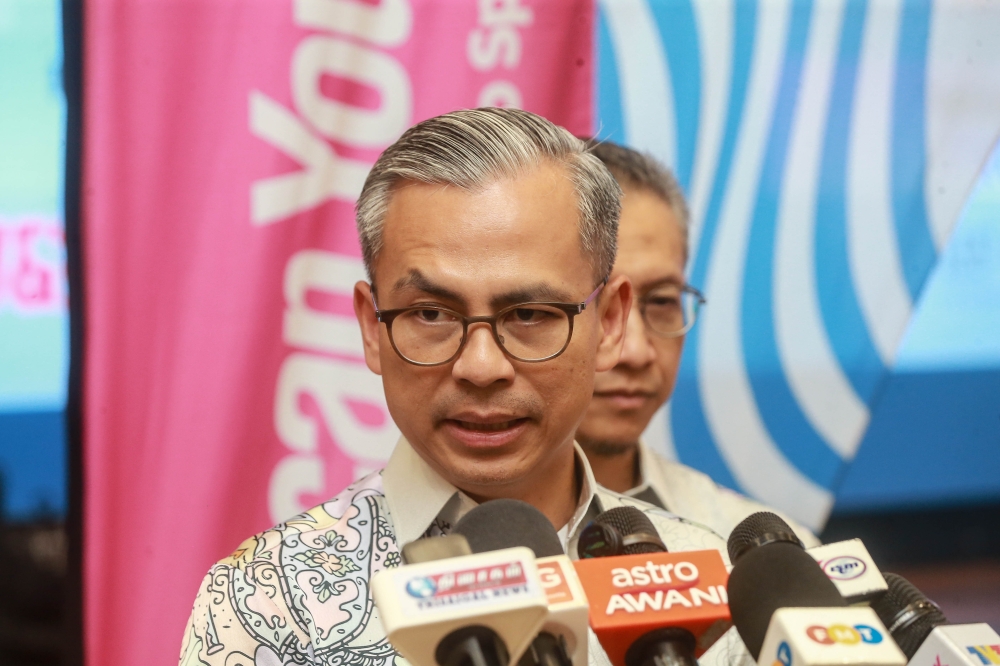
The Royal Commission of Inquiry's findings concerning the management and operations of Lembaga Tabung Haji will be distributed to four separate governmental bodies for comprehensive investigation, according to Communications Minister Fahmi Fadzil. The action represents a significant step in addressing concerns that have mounted around the pilgrimage fund's stewardship and financial practices, signalling the government's commitment to pursuing accountability across multiple regulatory domains.
The referral encompasses the Royal Malaysia Police, the Malaysian Anti-Corruption Commission, Bank Negara Malaysia, and the Inland Revenue Board—a deliberate distribution designed to allow each institution to examine specific aspects of the RCI's conclusions within their respective jurisdictional remits. This multi-agency approach acknowledges that potential violations may span criminal conduct, financial regulatory breaches, banking sector oversight, and tax compliance matters, requiring expertise and investigative powers that no single organisation alone possesses.
Tabung Haji, Malaysia's statutory body managing pilgrim savings and investments with assets valued in the billions, has faced mounting scrutiny over investment strategies, governance failures, and fund deployment decisions that have eroded public confidence. The establishment of the RCI itself reflected widespread concern among Muslim Malaysians about whether their savings had been adequately protected and prudently managed. The institution plays a crucial role in facilitating the Hajj pilgrimage for Malaysian Muslims, making its financial health and integrity a matter of considerable national and religious significance.
The involvement of Bank Negara Malaysia underscores concerns about compliance with financial sector regulations and banking standards. As the country's central bank and primary financial regulator, Bank Negara possesses statutory authority to investigate breaches of banking law and may assess whether Tabung Haji's financial management aligned with prudential standards and disclosure requirements. Similarly, the Inland Revenue Board's inclusion suggests the RCI may have identified potential tax-related irregularities or questions surrounding the proper treatment of fund income and transactions for taxation purposes.
The Malaysian Anti-Corruption Commission's involvement points toward findings that may implicate abuse of authority, conflicts of interest, or corrupt practices by officials managing the fund. Corruption remains a significant institutional risk in Malaysia's public sector, and the MACC's forensic capabilities would be essential for investigating whether personal enrichment or improper decision-making compromised the fund's financial interests. The police referral similarly indicates the RCI may have uncovered evidence suggestive of criminal conduct falling within the scope of ordinary criminal law.
This multi-pronged investigative strategy represents a departure from conventional handling of such inquiries, where a single agency might have been tasked with follow-up. The distribution to multiple bodies reflects both the complexity of potential violations and a recognition that siloing investigations within one agency might fail to capture the full scope of alleged misconduct. It also provides a degree of cross-institutional oversight, reducing the prospect that any single investigative body might deprioritise aspects of the findings.
For Malaysian pilgrims and Tabung Haji account holders, the referral signifies that official action extends beyond the RCI's factual determination. These individuals have contributed decades of savings toward fulfilling one of Islam's Five Pillars, making the integrity of their custodian institution a matter touching personal religious obligation and financial security. Public trust in Tabung Haji's governance had deteriorated substantially, and the prospect of serious institutional investigation may partially restore confidence, though only sustained reform and accountability can truly rebuild the fund's reputation.
The timing and scope of referrals will likely influence the trajectory of broader governance reforms affecting statutory bodies in Malaysia. Tabung Haji is not an isolated case; Malaysian public institutions have periodically faced similar scrutiny regarding operational integrity and financial management. The willingness of the government to refer RCI findings to multiple investigative authorities may establish a precedent for enhanced accountability across other statutory bodies managing public or semi-public funds, potentially signalling a shift toward more rigorous institutional oversight.
Investigators will now examine the RCI's evidence and conclusions, determining whether specific individuals or entities bear criminal or administrative liability. The process will necessarily be protracted, as conducting parallel investigations across separate agencies requires coordination and avoidance of duplicative effort. The police, MACC, Bank Negara, and IRB must establish protocols for information sharing and sequencing investigations to ensure efficiency whilst preserving the integrity of each investigation stream.
Regionally, Malaysia's handling of the Tabung Haji matter carries implications for investor and depositor confidence in Islamic financial institutions across Southeast Asia. Islamic banking and savings vehicles occupy an increasingly important role in the region's financial architecture, and governance failures in one jurisdiction can undermine confidence in comparable institutions elsewhere. Demonstrating robust accountability mechanisms reassures stakeholders across Muslim-majority economies that their religious obligations and financial interests align with institutional integrity.
The referral also highlights the tension between protecting institutional reputation and pursuing accountability. Tabung Haji serves millions of Malaysians, and protracted or destabilising investigations could disrupt operations or discourage new contributions. However, failing to investigate credible allegations of misconduct would compound the breach of public trust already evident in the RCI's initiation. The government must navigate this balance, ensuring investigations proceed with appropriate rigour whilst minimising operational disruption to an institution vital to Malaysian Muslim society.

