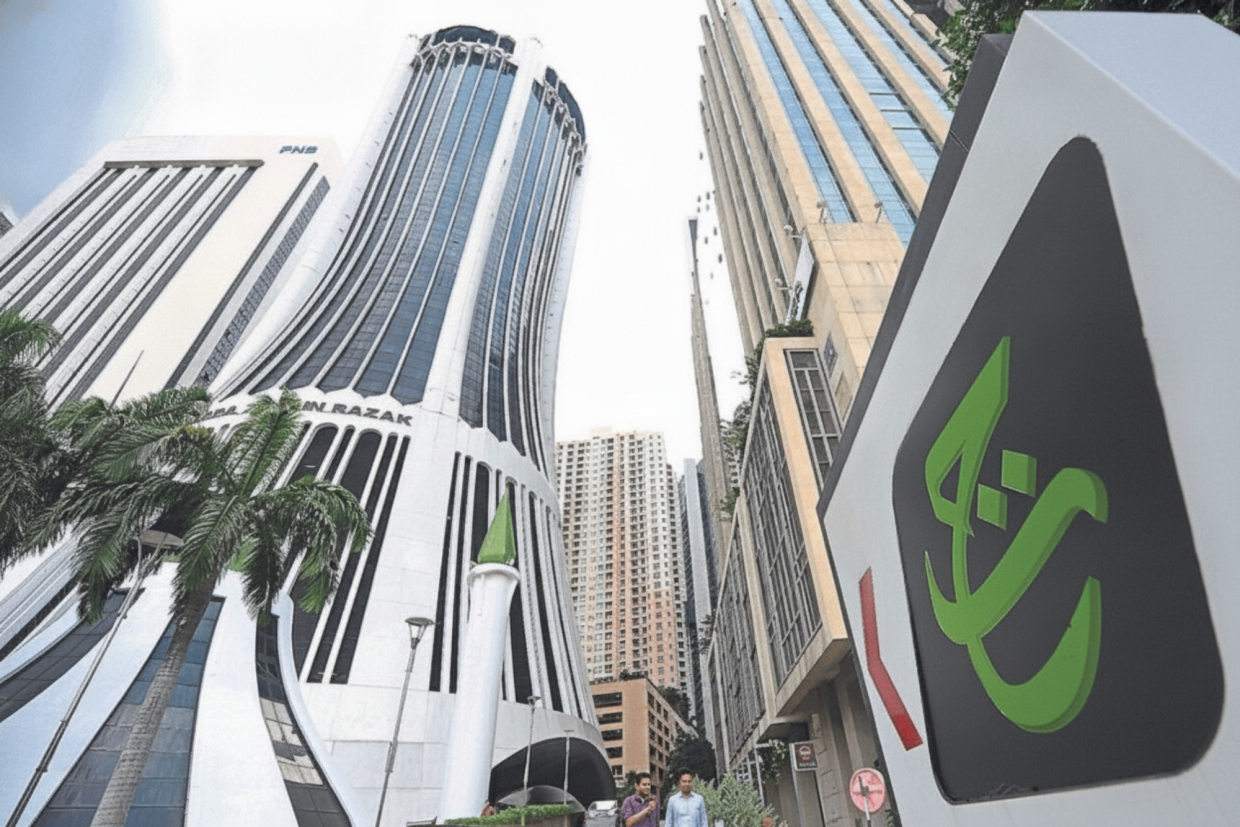
The Tabung Haji (TH) pilgrimage fund made sweeping changes to its accounting policies on the same day in 2017, adjusting its asset impairment threshold from 70 per cent to 85 per cent and then 90 per cent, according to findings laid bare in the recently published Royal Commission of Inquiry (RCI) report. These dramatic policy shifts allowed TH to report profits when the true financial position demanded a loss declaration, enabling the fund to distribute dividend payments to depositors despite the absence of legitimate earnings. Minister in the Prime Minister's Department (Religious Affairs) Dr Zulkifli Hasan presented these findings to parliament, highlighting systemic accounting failures that fundamentally misrepresented TH's financial health to millions of Malaysian Islamic pilgrims who entrusted their savings with the institution.
The RCI investigation, which examined TH's operations between 2014 and 2020, discovered that the impairment policy adjustments violated fundamental accounting standards. Under Malaysian Financial Reporting Standards (MFRS), TH should have declared a net loss of RM1.4 billion in 2017 rather than the reported profit of RM3.4 billion. This RM4.8 billion discrepancy represents one of the most significant accounting manipulations uncovered in the inquiry, raising serious questions about governance oversight and the credibility of financial statements presented to depositors and regulators. The changes were implemented to enable TH to meet depositor expectations for dividend payments, marking a prioritization of public relations over financial transparency and regulatory compliance.
The mechanics of the accounting distortion reveal troubling methodology. When TH held share investments originally valued at RM1,000, under the revised impairment policy the fund would only recognize a loss when market value collapsed to RM100. In practical terms, if TH had attempted to sell those shares at current market prices, the institution would only recover RM100, yet financial statements continued reflecting the RM1,000 figure. This disconnection between accounting records and economic reality meant depositors could not make informed decisions about their savings, as reported asset values bore no resemblance to what those assets could actually generate if liquidated. This approach directly contravened accounting standards that mandate fair value representation.
Parallel to the impairment policy changes, TH also restructured its profit distribution calculation methodology in 2017. The fund shifted from calculating distributions based on average monthly deposit balances to using average annual lowest balance—a technical adjustment that would have reduced dividend payments. However, after encountering considerable negative reaction from the depositor base, TH reversed course by implementing the impairment policy changes, allowing the fund to maintain the previous distribution method and distribute an additional RM600 million in grants. This sequence demonstrates how external pressure and political considerations influenced accounting decisions rather than sound financial management principles. The decision-making process appears designed to satisfy depositor expectations rather than ensuring accurate financial representation, a fundamental breach of fiduciary responsibility.
Investigators discovered that the then chief financial officer, according to statutory declarations obtained by the RCI, explicitly stated that policy changes were implemented to facilitate profit distributions aligned with depositor expectations. This admission is particularly damaging as it demonstrates the accounting decisions were deliberately engineered to achieve predetermined outcomes rather than reflecting genuine financial performance. The RCI determined such actions violated the Statutory Bodies (Accounts and Annual Reports) Act 1980, which mandates consistent application of generally accepted accounting principles. The deliberate nature of these adjustments suggests institutional knowledge that accounting standards were being contravened, yet no internal safeguards prevented the manipulation.
The inquiry found deeper structural problems stretching back to 2014, when TH's liabilities first exceeded assets. Rather than transparently reporting this negative equity position, the fund adopted the Realisable Asset Value (RAV) methodology to calculate profits and support dividend distributions. This accounting approach, which TH continues using, lacks compliance with generally accepted accounting standards and violates Section 22 of the Tabung Haji Act 1995. By maintaining RAV calculations, TH was able to present a facade of profitability while economically deteriorating. For Malaysian depositors, many of whom are saving for the hajj pilgrimage over decades, this meant their accounts showed growing balances while the underlying institutional financial health catastrophically declined. The disconnect between reported performance and economic reality potentially exposed millions of depositors to significant financial risk without their knowledge.
The implications for Malaysia's regulatory environment extend beyond TH itself. The RCI's findings expose gaps in oversight mechanisms that allowed accounting irregularities to persist across multiple years without intervention from external auditors, regulators, or the board of directors. That changes could be implemented twice within a single day without triggering immediate investigation or suspension suggests weak governance structures and potentially inadequate audit independence. For Malaysian investors in other government-linked companies and statutory bodies, the TH situation raises concerns about whether similar accounting flexibility might exist elsewhere, eroding public confidence in financial reporting standards across the broader institutional landscape.
For the millions of Malaysian depositors with Tabung Haji savings, the inquiry's findings carry profound implications. Many contributors—particularly those from lower and middle-income backgrounds—view TH as a secure savings vehicle managed according to Islamic principles and strict regulations. The revelation that financial statements systematically misrepresented the fund's condition violates the trust that enabled these depositors to accumulate hajj funds over many years. Some contributors may have deposited additional funds believing the institution was performing adequately, when in reality TH was experiencing severe financial deterioration masked by accounting maneuvers. This breach of transparency strikes at the foundation of confidence in government institutions managing public money.
The RCI published its 211-page report in late July, documenting multiple weaknesses in TH's management and operations spanning the period 2014 to 2020. The inquiry submitted 25 specific recommendations for institutional improvements, with TH implementing approximately 75 per cent of these recommendations by late July. Zulkifli's presentation to parliament signals the government's intention to advance reform efforts and presumably address the governance failures that permitted accounting irregularities. However, the timing of implementation remains critical—depositors will scrutinize whether genuine structural changes are being undertaken or whether surface-level modifications are being implemented to deflect public concern. The government's approach to TH's restoration will significantly influence public perceptions of its commitment to institutional accountability and financial integrity.
Looking forward, the TH case presents important lessons for Southeast Asia's approach to regulatory oversight of government-linked financial institutions. As several countries in the region operate similar pilgrimage savings schemes and government-controlled funds, the Malaysian experience demonstrates how accounting flexibility can evolve into systemic manipulation without robust oversight structures. The RCI inquiry itself took multiple years from establishment in 2021 through report presentation in August 2022, indicating how long accounting irregularities can persist before investigation and public disclosure. For Malaysian policymakers and regional peers developing institutional safeguards, the TH investigation underscores the necessity for real-time audit mechanisms, mandatory reporting thresholds, and board independence standards that prevent financial reporting from becoming subordinate to political or commercial pressures.
The broader question facing TH and its leadership involves restoring institutional credibility with depositors who have now learned that reported financial statements fundamentally misrepresented the fund's condition. Transparency regarding past manipulations, clear explanations of reforms being implemented, and demonstrable changes to governance structures will be essential for rebuilding confidence. For a fund built on Islamic principles emphasizing honesty and trust, the accounting irregularities represent a profound betrayal of the ethical foundations upon which the institution claims legitimacy. TH's recovery depends not merely on accounting corrections but on fundamental cultural transformation demonstrating that financial integrity and depositor welfare supersede all other institutional considerations.

