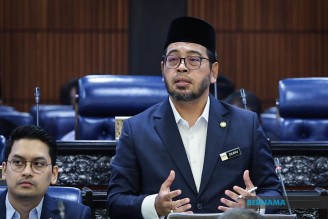
Tabung Haji's investment portfolio became dangerously intertwined with the 1Malaysia Development Bhd scandal through its stake in Putrajaya Perdana Bhd, a relationship that ultimately cost the hajj pilgrimage fund RM145.3 million in losses, according to the institution's Royal Commission of Inquiry report unveiled in August. Minister in the Prime Minister's Department (Religious Affairs) Dr Zulkifli Hasan highlighted during a Dewan Rakyat briefing that the problematic property investment represented just one of fourteen flawed acquisitions examined in the comprehensive RCI investigation, part of a far larger pattern of financial mismanagement that accumulated billions of ringgit in total losses across TH's portfolio.
The architectural flaw in TH's decision-making became apparent when the fund appointed its chairman simultaneously to lead Putrajaya Perdana's operations, creating an obvious conflict of interest that should have triggered immediate scrutiny from independent board oversight. This dual appointment effectively placed a TH executive at the centre of 1MDB-related transactions during the period when the development fund was already mired in international controversy and subject to multiple investigations. The arrangement raised fundamental questions about whether TH's capital allocation was truly serving the interests of the fund's beneficiaries—the Malaysian Muslim pilgrim community—or whether it had instead become a tool for resolving the financial difficulties of other parties entangled in the 1MDB web.
TH's exposure to 1MDB extended beyond the Putrajaya Perdana transaction. The fund purchased prime real estate at the Tun Razak Exchange, the nation's flagship financial hub, directly from 1MDB during the height of the 1MDB controversy. This acquisition demonstrated how the boundaries between struggling entities and distressed asset sellers had become dangerously blurred, with TH operating as a convenient vehicle for absorbing liabilities that should have been subjected to rigorous independent evaluation. The purchase timing, coming when 1MDB's reputational and financial position had already deteriorated significantly, suggested inadequate due diligence processes within TH's investment committee.
A particularly striking dimension of TH's governance failure involved the dual position held by TH's chief executive officer, who simultaneously served as a board member of 1MDB itself. This arrangement created an insurmountable structural conflict that rendered independent oversight impossible, as the executive could not credibly represent TH's interests while also holding fiduciary responsibilities to the organisation causing TH's losses. Dr Zulkifli's pointed question—whether these investments served TH's beneficiaries or resolved problems for other parties—encapsulates the core governance violation that permitted such arrangements to proceed without intervention from the board or regulatory authorities.
The TH financial catastrophe extended well beyond the 1MDB connection into other major investment blunders. The fund's involvement in FGV Holdings, which achieved acclaim as Malaysia's largest initial public offering by raising over RM10 billion, subsequently became a source of enormous losses exceeding RM1 billion as share valuations collapsed. TH's response to the deteriorating investment position revealed an institutional culture more concerned with concealment than accountability: the fund mechanically adjusted its impairment policy to obscure mounting losses rather than taking decisive action to stem the damage. Even as the FGV share price fell by more than eighty per cent, TH continued holding its depreciated position without the kind of active portfolio management that fiduciary duty demands.
The scale of TH's investment losses across multiple property transactions underscores how the fund's leadership became disconnected from basic valuation and negotiation principles. In one reversal of earlier transactions, TH subsequently repurchased the TRX land it had previously sold for RM400 million, completing the cycle by acquiring the same property back at RM270 million according to contemporary market assessments. This represented not merely a loss but an indictment of the original sale decision, suggesting that TH had liquidated valuable assets at depressed prices during the period when its leadership faced the most intense pressure to generate cash to mask underlying financial distress. The UJ Estates palm plantation transaction followed an identical pattern: TH sold the property for RM800 million, then repurchased the same asset at RM695 million—though when including the RM115 million cash component of the deal, the enterprise value dropped to approximately RM580 million.
The Royal Commission's 211-page report, released publicly in July after submission to the King in August 2022, synthesised nearly a decade of governance failures spanning the 2014 to 2020 period. This five-year window captured the institution during its most chaotic and conflicted period, when personnel holding multiple executive roles operated across TH, 1MDB, and PPB simultaneously. The RCI identified weaknesses spanning operational procedures, management accountability, investment evaluation processes, and board oversight mechanisms—each contributing to an environment where transactions explicitly contradicting TH's core mission could advance without meaningful resistance.
The commission submitted twenty-five specific recommendations for systematic remediation, targeting the institutional vulnerabilities that had permitted such dysfunction. By late July, TH reported implementing seventy-five per cent of these recommendations, demonstrating accelerated compliance once external scrutiny had exposed the governance deficiencies. However, implementing structural recommendations merely addresses the mechanisms through which decisions flow; the deeper challenge involves restoring organisational culture emphasizing accountability and fiduciary responsibility to the millions of Malaysian Muslims whose savings TH manages.
For Malaysian investors and the broader Southeast Asian investment community, TH's experience offers a cautionary lesson about institutional capture and the vulnerability of sovereign wealth and managed funds to mission drift. The Malaysian pilgrimage fund's transformation into a vehicle for managing 1MDB's problematic assets illustrates how the absence of independent oversight, combined with executives holding simultaneous positions across conflicted entities, can systematically undermine even institutions serving essential religious and social functions. The recovery of TH's financial position now depends not merely on correcting specific transactions but on fundamentally restructuring how the institution manages conflicts of interest and ensures that investment decisions remain anchored to beneficiary welfare rather than accommodating the requirements of struggling counterparties.

