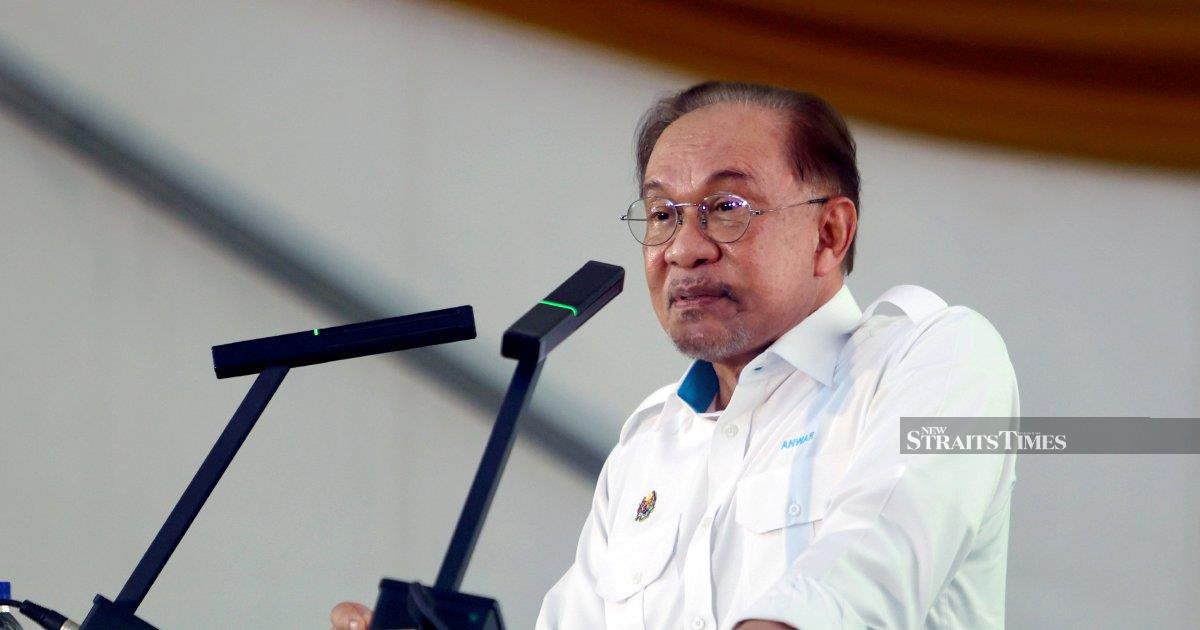
The Taiwan Chamber of Commerce & Industry in Malaysia has formally expressed unease regarding Prime Minister Datuk Seri Anwar Ibrahim's latest statements positioning Taiwan within China's sovereignty, raising questions about the stability of the country's technology sector investment climate. The organisation's public warning signals growing anxiety among the island's business community about how Malaysia's political leadership frames cross-strait relations and the potential consequences for capital flow into high-value manufacturing and semiconductor ventures.
Taiwan remains one of Southeast Asia's most significant sources of technology investment, with major chipmakers and electronics manufacturers maintaining substantial operations throughout Malaysia. The island's firms have historically viewed the country as a strategically valuable location for semiconductor production, assembly, and testing facilities due to its geographic positioning, established industrial infrastructure, and skilled workforce. Any perception of political instability or diplomatic tension could prompt investors to reassess their regional commitments and redirect capital toward markets perceived as offering clearer policy certainty.
The timing of TCCIM's formal objection reflects the practical concerns of business leaders who operate across multiple jurisdictions and must navigate complex geopolitical sensitivities. Taiwan's investment community in Malaysia comprises manufacturers, technology firms, and logistics operators whose operations depend on predictable government policy and diplomatic stability. When political leaders make statements that complicate Taiwan's international positioning, these companies face internal pressure from corporate headquarters and shareholders questioning the long-term viability of their Malaysian investments.
Anwar Ibrahim's characterisation of Taiwan echoes the People's Republic of China's longstanding position on cross-strait relations, a stance that has intensified in recent years. Malaysia, as a sovereign nation navigating between major powers, has traditionally maintained what diplomats describe as careful ambiguity on Taiwan's political status. This balance allows the country to preserve economic relationships with both Taipei and Beijing while avoiding direct entanglement in their dispute. The chamber's intervention suggests this equilibrium may be shifting in ways that concern foreign investors.
The semiconductor and technology sectors represent crucial components of Malaysia's industrial strategy for the coming decade. The government has invested substantially in upgrading domestic capacity and attracting foreign manufacturers as part of broader economic diversification efforts. Semiconductor production contributes significantly to export revenues and provides high-skilled employment opportunities. Any disruption to investment flows in these sectors could undermine these development objectives and affect the country's competitiveness within global supply chains that have become increasingly vital following recent geopolitical disruptions.
Taiwan Chamber's expression of concern carries weight because it represents not merely political objections but concrete business interests. The organisation comprises executives and entrepreneurs who make investment and operational decisions based on risk assessment. When such representatives issue formal warnings, they are signalling that specific companies may reconsider their commitments or that prospective investors may view Malaysia as presenting elevated political risk compared to alternative Southeast Asian locations.
The dynamics between Taiwan, Malaysia, and China extend beyond bilateral commerce into regional stability architecture. Malaysia's relationships with Taiwan and China both carry strategic importance, with significant trading partnerships and cultural ties binding the nation to both entities. Managing these relationships requires consistent, carefully calibrated diplomatic messaging that preserves economic opportunities while respecting all parties' political sensitivities. Public statements that dramatically shift this balance can create practical complications for policymakers and business leaders alike.
Investment decisions in semiconductors and technology manufacturing involve multi-year capital commitments and long-term planning horizons. Companies undertaking such ventures conduct thorough due diligence on political stability, regulatory consistency, and diplomatic relationships. Comments from national political leaders about contested territories or sovereignty disputes factor directly into these assessments. Investors interpreting such statements as signalling changing political direction may accelerate relocation timelines or redirect future investment allocations toward markets perceived as offering greater stability.
The chamber's intervention also reflects broader regional dynamics where Southeast Asian nations increasingly find themselves navigating great-power competition. Taiwan's technological prowess and Malaysia's manufacturing capabilities make their bilateral relationship economically significant independent of broader geopolitical considerations. Business communities in both locations have developed functional working relationships and supply chain interdependencies that operate somewhat separately from official governmental relations. When political statements create friction, these commercial networks face disruption.
Moving forward, Malaysia faces implicit pressure to clarify its position on cross-strait relations in ways that reassure investors while maintaining diplomatic flexibility. The government must balance domestic political considerations, relationships with major powers, and the practical needs of foreign business communities seeking policy certainty. How Anwar Ibrahim's administration responds to TCCIM's concerns could influence not only Taiwan's investment decisions but also perceptions among other foreign technology investors about Malaysia's investment climate and policy stability.
The semiconductor industry's strategic importance extends beyond Malaysia into regional security considerations and global supply chain resilience. Taiwan's dominance in advanced chip production makes its technology exports essential for economies throughout Southeast Asia and beyond. Malaysia's role as a manufacturing and assembly hub within this ecosystem adds further significance to maintaining stable investment conditions. Political complications that disrupt these relationships carry implications extending beyond bilateral trade into broader questions of regional economic integration and technological sovereignty.
The dialogue between Anwar Ibrahim's government and the Taiwan Chamber of Commerce appears likely to continue as both sides navigate the intersection of political rhetoric and practical economic interests. The chamber's public stance indicates that Taiwan's business community will not remain silent when political developments threaten investment security. Whether this pressure prompts any adjustment in official messaging, or whether Malaysia's government maintains its current rhetorical positioning regardless of commercial consequences, will become increasingly apparent through business community behaviour in coming quarters.

