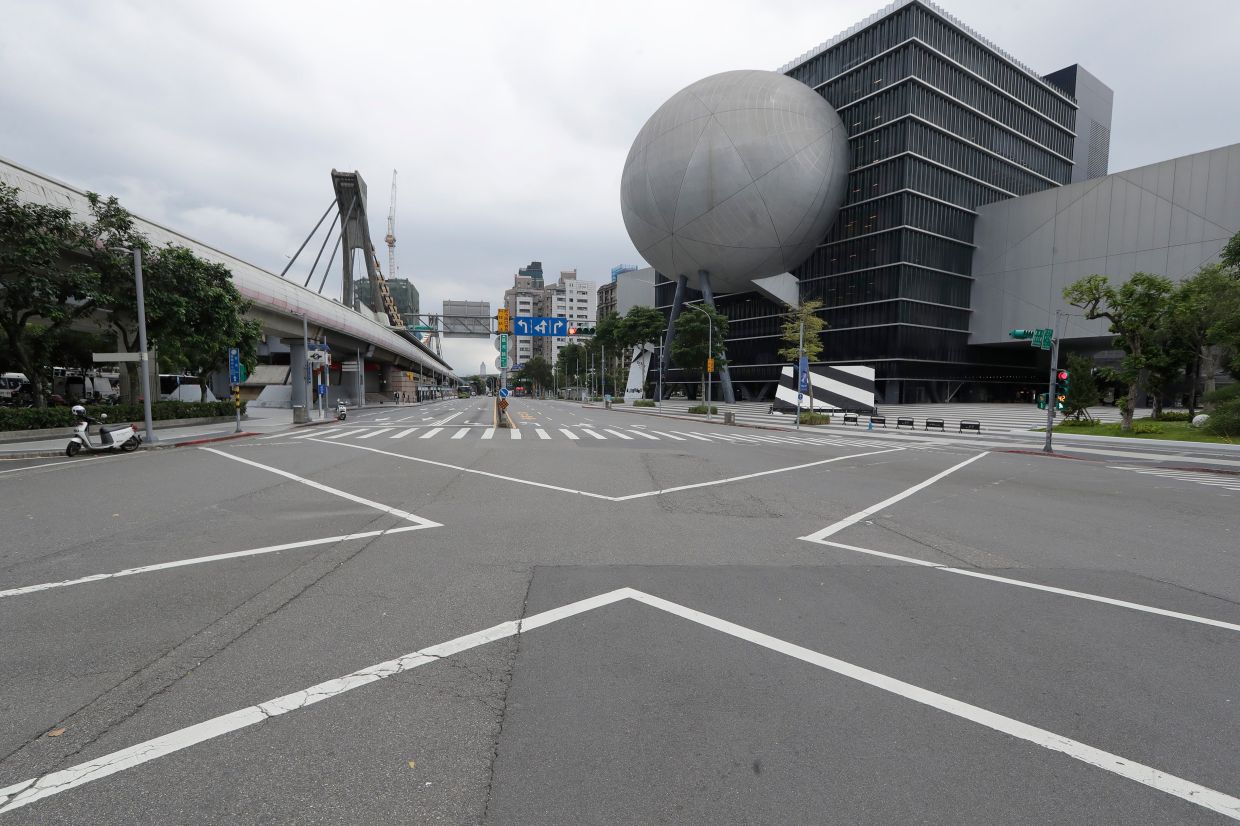
Taiwan executed a coordinated slowdown of mobile internet services across Taipei and six surrounding cities and localities on August 13, reducing data transmission speeds to a basic 256 Kbps during the final phase of its Han Kuang exercises. This deliberate throttling of digital infrastructure, which normally supports 5G connectivity in major population centres, represents a marked escalation in how the self-governed island approaches its annual military preparedness regime. The telecommunications operators maintained this restricted capacity throughout the drill period, effectively rendering video streaming, image loading, and most digital services unusable while preserving text-based communication.
The Han Kuang drills, which commenced the previous week and extended through mid-August, have traditionally focused on military-specific operations and mobilisation protocols. However, this year's iteration reflects a fundamental strategic recalibration emphasising the integration of civilian populations and local government agencies into comprehensive defence scenarios. Where previous iterations of Taipei's urban resilience drills proceeded with minimal public disruption or awareness, Taiwan's defence establishment has determined that authentic preparedness requires meaningful civilian participation and tangible inconvenience. This philosophical shift acknowledges the reality that any genuine conflict would profoundly disrupt daily life, making public familiarity with emergency procedures essential rather than peripheral.
President Lai Ching-te publicly apologised for the service restrictions, framing the exercise as a necessary burden on the general population. His statement—"We ask for your understanding and support, as this is a necessary drill"—reflected both an acknowledgment of public inconvenience and an implicit appeal to citizens to recognise the strategic imperative behind such measures. This direct presidential communication regarding the drills underscores Taipei's assessment that civilian buy-in and psychological preparedness constitute genuine national security assets. By positioning the inconvenience as collectively shouldered rather than externally imposed, the government attempted to cultivate a sense of shared responsibility.
The expanded scope of this year's Han Kuang exercises extended beyond digital infrastructure disruption. Military personnel coordinated with civilian authorities to implement simultaneous air raid simulations at multiple locations, including shutting the gates of Taipei metro stations and temporarily confining passengers within the facilities. At one station on Thursday afternoon, commuters experienced approximately thirty minutes of confinement as part of the evacuation and sheltering simulation. This element of the drill deliberately introduced mild but palpable stress and uncertainty into ordinary transit experiences, allowing participants to develop familiarity with emergency protocols outside the abstract realm of theoretical discussion.
Hospitals participated in parallel exercises focused on operational continuity under crisis conditions. Lai visited a medical facility that simulated the relocation of critical operations to underground bunkers, demonstrating how Taiwan's healthcare infrastructure might maintain essential services during armed conflict. These hospital-based drills address vulnerabilities particular to the medical sector—dependency on above-ground facilities, supply chain vulnerability, and the requirement to maintain continuous operations during emergencies. By rehearsing underground alternatives, Taiwan's health system develops practical understanding of constraints and feasibility questions that would only become apparent during actual conflict.
The decision to meaningfully disrupt digital connectivity reflects sophisticated understanding of how modern economies depend on uninterrupted telecommunications. A conflict scenario involving Taiwan would inevitably produce communications degradation through infrastructure damage, electromagnetic pulse effects, or deliberate jamming. Exposing civilians to the reality of text-only internet communication—a stark reduction from contemporary digital normalcy—serves an educational function beyond mere security theatre. Citizens who experience such restrictions during peacetime drills develop more realistic mental models of conflict consequences, potentially reducing panic or maladaptive behaviour during actual emergencies.
Allen Hsieh, a tourist from Hong Kong who experienced the metro station confinement firsthand, offered an outsider's perspective on the exercise's authenticity and effectiveness. Having expected only text message notifications about the drill, Hsieh encountered unexpectedly immersive simulation instead. His assessment that the exercise "did not cause me any inconvenience" and his explicit recognition that "Taiwan needs to conduct exercises, given the current situation" suggested that at least some public reaction to the drills tilted toward acceptance rather than resentment. His observation that the realism exceeded his expectations indicates the exercises succeeded in moving beyond bureaucratic compliance toward substantive preparedness education.
The broader geopolitical context animating these intensified drills reflects Taiwan's assessment of its strategic environment. Across the Taiwan Strait, military capabilities and stated intentions regarding unification have prompted Taipei's defence establishment to fundamentally reconceive civil-military integration. Han Kuang exercises function as both practical rehearsals and public signalling mechanisms, demonstrating to international observers and domestic constituencies alike that Taiwan possesses serious defence capacity and civilian resilience. The explicit inclusion of inconvenient elements—internet throttling, metro station closures, hospital relocation drills—communicates that preparedness is not an optional luxury but an integrated feature of contemporary civic life.
The escalation toward more disruptive and realistic exercises also reflects lessons from other regional conflicts and international defence planning. Taiwan observes how nations without adequate civil defence preparation experience disproportionate civilian casualties and social breakdown during conflicts. By normalising emergency procedures and familiarising populations with constraint and adaptation, Taiwan's defence planners seek to build resilience that extends beyond military hardware into the psychological and organisational fabric of civilian society. This approach recognises that defence capacity encompasses not merely weaponry but population cohesion and adaptive capacity under stress.
Looking forward, Taiwan appears likely to continue expanding the scale and disruption level of Han Kuang exercises, potentially incorporating broader geographic areas and longer-duration restrictions. The successful execution of this year's drills and the measured public response suggest that greater citizen acceptance of emergency preparedness measures may be achievable through transparent communication and graduated exposure to realistic scenarios. As Taiwan's strategic position remains contested and military modernisation accelerates across the strait, investment in civilian psychological and operational preparedness increasingly appears central to broader defence strategy. The August 13 internet slowdown thus represents not an isolated inconvenience but a deliberately calibrated step in reshaping Taiwan's collective understanding of security and shared responsibility.

