The political temperature in Tamil Nadu rose sharply on Wednesday following the release of Udhayanidhi Stalin, the Leader of Opposition and former deputy chief minister, on station bail after several hours of interrogation connected to remarks he made about actress Trisha Krishnan. The incident highlights the intensifying rivalry between the DMK and Chief Minister M.K. Vijay's fledgling TVK party, with both sides deploying different strategies to maintain their political standing in the southern state.
Staling's detention began when police arrested him at his Chennai residence following a formal complaint filed by the ruling TVK government, which characterised his comments as constituting verbal harassment and the objectification of a woman. The controversy centres on remarks he made during a DMK-organised protest in Thanjavur, where he was delivering criticism of Chief Minister Vijay's handling of the Cauvery water dispute and the neighbouring state of Karnataka's planned Mekedatu dam project. The political gathering took an unexpected turn when supporters in the crowd invoked the name of Trisha, described as someone with close ties to the Chief Minister.
Following this interjection, Stalin made a comment that would spark the furore: "Wherever water comes, whether it comes or not, water should come there." While Stalin intended this as wordplay connected to the water dispute topic under discussion, observers quickly interpreted the statement as containing sexual innuendo, particularly given the context of mentioning Trisha's name. The remark immediately drew condemnation from the TVK administration, which characterised it as inappropriate conduct toward a public figure and lodged complaints with both local law enforcement and the National Commission for Women.
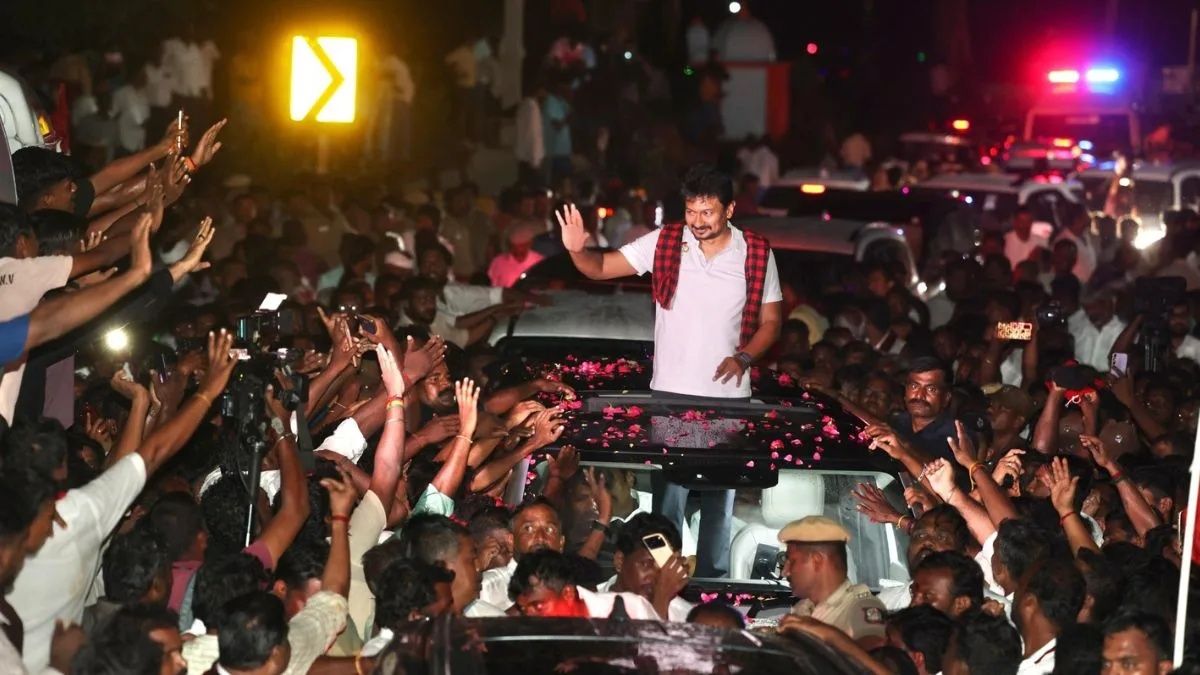
The arrest itself became a flashpoint for broader political tensions. Hundreds of DMK party workers and sympathisers converged outside the Sengipatti police station, where Stalin was being held for interrogation, to register their opposition to what they viewed as governmental overreach. Upon his release, supporters accorded him a reception that reflected party solidarity, with activists chanting slogans directly criticising Chief Minister Vijay and his administration's governance record. The scene underscored how individual incidents can rapidly become expressions of larger political grievances between competing formations.
During a press conference held immediately after his release, Stalin maintained his innocence and reframed the entire episode as a political attack rather than a genuine case of misconduct. He categorically rejected suggestions that his words carried double meaning or improper intent, asserting instead that he had been exercising his democratic right to advocate for farmers' interests during the rally. Stalin characterised his arrest as merely the latest in a pattern of harassment by what he termed a government lacking legitimacy and lacking genuine democratic credentials.
Staling's statement reflected a strategy common in Indian politics: transforming personal or legal difficulties into evidence of governmental persecution. He argued that the Chief Minister's administration represents nothing more than a "circus" rather than a functioning government, and contended that arresting DMK legislators has become standard operating procedure for the ruling party. By framing his detention within the context of partisan conflict rather than acknowledging the specific complaint, Stalin attempted to shift public conversation toward broader questions about whether the TVK government respects democratic norms and opposition voices.
The incident reveals the precarious position of newly elected governments in Indian states, particularly those led by actors-turned-politicians like Vijay. The TVK's decision to involve the National Commission for Women signals an attempt to establish that the case concerns gender-based impropriety rather than political rivalry. However, critics might observe that weaponising women's protection mechanisms to suppress political opponents risks delegitimising genuine efforts to address harassment and objectification. The strategy exposes how political disputes can become entangled with serious social issues.
For Tamil Nadu's political landscape, the Stalin episode demonstrates the continuing volatility of state politics where personal disputes between major political figures can rapidly escalate into constitutional questions. The DMK, as the establishment opposition force, possesses greater institutional experience in navigating such confrontations, whereas the TVK remains an untested political formation still consolidating its administrative apparatus. The arrest of a senior Opposition figure so early in the TVK administration's tenure may have been intended to demonstrate toughness but risks appearing vindictive to observers.
The water dispute backdrop to these remarks holds genuine significance for Tamil Nadu's rural economy and development prospects. The Cauvery waters have been contested between Tamil Nadu and Karnataka for decades, touching fundamental questions of agricultural viability and inter-state cooperation. That political competition over this substantive issue should deteriorate into allegations of personal misconduct suggests that the institutional mechanisms for managing serious policy disagreements may be insufficient, forcing parties toward confrontational tactics.
For Malaysian and broader Southeast Asian readers, the Tamil Nadu controversy illustrates dynamics present across the region's democracies: the challenges faced by newly ascendant political forces in exercising power responsibly, the thin line between political competition and personal attacks, and the recurring risk that genuine concerns about misconduct become weaponised in partisan conflicts. As Tamil Nadu continues navigating its transition from the long-dominant DMK and AIADMK duopoly toward a more fragmented political landscape, incidents like Stalin's arrest will likely multiply, testing institutional maturity and democratic resilience.

