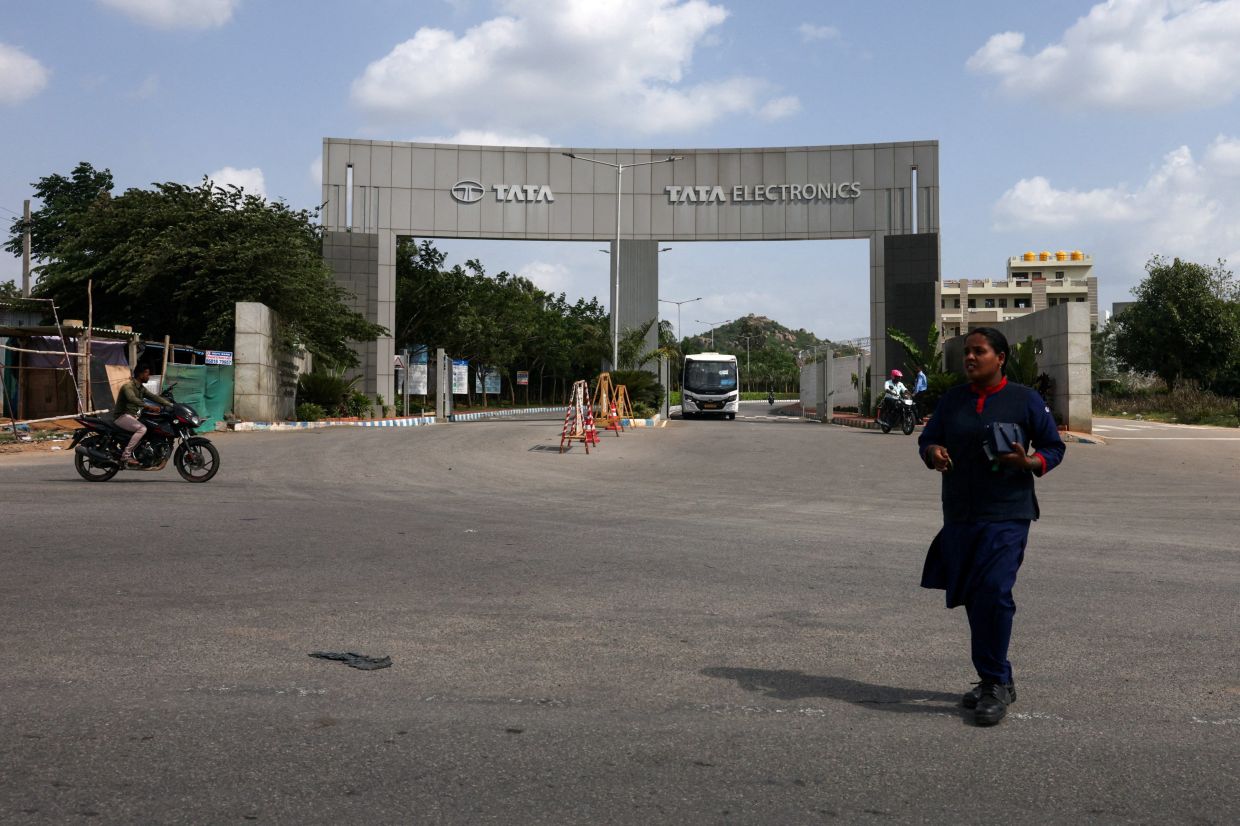
Tata Electronics acknowledged on Monday that it had fallen victim to a significant cybersecurity breach, after online security researchers discovered that a ransomware gang calling itself World Leaks had published what it claimed were confidential component designs and technical specifications belonging to Apple and Tesla—both major clients of the Indian conglomerate. The breach represents a substantial security failure for one of the region's most critical manufacturing operations and raises fresh questions about data protection practices at facilities producing some of the world's most advanced consumer electronics.
According to investigators who reviewed the stolen material, World Leaks has distributed more than 200,000 files across the dark web, a section of the internet beyond the reach of conventional search engines and law enforcement monitoring. The company issued a terse statement confirming the intrusion, asserting that detection systems identified the problem weeks earlier and that swift response measures had kept business operations intact and uninterrupted across all divisions. However, this assurance masked a more troubling reality: the perpetrators had already obtained extensive access to sensitive intellectual property.
Apple launched an investigation into the incident and was conducting a thorough technical assessment of what information may have been compromised, according to a person with direct knowledge of the matter. Notably, the attackers also submitted a formal ransom demand to Tata in connection with the breach. Apple itself declined to comment publicly on the situation, while Tata refused to provide any details about the extortion attempt or its response. The silence from both corporations underscores the sensitivity surrounding the incident and the potential commercial damage should the scope of the compromise become widely known.
The timing of this breach adds to mounting complications for Apple's manufacturing footprint in India. Tata is already navigating environmental controversies related to alleged soil contamination near one of its iPhone production facilities, issues that have attracted regulatory and media scrutiny. These accumulating challenges threaten to complicate Apple's strategic diversification away from China, where political tensions and supply chain vulnerabilities have prompted the tech giant to expand production elsewhere. India, under Prime Minister Narendra Modi's administration, has positioned itself as an alternative manufacturing destination, with government incentives designed to attract global electronics companies and reduce dependence on Chinese capacity.
Tata's expanding role as a supplier to Apple represents a cornerstone of this broader government strategy to establish India as an electronics manufacturing centre capable of serving multinational corporations. The company now accounts for roughly a third of Apple's iPhone production in India, with rival manufacturer Foxconn managing the remainder. This arrangement reflects Apple's intention to gradually shift capacity away from concentration in any single nation or partner. Yet the security lapse now calls into question whether Indian manufacturing partners possess adequate safeguards for protecting proprietary information entrusted to them by global technology leaders.
History suggests this is not an isolated incident for Tata's technology infrastructure. In the previous year, the conglomerate's British automotive subsidiary Jaguar Land Rover fell victim to a cyberattack that forced a complete six-week production shutdown, demonstrating both the vulnerability of its systems and the cascading operational consequences of such breaches. That incident raised concerns about cybersecurity maturity across Tata's global operations, concerns that this latest breach validates. The pattern indicates systemic gaps in how the company detects, prevents, and responds to sophisticated attacks.
According to security researchers who examined the compromised files, the dataset contains far more than proprietary manufacturing documents. The collection includes years of accumulated email correspondence, system event logs spanning extended periods, and personal identification documents—including passport copies—of employees, some of them foreign nationals working at Tata facilities. This breadth of personal data exposure creates secondary vulnerabilities for individuals employed by the company and raises data protection compliance questions under Indian privacy law and international standards.
The stolen material includes what appears to be a comprehensive Apple quality assurance document running 52 pages, stamped with the company's proprietary markings and detailing inspection standards for iPhone circuit board components manufactured at Tata's facilities. Multiple files and folders reference Hosur, the location of Tata's primary iPhone assembly plant situated in Tamil Nadu state in southern India. Additionally, researchers discovered references to Tesla parts specifications, including documentation allegedly related to a chargeport controller component for the North American version of the Model Y SUV. One purported Tesla document dated May 2025 contained technical drawings for Project Highland, Tesla's publicly known internal designation for a redesigned Model 3 sedan.
Security researcher Rajshekhar Rajaharia, who has previously assisted Indian law enforcement with cyber investigations, conducted an independent review of the World Leaks database and confirmed the presence of 181 files and folders when searching for references to Apple, and additional documents when searching for Tesla, including what appeared to be manufacturing specifications and assembly documentation. A second researcher, Rakesh Krishnan, verified that the stolen data had been publicly accessible on the dark web since at least June 10, suggesting a window of weeks during which competing manufacturers or foreign intelligence services could have accessed the information.
Tata informed at least some employees working in its iPhone assembly operations of the breach during the preceding week, according to a source with knowledge of the company's internal communications. This notification came well after World Leaks had already begun publishing the stolen data online, indicating that employee awareness lagged significantly behind public exposure of the incident. The timing raises questions about Tata's incident response procedures and whether affected staff received adequate warning to take protective measures regarding their personal information now exposed online.
The breach underscores a fundamental vulnerability facing global multinational corporations that have dispersed manufacturing across multiple jurisdictions and outsourced partners. Even when those partners employ sophisticated operations and serve the world's most demanding technology companies, they may lack equivalent cybersecurity maturity or the resources required to defend against well-resourced attackers. For Malaysian technology firms and manufacturers similarly positioned as suppliers to global leaders, the incident offers an instructive cautionary tale about the necessity of investing in robust cyber defences and incident response capabilities as a competitive imperative, not merely a compliance checkbox.
India's Computer Emergency Response Team, the dedicated unit within the country's IT ministry responsible for managing national cybersecurity incidents, did not immediately respond to inquiries about whether it was investigating the Tata breach or coordinating with affected companies. This silence raises concerns about the speed and effectiveness of India's official cyber incident response at a moment when data security failures could undermine the government's stated objective of attracting multinational manufacturing investment. The gap between the discovery of the breach and official acknowledgement, combined with the absence of visible government action, suggests institutional capacity constraints in India's cybersecurity apparatus.